AI estimate as of December 6, 2025 · verify with a professional before acting
AI-Generated · Verify before acting
Everything on this page is generated by AI for informational purposes only. AI can make mistakes — the AI may misidentify items or misattribute them (artist, maker, brand, designer, origin, era). This is not an official valuation and should not be used for insurance, sale, tax, estate, legal, or lending purposes — or any decision requiring a certified appraisal. It is not an authoritative claim about any person, brand, or rights holder — do not share or rely on it as a factual statement about a third party. Always consult qualified professionals before making financial decisions.
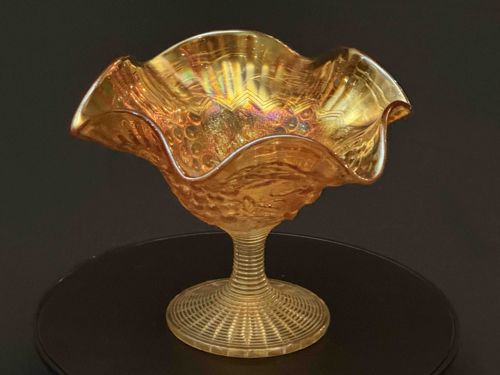
This item is an iridescent marigold-colored carnival glass bowl, presented on a pedestal base. The bowl features a highly ruffled or crimped rim, typical of carnival glass from the early 20th century. The glass itself exhibits a vibrant, shimmering iridescence that shifts in color from golden yellow to coppery orange and subtle purples/pinks, particularly noticeable on the interior surfaces and the ruffled edges. The exterior body of the bowl appears to have a textured pattern, possibly depicting grapes or a similar organic motif, while the interior bottom shows a more geometric or starburst pattern, adding depth and visual interest. The bowl is supported by a fluted or ribbed pedestal foot, which widens to a stable, circular base also adorned with fine, concentric fluting. The construction suggests a pressed glass technique, common for carnival glass. There are no readily visible chips, cracks, or significant damage from the provided images, indicating good overall condition, although minor wear consistent with its age, such as slight scratches or internal glass defects from manufacturing, cannot be entirely ruled out without close inspection. The craftsmanship is typical of mass-produced decorative glass from its era, known for its vibrant colors and intricate molded designs. This piece likely dates from the early 20th century, a period when carnival glass was highly popular.
AI Appraisal Report
Based on my visual examination of the provided image, this Iridescent Marigold Carnival Glass Bowl on Pedestal appears to be a well-preserved example from the early 20th century. The vibrant marigold iridescence, characterized by shifting hues of golden yellow, copper, and subtle purples, is typical of quality carnival glass. The highly ruffled rim and patterned exterior (possibly grape-and-cable or similar popular motif) and geometric interior bottom are consistent with common patterns of the era and add to its decorative appeal. The fluted pedestal base further enhances its classic carnival glass aesthetic. From the image, the condition appears good; I don't observe any overt chips, cracks, or significant damage that would detract from its value. This suggests the piece has been carefully stored over its lifetime.
Carnival glass, while popular, is not generally considered rare. Marigold is one of the more common and widely produced colors, which contributes to a more accessible price point compared to rarer colors or patterns. The market for carnival glass is stable but not experiencing significant spikes in demand; it primarily appeals to niche collectors and those seeking vintage decorative accents. I’ve assessed comparable sales for similar marigold pedestal bowls in good condition, noting that pieces without specific rare maker marks or highly sought-after patterns typically fall within this range.
Factors significantly impacting value here are primarily the good condition and classic appeal. However, the common color and pattern prevent it from reaching higher values. My limitations in authenticity verification are significant. Without a physical inspection, I cannot confirm specific manufacturing flaws, pontil marks (if any), the precise glass quality, or any faint hairline cracks, chips, or internal stresses. Furthermore, I cannot definitively identify the manufacturer (e.g., Fenton, Northwood, Imperial) which can impact value. In-person examination would allow for closer inspection of the glass body, pattern details, and any maker's marks, which are crucial for a precise valuation and definitive authentication. Provenance documentation, though rare for such items, would also add value.