AI Appraisal Estimate

AI-generated estimates · not official valuations

From the user

What was submitted

Photo and notes provided by the user — not generated by AI

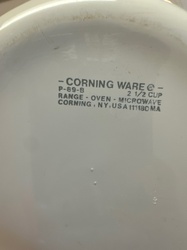
Submitted item photo
Submitted photo · June 2, 2026

User's notes

No additional notes provided.

AI analysis below

AI appraisal

AI analysis & estimate

AI-Generated · Verify before acting

Everything below is generated by AI for informational purposes only. AI can make mistakes — the AI may misidentify items or misattribute them (artist, maker, brand, designer, origin, era). This is not an official valuation and should not be used for insurance, sale, tax, estate, legal, or lending purposes — or any decision requiring a certified appraisal. It is not an authoritative claim about any person, brand, or rights holder — do not share or rely on it as a factual statement about a third party. Always consult qualified professionals before making financial decisions.

Read the full disclaimer

AI Identification

·Not independently authenticated·Verify before acting

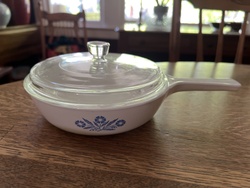
Red Speckled Ceramic Lidded Pot (Tureen/Crock)

Kitchenware / Ceramic Cookware

AI Estimated Value

·Not an official valuation·Verify before acting

$25-45

As of June 2, 2026

AI Item Analysis

·AI can make mistakes·Verify before acting
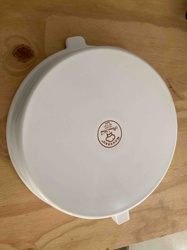
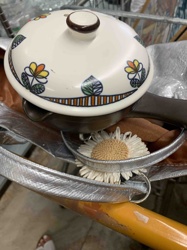
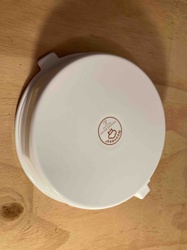
The item is a lidded ceramic pot, appearing to be a soup tureen or a French onion soup crock, characterized by its vibrant red exterior with a speckled or flecked finish. The main body of the pot is spherical or rounded, with a visible handle on the left side, suggesting a second handle on the opposing side, forming a traditional two-handled tureen configuration. The interior and the bottom circular base, where the text 'CAP' is visible, are finished in an unglazed or matte off-white/cream color, providing a stark contrast to the glossy red exterior. The lid is also in the same speckled red finish and features a prominent, circular red knob for lifting. The word 'CAP' is prominently printed in sans-serif capital letters on the bottom, indicating either a brand name, initial, or a functional label (e.g., 'cup' or 'cap-acity'). The overall condition appears good, with a clean finish and no apparent chips, cracks, or significant wear visible from this angle. The speckled glaze suggests a mid-20th century to contemporary manufacturing style, often associated with stoneware or earthenware designed for oven-to-table use. The craftsmanship appears to be of decent quality, with smooth curves and a well-integrated handle design. The contrast between the glazed exterior and unglazed base is typical for ceramic baking dishes, allowing for better heat distribution or to prevent scratching surfaces. The size appears to be moderate, suitable for serving individual portions or a small family.
AI Appraisal Report

·AI can make mistakes·Verify before acting
Upon visual examination of this red speckled ceramic lidded pot, which appears to be a soup tureen or crock, I assess it to be a piece of mass-produced, mid-20th century to contemporary oven-to-table stoneware. The condition appears to be very good, with no visible chips, cracks, or crazing in the glossy red glaze. The unglazed base and interior are typical for this type of functional cookware. The mark 'CAP' is the most significant identifier, but without further context, it is difficult to definitively attribute it to a well-known or highly collectible manufacturer. It could represent an unknown brand, a style, or simply a capacity marking. The market for this type of ceramic cookware is generally driven by utility and decorative appeal rather than high collector value. Comparable individual tureens or crocks from lesser-known or unmarked brands of this era typically sell in the secondary market. The vibrant color and good condition are positive value factors. However, the lack of a recognizable high-end maker's mark, such as Le Creuset, Dansk, or a specific studio potter, significantly limits its potential value. It is a functional and attractive piece of kitchenware, but it does not appear to possess significant rarity. My valuation is based on these factors. To confirm authenticity and manufacturer, an in-person examination would be required to inspect the full maker's mark, weight, and material quality. Tracing the 'CAP' mark through pottery databases would be necessary for a definitive attribution.

Get your items appraised

Instant estimates of your treasures with AI-powered appraisals

Browse More Appraisals