AI estimate as of August 25, 2025 · verify with a professional before acting
AI-Generated · Verify before acting
Everything on this page is generated by AI for informational purposes only. AI can make mistakes — the AI may misidentify items or misattribute them (artist, maker, brand, designer, origin, era). This is not an official valuation and should not be used for insurance, sale, tax, estate, legal, or lending purposes — or any decision requiring a certified appraisal. It is not an authoritative claim about any person, brand, or rights holder — do not share or rely on it as a factual statement about a third party. Always consult qualified professionals before making financial decisions.
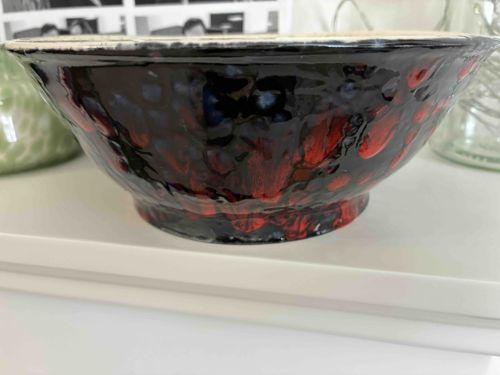
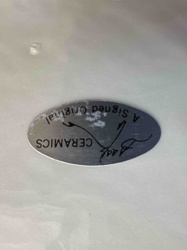
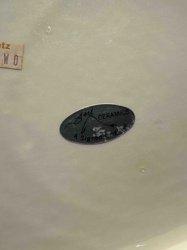
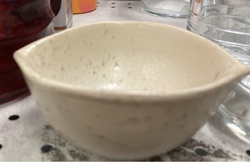
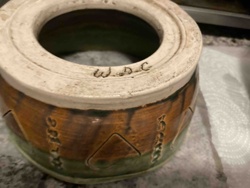
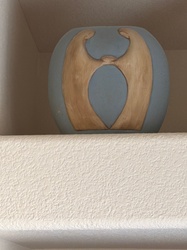
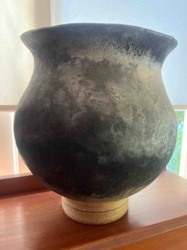
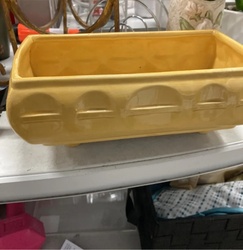
This is a round, footed ceramic bowl featuring a vibrant, reactive glaze. The primary colors of the glaze are deep black and striking red, with scattered areas of apparent dark blue or purple, creating a lava-like or mottled effect across the exterior surface. The texture appears somewhat irregular due to the nature of the glaze application, suggesting a dynamic, almost organic finish. The bowl has a defined footrim, which elevates the main body of the vessel. The rim of the bowl appears to be a contrasting lighter color, possibly an unglazed or differently glazed ceramic. The interior of the bowl cannot be seen, but the exterior suggests a sturdy, possibly handcrafted construction. There are no visible chips, cracks, or significant wear evident from the provided image, and the glaze maintains a high sheen, indicating good overall condition. The style points towards mid-20th century studio pottery or art pottery, possibly dating from the 1960s or 1970s, known for experimental glazes and forms. No maker's marks or signatures are discernible from the image. The craftsmanship appears to be of good quality, given the complexity of the glazes and the consistent form of the bowl, suggesting it could be a decorative art piece or a functional serving bowl.
AI Appraisal Report
Upon my virtual examination of this Reactive Glaze Ceramic Bowl, I find it to be in excellent condition, showing no visible chips, cracks, or significant wear. The glaze retains a high sheen, indicating proper care. Authenticity, based solely on visual cues, points towards a mid-20th century (likely 1960s-1970s) studio or art pottery piece. The dynamic reactive glaze, with its black, red, and subtle blue/purple hues, is characteristic of the experimental approaches prevalent during that era.
From a market perspective, there's a steady demand for well-preserved studio pottery from this period, particularly pieces with unique glazes. Comparables often include works by unidentifiable studio potters, which typically fetch moderate prices unless a significant artist is identified. The absence of a discernible maker's mark limits its value, as signed pieces by known artists command substantially higher prices. Its potential rarity is tied to the unique glaze combination and execution; however, without a maker, it remains a charming decorative piece rather than a collectible rarity with documented provenance. The craftsmanship appears good, suggesting a skilled hand.
To fully authenticate and maximize value, an in-person examination would be crucial to assess tactile qualities, exact weight, and to search for any subtle maker's marks not visible in the image. Provenance documentation, such as original purchase receipts or exhibition history, would significantly enhance its value. Scientific testing of the ceramic body or glaze composition could further confirm its age and origin. Without these, my appraisal is based on visual condition and aesthetic appeal.