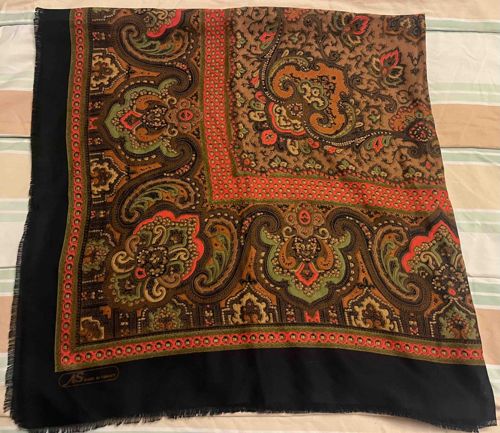
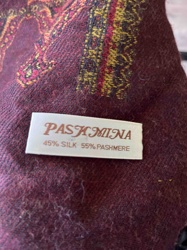
This piece is folded into fourths and is labeled “AS Made in Istanbul”. It was likely purchased in the 1960s.
These notes were written by the person who submitted this item. Appraiser.AI has not verified them, and the AI's identification and estimate may rely on them.
AI Estimated Value
Not an official valuation
$75 - $125
AI estimate as of July 8, 2025 · verify with a professional before acting
AI-Generated · Verify before acting
Everything on this page is generated by AI for informational purposes only. AI can make mistakes — the AI may misidentify items or misattribute them (artist, maker, brand, designer, origin, era). This is not an official valuation and should not be used for insurance, sale, tax, estate, legal, or lending purposes — or any decision requiring a certified appraisal. It is not an authoritative claim about any person, brand, or rights holder — do not share or rely on it as a factual statement about a third party. Always consult qualified professionals before making financial decisions.
This analysis also relies on unverified notes provided by the user, which may be incomplete or inaccurate and could affect the result.
This item is a square-shaped textile, likely a scarf or shawl, featuring a rich and complex paisley pattern. The primary colors of the pattern are earthy tones, including various shades of brown, olive green, dark red/orange, and black, with accents of lighter greens and possibly cream within the intricate designs. The overall design features large, ornate paisley motifs concentrically arranged towards the center, framed by a distinct border. The border itself consists of a black outer edge featuring a fringe, followed by a narrow band of speckled orange/red dots, and then a wider band with repeating smaller paisley or floral elements set against a dark brown background. The textile appears to be woven, possibly from a material like wool, silk, or a blend, given its drape and the visible texture. The edges exhibit a fringed finish, indicating a traditional construction method. The item is folded into approximate quarters, suggesting its original size would be considerably larger when fully unfurled. There are no immediately obvious signs of wear, damage, or significant repairs visible in the provided image; the colors appear vibrant and the fabric seems to maintain its integrity. A label integrated into the black corner of the fabric clearly reads "AS Made in Istanbul." This manufacturer's mark, combined with the likely purchase date in the 1960s and the traditional paisley design, strongly suggests an origin from Turkey and places its estimated age around the mid-20th century. The craftsmanship appears to be of good quality, with well-defined patterns and consistent color application, indicative of a mass-produced, yet carefully designed, accessory of its era.
AI Appraisal Report
Upon my virtual examination of this Vintage "AS Made in Istanbul" Paisley Pattern Scarf/Shawl, I observe a well-preserved textile piece exhibiting hallmarks of its suggested 1960s origin. The intricate paisley pattern, rich earthy color palette (browns, olive green, dark red/orange, black), and fringed edges are consistent with traditional Turkish textile artistry of that period.
From the image, the condition appears excellent, with vibrant colors and no visible signs of wear, tears, stains, or repairs. The clear "AS Made in Istanbul" label bolsters its authenticity as a Turkish-made item, correlating well with the owner's stated purchase in the 1960s.
Regarding market conditions, vintage scarves and shawls, particularly those with identifiable origins and quality craftsmanship, have a consistent niche demand. Factors impacting value for this piece include its apparent excellent condition, the classic and enduring appeal of the paisley design, and its Turkish origin, which often signifies quality in such textiles. While not exceptionally rare, unique patterns or superior quality pieces from specific regions do draw collector interest.
However, it is crucial to state the limitations of this appraisal. My assessment of condition and authenticity is based solely on the provided image. A physical examination is essential to determine the exact material composition (e.g., silk, wool blend), assess the fabric's true hand and drape, confirm the absence of subtle damages or repairs not visible in the photo, and verify the integrity of the weave. Furthermore, while the label and design strongly suggest authenticity, provenance documentation (like original purchase receipts) would provide irrefutable evidence. Scientific testing might be employed to definitively date the fibers if provenance were lacking, but in this case, it appears less critical given the label and design aesthetics. The folded state also prevents me from assessing its full dimensions and the complete pattern layout. Despite these limitations from a remote appraisal, the piece presents very favorably.