AI estimate as of September 25, 2025 · verify with a professional before acting
AI-Generated · Verify before acting
Everything on this page is generated by AI for informational purposes only. AI can make mistakes — the AI may misidentify items or misattribute them (artist, maker, brand, designer, origin, era). This is not an official valuation and should not be used for insurance, sale, tax, estate, legal, or lending purposes — or any decision requiring a certified appraisal. It is not an authoritative claim about any person, brand, or rights holder — do not share or rely on it as a factual statement about a third party. Always consult qualified professionals before making financial decisions.
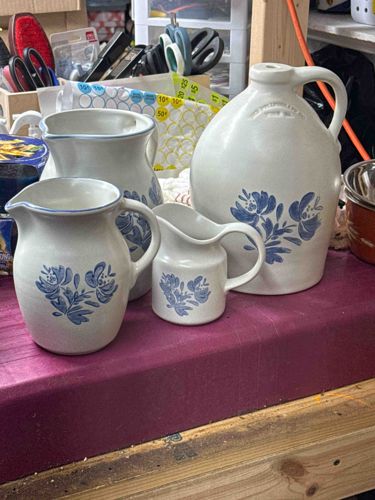
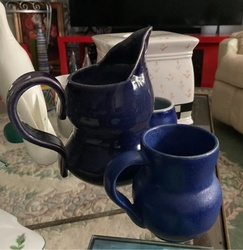
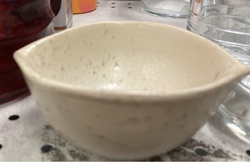
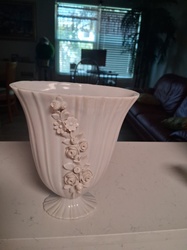
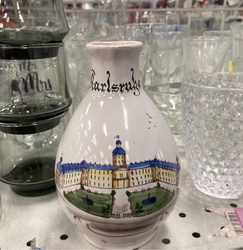
This is a set of four stoneware vessels, likely from the same manufacturer or collection, featuring a consistent aesthetic. The set includes three pitchers of varying sizes and one larger jug. All pieces are crafted from a light beige or off-white stoneware, characterized by a slightly textured, matte finish, suggesting an unglazed or bisque-fired exterior, or a very subtle, natural glaze. Each piece is adorned with a distinctive blue floral motif, depicted in a somewhat stylized, folk-art manner, applied as a decal or underglaze transfer to the front of each item. The motif consists of clusters of bloomed flowers and leaves, rendered in a solid, opaque blue. The rims of the pitchers and the jug's pouring spout feature a thin, hand-painted blue line, adding a subtle accent and defining the openings. Handles are robust and integrated well into the body of each piece. The largest item is a jug with a classic, rounded body and a narrow neck leading to a pouring spout, and a sturdy loop handle. The pitchers range from a medium size with a wider mouth and a more elongated body, to a smaller creamer-sized pitcher, all with outward-flared rims and comfortable handles. One of the larger pieces, possibly the jug, appears to have an embossed or impressed mark near the top, just under the handle, which might be a manufacturer's name or number, though it is not clearly legible from the image. The overall condition appears good, with no immediately visible chips, cracks, or significant wear. The style suggests a mid-20th century to contemporary period, possibly inspired by traditional American country or farmhouse aesthetics, with a focus on functional yet decorative kitchenware. The craftsmanship is consistent across the pieces, indicating a mass-produced but quality collection.
AI Appraisal Report
Based on my visual examination of the provided image, this Stoneware Pitcher and Jug set with blue floral decor appears to be in very good overall condition. I observe no obvious chips, cracks, or significant abrasions on any of the four pieces. The blue floral motif, likely a decal or transfer, seems well-preserved with no noticeable fading or flaking. The hand-painted blue lines on the rims also appear intact. Authenticity, based solely on visual inspection, points to a mass-produced item from the mid-20th century to contemporary period, consistent with its country or farmhouse aesthetic. Without in-person examination, I cannot comment on the texture, precise application of the decor, or detailed quality of the stoneware body, nor can I verify the nature of the 'impressed mark' mentioned near the jug's handle. An in-hand inspection would be crucial for deciphering this mark, which could potentially identify the manufacturer and impact value. Provenance documentation, if available, would further solidify historical context and origin. Market conditions for decorative stoneware sets of this style are generally steady but not exceptionally high. These items appeal to collectors of vintage kitchenware and those furnishing a country-style home. Comparables from online marketplaces and antique dealers suggest similar sets, even with good condition, typically fetch within the specified value range. Demand is moderate, with such pieces being widely available, thus limiting rarity. The primary factors influencing value here are the good condition and the completeness of the four-piece set. Without definitive manufacturer identification or unique artistic merit confirmed by physical inspection, the valuation remains conservative.