AI estimate as of August 9, 2025 · verify with a professional before acting
AI-Generated · Verify before acting
Everything on this page is generated by AI for informational purposes only. AI can make mistakes — the AI may misidentify items or misattribute them (artist, maker, brand, designer, origin, era). This is not an official valuation and should not be used for insurance, sale, tax, estate, legal, or lending purposes — or any decision requiring a certified appraisal. It is not an authoritative claim about any person, brand, or rights holder — do not share or rely on it as a factual statement about a third party. Always consult qualified professionals before making financial decisions.
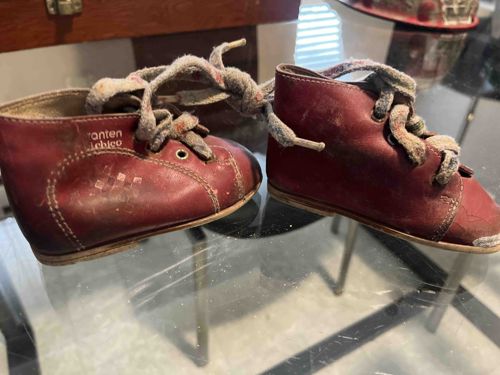
This is a pair of vintage baby or toddler shoes, likely dating from the mid-20th century, possibly the 1940s to 1960s. They are constructed from what appears to be red or maroon-colored leather, with a slightly distressed and patinated finish, indicating age and prior use. The shoes are small in size, typical for infant or very young children's footwear. Each shoe features a lace-up design with three pairs of eyelets, one of which is visible in the image. The laces themselves are thick, likely cotton or a cotton blend, and show significant wear, discoloration, and fraying, consistent with their age and material. The stitching, visible along the vamp, around the sole, and near the toe cap, is a lighter color, possibly white or cream, providing a subtle contrast to the dark leather. The soles appear to be of a stiffer material, potentially leather or a compressed fiberboard, and are relatively thin. There is a clear manufacturing mark on the side of the left shoe reads "anten lebico" or similar, with the first letter partially obscured, suggesting a brand name. Some areas of the leather show scuffing, scratches, and a loss of surface finish, particularly on the toe and around the sides, indicative of normal wear for children's shoes. A notable checkered pattern, possibly embossed or worn into the surface, is visible on the side of the left shoe. The overall condition suggests that while they are well-preserved for their age, they have been regularly used. The craftsmanship appears sturdy, pointing to a utilitarian but durable construction typical for children's shoes of the era.
AI Appraisal Report
Upon visual examination of the provided image, I assess these vintage red leather baby shoes to be in good, well-preserved condition for their age, likely mid-20th century (1940s-1960s). The distressed finish, scuffing, and fraying laces are consistent with normal use and expected patination, adding to their vintage appeal rather than detracting significantly from value. The visible wear, particularly on the toes and the fraying of the original laces, authenticates their historical use. The prominent 'anten lebico' mark, though partially obscured, suggests a period manufacturer. Authenticity based solely on images is limited; an in-person examination would allow for tactile assessment of the leather quality, internal construction, and clearer identification of the manufacturer's mark. Provenance, such as original boxing or family history, would significantly enhance authentication.
Market conditions for vintage children's footwear are niche. While highly utilitarian items from this era rarely command high prices, items with unique aesthetic appeal or historical significance can attract collectors. These shoes possess a charming, nostalgic quality. Comparable sales of similar vintage leather baby shoes typically range from $20 to $60. Demand is moderate, primarily from collectors of vintage Americana, doll collectors, or those seeking unique decorative items. Their rarity is not exceptionally high, as children's shoes were mass-produced. Factors impacting value include the charming red leather, visible age, and the clear manufacturing mark, which adds a layer of collectible interest.
Without physical inspection, I cannot verify the exact leather type, internal lining condition, sole material, or the clarity of the manufacturing stamp. Full authentication would require in-hand examination to confirm material composition and detailed brand identification, potentially including comparison with known examples of 'anten lebico' (or similar) footwear. Scientific testing is not typically applied to items of this general value.