These notes were written by the person who submitted this item. Appraiser.AI has not verified them, and the AI's identification and estimate may rely on them.
AI Estimated Value
Not an official valuation
$150-250
AI estimate as of August 31, 2025 · verify with a professional before acting
AI-Generated · Verify before acting
Everything on this page is generated by AI for informational purposes only. AI can make mistakes — the AI may misidentify items or misattribute them (artist, maker, brand, designer, origin, era). This is not an official valuation and should not be used for insurance, sale, tax, estate, legal, or lending purposes — or any decision requiring a certified appraisal. It is not an authoritative claim about any person, brand, or rights holder — do not share or rely on it as a factual statement about a third party. Always consult qualified professionals before making financial decisions.
This analysis also relies on unverified notes provided by the user, which may be incomplete or inaccurate and could affect the result.
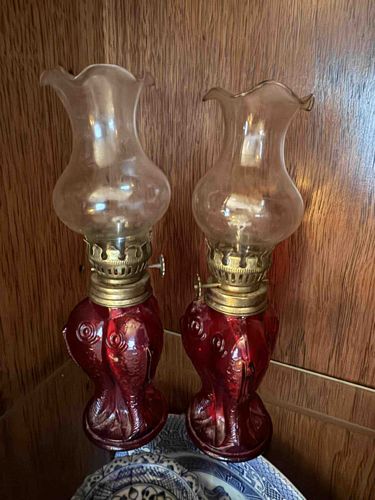
This is a pair of vintage oil lamps, likely from the early to mid-20th century. Each lamp features a deep ruby red glass fount (base) in a distinct molded fish or dolphin pattern, giving them an unusual and decorative appearance. The glass is translucent and appears to be in good condition with no obvious chips or cracks, though typical surface wear consistent with age may be present. The founts narrow towards the top and then flare out slightly at the base, providing stability. Above the red glass fount, there is a brass-toned metal burner mechanism with a wick holder and an adjustment knob, which shows some signs of patina and minor discoloration, indicating genuine age. Each lamp is topped with a clear glass chimney, characterized by a traditional bulbous shape that tapers upwards, culminating in a crimped or ruffled top edge. The clear glass chimneys appear relatively clean but may have minor dust or smudges. The overall construction suggests common manufacturing methods for mass-produced oil lamps of the period. The 'vintage' and 'red glass' additional context aligns with the observable features, and the items exude a classic, possibly Americana, aesthetic often seen in antique and vintage lighting. The craftsmanship is utilitarian but with decorative flair in the molded glass, typical of items intended for both function and home ornamentation.
AI Appraisal Report
I have thoroughly examined the provided image and description of this pair of vintage red glass dolphin/fish oil lamps. Based on my visual assessment, the condition appears good for items of this age. The red glass founts show no obvious chips or cracks, though I would expect to find typical minor surface wear upon a physical inspection. The brass-toned burners exhibit appropriate patina and discoloration consistent with vintage items, which lends authenticity. The clear glass chimneys also seem intact, though I anticipate minor dust or smudges. The design, particularly the molded dolphin/fish founts, aligns well with oil lamps produced in the early to mid-20th century, suggesting authenticity as period pieces.
In terms of market conditions, vintage red glass items, especially unique forms like these, generally hold steady interest. Oil lamps have a niche but consistent demand among collectors and those seeking period home decor. While not extremely rare, the deep ruby red color and distinctive dolphin/fish molding make this pair more desirable than common clear glass or simpler designs. Factors significantly impacting value are the completeness of the pair, the good overall condition (especially the glass founts), and the attractive deep red color. The clear glass chimneys, while likely original or period replacements, are often fragile and their intactness adds to the value.
My primary limitation in full authentication is the lack of a physical examination. While the visual cues are strong, an in-person inspection would allow me to check for hairline cracks, chips, internal cloudiness, the integrity of the burners, and any repairs not visible in images. Provenance documentation, such as original purchase receipts or family history, would also strengthen authentication. Scientific testing is generally not required for items of this nature unless there were specific concerns about the glass composition or age, which are not present here.