AI Appraisal Estimate

AI-generated estimates · not official valuations

From the user

What was submitted

Photo and notes provided by the user — not generated by AI

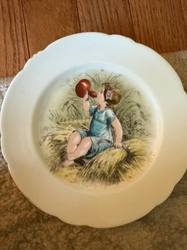
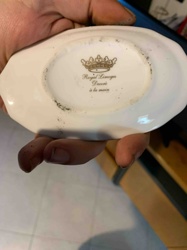
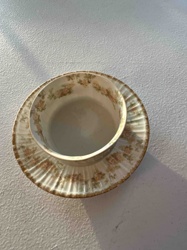
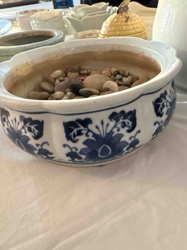
Submitted item photo
Submitted photo · May 18, 2026

User's notes

No additional notes provided.

AI analysis below

AI appraisal

AI analysis & estimate

AI-Generated · Verify before acting

Everything below is generated by AI for informational purposes only. AI can make mistakes — the AI may misidentify items or misattribute them (artist, maker, brand, designer, origin, era). This is not an official valuation and should not be used for insurance, sale, tax, estate, legal, or lending purposes — or any decision requiring a certified appraisal. It is not an authoritative claim about any person, brand, or rights holder — do not share or rely on it as a factual statement about a third party. Always consult qualified professionals before making financial decisions.

Read the full disclaimer

AI Identification

·Not independently authenticated·Verify before acting

Vintage Limoges-Style French Porcelain Pedestal Compote Bowl

Antique & Vintage Home Decor / Porcelain & Fine China

AI Estimated Value

·Not an official valuation·Verify before acting

$125 - $175

As of May 18, 2026

AI Item Analysis

·AI can make mistakes·Verify before acting
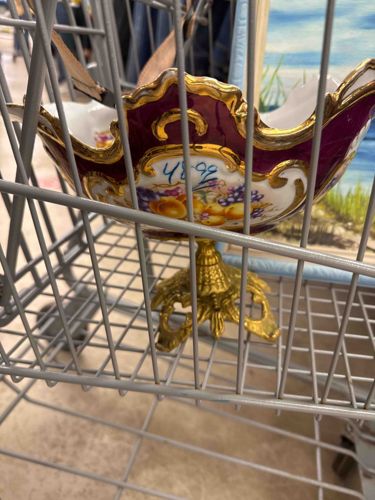
This is a decorative pedestal compote bowl, characteristic of vintage French or Bavarian porcelain styles such as those produced by Limoges. The item features a scalloped, wavy rim accented with heavy 22k gold-gilded flourishes. The exterior of the porcelain body is finished in a vibrant mulberry or plum-colored luster glaze, contrasted by white reserves that depict a hand-painted or transfer-ware fruit still life, including grapes and peaches. The porcelain vessel is mounted atop an ornate, cast brass or bronze-finished metal pedestal base with a four-footed baroque design. The interior of the bowl appears to be a clean white glaze. Notably, there is a handwritten price or inventory number '48.99' in blue marker directly on the porcelain, which would require careful cleaning to prevent damage to the finish. In terms of condition, there is visible minor crazing on the purple glaze and some wear to the gold gilding along the high-contact areas of the rim, consistent with a mid-20th-century age. The metal base shows a slight patina, which is desirable for its age. Overall, the piece exhibits high-quality craftsmanship, reflecting a mid-to-late 20th-century revival of 19th-century Neo-Rococo aesthetics.

AI Appraisal Report

·AI can make mistakes·Verify before acting
I have conducted a visual examination of this pedestal compote, a decorative piece evocative of the mid-20th-century Neo-Rococo revival. The item displays characteristic hallmarks of French or Bavarian 'Limoges-style' porcelain, notably the rich mulberry luster glaze and heavy gold gilding. The mounting to an ornate চার-footed metal base suggests a production date between 1950 and 1970, rather than an 18th or 19th-century origin. Condition-wise, while the structural integrity appears sound, the visible crazing in the purple glaze and the wear to the 22k gold flourishes are typical of domestic use but do slightly depress the valuation. The blue marker notation '48.99' on the glaze is a significant cosmetic detraction; if this has leached into the crazing, it may be permanent. The market for mid-century revival porcelain is currently stable but specialized. Similar pieces by manufacturers like Fragonard or Courting Couple style exports typically realize between $100 and $200 at boutique auctions. The fruit motif is classic, though less collectible than scenic figurative transfers. High-quality craftsmanship keeps the value out of the 'common' tier, yet the lack of a visible maker's mark in the images limits a premium valuation. Limitation on Authenticity: This appraisal is based strictly on visual data. I cannot verify the metallic composition of the base (brass vs. bronze-finished pot metal) nor the specific manufacturer without inspecting the underside of the porcelain. Full authentication would require removing the metal mounting to check for hidden backstamps and a tactile assessment of the glaze depth and paste density. Provenance or an original purchase receipt from a recognized European importer would significantly bolster the attribution.

Get your items appraised

Instant estimates of your treasures with AI-powered appraisals

Browse More Appraisals