AI Appraisal Estimate

AI-generated estimates · not official valuations

From the user

What was submitted

Photo and notes provided by the user — not generated by AI

Submitted item photo
Submitted photo · May 31, 2026

User's notes

No additional notes provided.

AI analysis below

AI appraisal

AI analysis & estimate

AI-Generated · Verify before acting

Everything below is generated by AI for informational purposes only. AI can make mistakes — the AI may misidentify items or misattribute them (artist, maker, brand, designer, origin, era). This is not an official valuation and should not be used for insurance, sale, tax, estate, legal, or lending purposes — or any decision requiring a certified appraisal. It is not an authoritative claim about any person, brand, or rights holder — do not share or rely on it as a factual statement about a third party. Always consult qualified professionals before making financial decisions.

Read the full disclaimer

AI Identification

·Not independently authenticated·Verify before acting

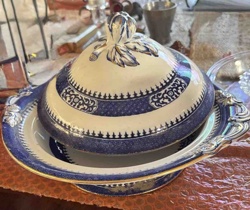
Alfred Meakin Royal Semi-Porcelain Hanwell Pattern Tableware

Antique Ceramics and Pottery

AI Estimated Value

·Not an official valuation·Verify before acting

$25 - $45

As of May 31, 2026

AI Item Analysis

·AI can make mistakes·Verify before acting
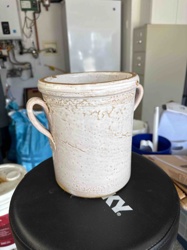
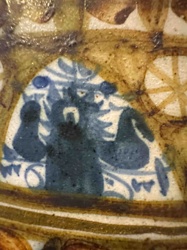
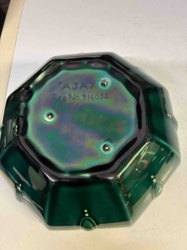
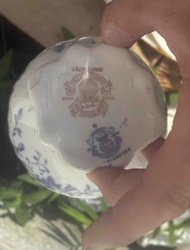
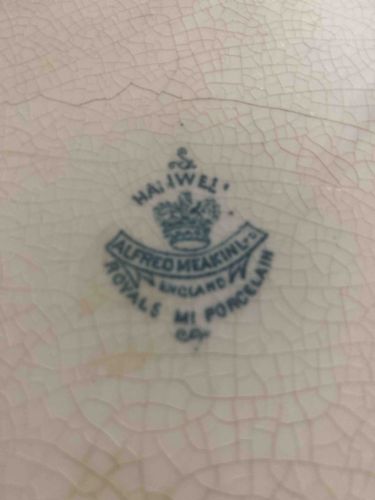
This item is a piece of antique English ceramic tableware, identifiable by its clear backstamp. The material is 'Royal Semi-Porcelain', a high-quality earthenware designed to mimic the appearance and properties of fine porcelain. The item features a cream-colored body with an extensive and uniform network of fine surface crazing, which is a common aging characteristic in glazed ceramics where the glaze develops tiny cracks relative to the body's expansion over time. There are noticeable areas of yellow-to-brown staining or discoloration under the glaze, likely caused by organic matter or oils seeping into the porous body through the crazing network (often referred to as 'tea-staining'). The blue underglaze backstamp is prominent, featuring a crown surmounting a ribbon that reads 'ALFRED MEAKIN LTD', with 'ENGLAND' below it. The pattern name 'HANWELL' is arched at the top, and 'ROYAL SEMI-PORCELAIN' is printed at the bottom. Alfred Meakin operated in Tunstall, Stoke-on-Trent, and the specific 'Ltd' designation combined with this style of crown suggests a production date between the late 19th century and the early 20th century (circa 1891-1913). While the piece shows significant patina from age, the backstamp remains legible, serving as an important mark of British ceramic heritage and manufacturing quality from the Victorian/Edwardian era.
AI Appraisal Report

·AI can make mistakes·Verify before acting
I have conducted a visual inspection of the Alfred Meakin 'Hanwell' pattern piece via the provided images. The backstamp confirms its origin from the Royal Albert, Victoria, and Highgate Potteries in Tunstall, specifically dating the piece to the late Victorian or early Edwardian period (post-1891). Authenticity is supported by the specific typography of the 'Ltd' designation and the aesthetic characteristics of the flow-blue or blue transferware common to England's Staffordshire region during this era. Condition is a primary factor in this valuation. The piece exhibits extensive crazing and significant 'tea-staining' or oxidized discoloration. While some collectors appreciate this 'patina' as proof of age, in the current market for semi-porcelain, these are considered condition defects that detract from use and display value. The Hanwell pattern is attractive but not exceptionally rare; Alfred Meakin was a high-volume producer, and many similar transferware patterns remain available on the secondary market. Comparable sales for individual pieces of Meakin Royal Semi-Porcelain in this condition typically fall within the $20 to $50 range. Demand for stained transferware has softened recently as collectors prioritize 'cabinet-ready' pieces without structural or aesthetic degradation. Limitations: This appraisal is based on photographic evidence only. A physical examination is required to check for 'fleabite' chips, hairline fractures hidden by staining, or professional restorations. Full authentication and valuation would benefit from provenance documentation or an ultrasonic cleaning trial to determine if staining is reversible. Digital images cannot definitively confirm the 'ring' of the ceramic or the depth of surface abrasions.

Get your items appraised

Instant estimates of your treasures with AI-powered appraisals

Browse More Appraisals