AI Appraisal Estimate

AI-generated estimates · not official valuations

From the user

What was submitted

Photo and notes provided by the user — not generated by AI

Submitted item photo
Submitted photo · May 28, 2026

User's notes

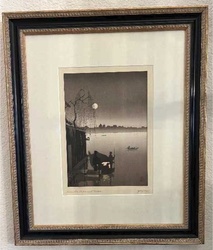
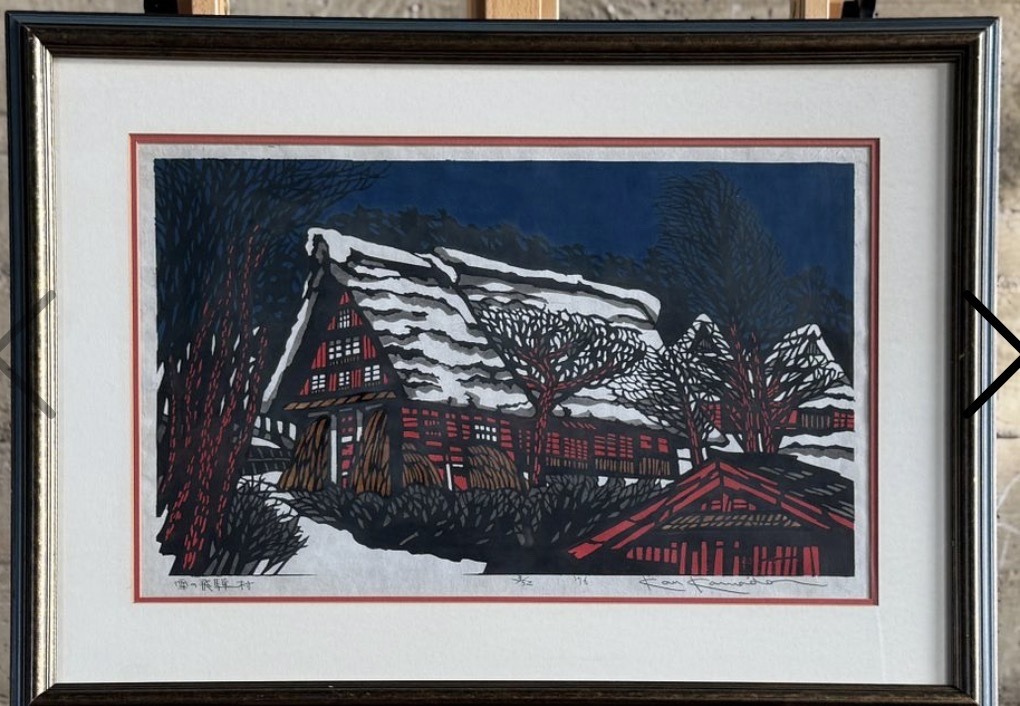
KAN KAWADA, "KURASHIKIGAWA"

AI analysis below

AI appraisal

AI analysis & estimate

AI-Generated · Verify before acting

Everything below is generated by AI for informational purposes only. AI can make mistakes — the AI may misidentify items or misattribute them (artist, maker, brand, designer, origin, era). This is not an official valuation and should not be used for insurance, sale, tax, estate, legal, or lending purposes — or any decision requiring a certified appraisal. It is not an authoritative claim about any person, brand, or rights holder — do not share or rely on it as a factual statement about a third party. Always consult qualified professionals before making financial decisions.

Note

This analysis also relies on unverified notes provided by the user, which may be incomplete or inaccurate and could affect the result.

Read the full disclaimer

AI Identification

·Not independently authenticated·Verify before acting

Kan Kawada - 'Snow in Hida Village' (Hida no Sato), Woodblock Print

Fine Art - Japanese Woodblock Prints

AI Estimated Value

·Not an official valuation·Verify before acting

$600 - $850

As of May 28, 2026

AI Item Analysis

·AI can make mistakes·Verify before acting
This is an original Japanese woodblock print (sosaku-hanga style) by the artist Kan Kawada (1927-1999). Although titled 'Kurashikigawa' in the user context, the pencil inscription at the bottom left reads 'Snow in Hida Village' (Hida no Sato), depicting the iconic gassho-zukuri farmhouses of the Gifu Prefecture under a heavy blanket of snow. The artwork features a striking palette of deep midnight blue, crisp white, and earthy brick-red, creating a high-contrast nocturnal winter scene. The composition is characterized by Kawada's signature bold, graphic lines and stylized textures, particularly visible in the snow-laden roofs and the intricate lattices of the wooden structures. The print is executed on traditional high-quality washi paper with visible natural fibers. It is framed with a professional double mat—an inner red accent mat that echoes the building tones and a primary cream-colored outer mat. It is housed in a contemporary dark wood frame with silver-toned inner ribbing. The piece is hand-signed 'Kan Kawada' in pencil at the bottom right and includes a limited edition numbering (possibly 10/200, though partly obscured). The condition appears excellent with no visible foxing, fading, or water damage, though a slight ripple in the paper suggests it is loosely mounted within the frame. The work likely dates to the late 20th century, showcasing the artist's mastery of modernizing traditional folk architecture through simplified forms and saturated color blocks.

AI Appraisal Report

·AI can make mistakes·Verify before acting
I have carefully examined the image of 'Snow in Hida Village' (Hida no Sato) by Kan Kawada (1927–1999). Identifying this as a Sosaku-hanga (creative print) work, I note the artist's characteristic use of bold, textured gouges and a vibrant, modern color palette. The print appears to be an original limited edition, pencil-signed and numbered. The condition appears near-fine, with the saturation of the midnight blue and brick reds suggesting minimal UV exposure. The slight rippling of the washi paper is typical of loose archival mounting and generally does not detract from the value unless accompanied by toning. Kan Kawada’s work occupies a stable niche in the mid-century Japanese print market. While not reaching the astronomical prices of Saitō or Hasui, Kawada is highly collected for his architectural themes. The 'Gassho-zukuri' subjects are among his most desirable due to their iconic cultural status. Recent auction comparables for similarly sized Kawada architectural prints range from $400 to $900 depending on the complexity of the scene and the edition number. While visual cues—including the paper texture, signature style, and ink absorption—strongly suggest authenticity, this appraisal is based on digital imagery. A full authentication would require physical inspection to verify the watermark, ensure the pigments are not modern digital facsimiles, and examine the reverse for foxing or 'matte burn.' I recommend retaining all provenance documents or original gallery labels from the reverse of the frame. This piece represents a high-quality example of late 20th-century Japanese graphic art, benefiting from its professional framing and popular subject matter.

Get your items appraised

Instant estimates of your treasures with AI-powered appraisals

Browse More Appraisals