AI Appraisal Estimate

AI-generated estimates · not official valuations

From the user

What was submitted

Photo and notes provided by the user — not generated by AI

Submitted item photo
Submitted photo · June 27, 2026

User's notes

No additional notes provided.

AI analysis below

AI appraisal

AI analysis & estimate

AI-Generated · Verify before acting

Everything below is generated by AI for informational purposes only. AI can make mistakes — the AI may misidentify items or misattribute them (artist, maker, brand, designer, origin, era). This is not an official valuation and should not be used for insurance, sale, tax, estate, legal, or lending purposes — or any decision requiring a certified appraisal. It is not an authoritative claim about any person, brand, or rights holder — do not share or rely on it as a factual statement about a third party. Always consult qualified professionals before making financial decisions.

Read the full disclaimer

AI Identification

·Not independently authenticated·Verify before acting

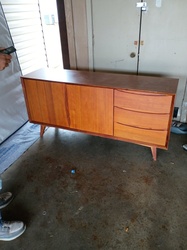
Art Deco Style Side Table with Burl Wood Drawer

Furniture

AI Estimated Value

·Not an official valuation·Verify before acting

$250 - $450

As of June 27, 2026

AI Item Analysis

·AI can make mistakes·Verify before acting
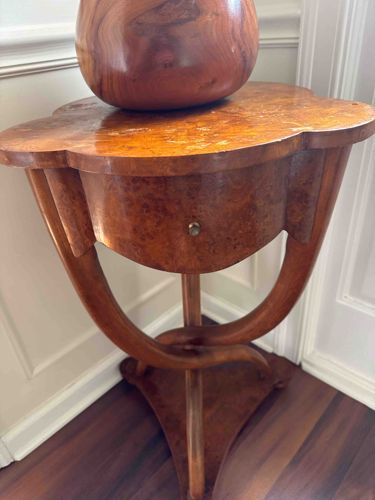
This is an Art Deco style side table, likely dating from the early to mid-20th century. It features a serpentine or scalloped top, possibly clover-shaped, crafted from a warm-toned wood that exhibits a visible wood grain, though the finish on the top appears aged and somewhat chipped or worn in patches. Below the tabletop, there is a single, central drawer with a distinctive burl wood veneer, giving it a rich, mottled pattern. The drawer is equipped with a small, brass-colored knob in the center. The table's support structure consists of a central column that descends to a tripartite or tripod base. Two graceful, U-shaped curved supports extend from the underside of the main body, elegantly connecting to the central column, adding to its Art Deco aesthetic. The overall construction appears to be of solid wood, with veneers used for decorative effect on the drawer and possibly other flat surfaces. The wood color is a medium to dark brown with reddish undertones. The visible wear on the tabletop, including some flaking or loss of finish, suggests age and consistent use. The design elements, particularly the curved lines and the use of burl wood, are indicative of the Art Deco period, emphasizing both functionality and decorative appeal. The craftsmanship appears to be of good quality, with smoothly integrated curves and well-fitted components, despite the surface condition issues.
AI Appraisal Report

·AI can make mistakes·Verify before acting
Upon visual examination of the provided images, this side table presents as a well-crafted piece in the Art Deco style, likely dating from the 1930s or 1940s. The design elements, including the serpentine top, U-shaped supports, and the use of a distinctive burl wood veneer on the drawer, are characteristic of the period. The construction appears to be solid wood with veneer accents. The primary factor impacting its value is its condition. The tabletop exhibits significant wear, with noticeable chipping and loss to the finish, which detracts from its aesthetic appeal and will require professional restoration. The main structure and the burl drawer front appear to be in better condition, which is a positive attribute. In the current market, authentic Art Deco furniture remains popular, but condition is paramount. Similar side tables in excellent, restored condition can fetch upwards of $600-$800, while pieces by notable designers command significantly more. However, given the visible damage to the top, this table falls into a lower price bracket. Its value is primarily as a 'project piece' for restoration. The moderate rarity and appealing design prevent a steeper decline in value. It is important to note the limitations of an appraisal based solely on images. I cannot confirm the maker, the specific woods used, the joinery techniques, or the originality of the hardware without a physical inspection. Full authentication would require examining the piece for any maker's marks, assessing the interior construction, and potentially analyzing the finish to confirm its age. Provenance documentation would significantly aid in verification and could increase its value.

Get your items appraised

Instant estimates of your treasures with AI-powered appraisals

Browse More Appraisals