Mousterian Style Chert Hand Axe Scraper
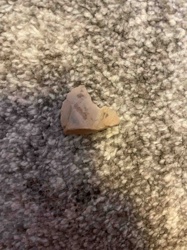
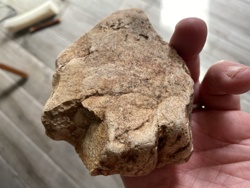
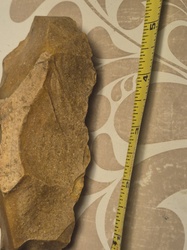
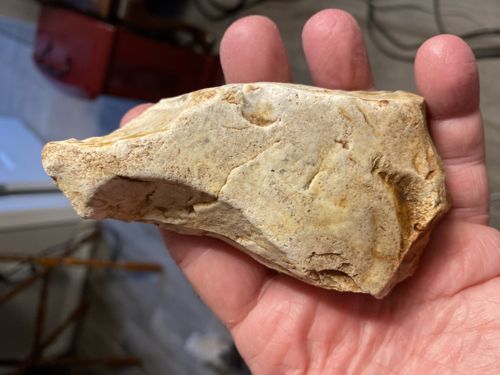
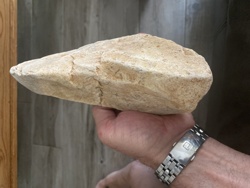
This lithic artifact is identified as a bifacial hand axe and scraper tool, measuring approximately 4 inches in length by 2.5 inches in width. It is fashioned from a high-silica lithic material, specifically chert, exhibiting a light tan to creamy beige coloration with subtle iron oxide staining indicative of long-term burial in Okalahoma soil. The tool features a robust, ergonomic design intended for handheld use without a shaft. The construction showcases distinct percussion flaking techniques, with a visible side-scraper edge that has been refined through secondary retouching to create a sharp, durable working surface. The item displays a significant desert varnish or heavy patina across its surfaces, smoothing the edges of the flake scars, which is a key indicator of prehistoric age. While the item is described in the context of Mousterian technology (typically associated with the Middle Paleolithic and Neanderthals in Eurasia), its recovery in Guthrie, OK, suggests it belongs to a North American Paleo-Indian or Archaic tradition utilizing similar bifacial reduction strategies. The physical condition is excellent for a field-found artifact, showing no modern fractures or significant impact damage beyond its original manufacture and ancient use-wear. The craftsmanship demonstrates high skill in stone knapping, with deliberate thinning of the flake to allow for a comfortable grip and a functional, tapered point.
AI-Generated Appraisal Disclaimer
Estimated Value
$150 - $300
Basic Information
Category
Prehistoric Stone Tool / Archaeological Artifact
Appraised On
February 28, 2026
Estimated Value
$150 - $300
Additional Details Provided By Owner
User Provided Information
A middle Paleolithic Mousterian chert hand axe scraper tool found in Guthrie , OK measuring 4" x 2.5"
Item Description
This lithic artifact is identified as a bifacial hand axe and scraper tool, measuring approximately 4 inches in length by 2.5 inches in width. It is fashioned from a high-silica lithic material, specifically chert, exhibiting a light tan to creamy beige coloration with subtle iron oxide staining indicative of long-term burial in Okalahoma soil. The tool features a robust, ergonomic design intended for handheld use without a shaft. The construction showcases distinct percussion flaking techniques, with a visible side-scraper edge that has been refined through secondary retouching to create a sharp, durable working surface. The item displays a significant desert varnish or heavy patina across its surfaces, smoothing the edges of the flake scars, which is a key indicator of prehistoric age. While the item is described in the context of Mousterian technology (typically associated with the Middle Paleolithic and Neanderthals in Eurasia), its recovery in Guthrie, OK, suggests it belongs to a North American Paleo-Indian or Archaic tradition utilizing similar bifacial reduction strategies. The physical condition is excellent for a field-found artifact, showing no modern fractures or significant impact damage beyond its original manufacture and ancient use-wear. The craftsmanship demonstrates high skill in stone knapping, with deliberate thinning of the flake to allow for a comfortable grip and a functional, tapered point.
Get Your Items Appraised
Instant estimates of your treasures with AI-powered instant appraisals