AI Appraisal Estimate

AI-generated estimates · not official valuations

From the user

What was submitted

Photo and notes provided by the user — not generated by AI

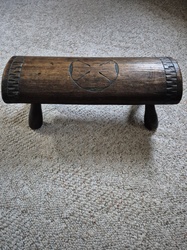
Submitted item photo
Submitted photo · May 28, 2026

User's notes

No additional notes provided.

AI analysis below

AI appraisal

AI analysis & estimate

AI-Generated · Verify before acting

Everything below is generated by AI for informational purposes only. AI can make mistakes — the AI may misidentify items or misattribute them (artist, maker, brand, designer, origin, era). This is not an official valuation and should not be used for insurance, sale, tax, estate, legal, or lending purposes — or any decision requiring a certified appraisal. It is not an authoritative claim about any person, brand, or rights holder — do not share or rely on it as a factual statement about a third party. Always consult qualified professionals before making financial decisions.

Read the full disclaimer

AI Identification

·Not independently authenticated·Verify before acting

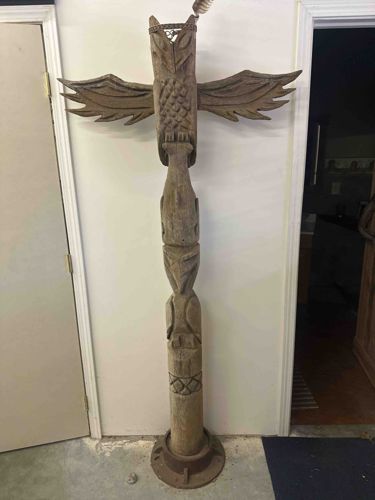
Carved Wooden Totem Pole

Art and Collectibles / Wood Carvings

AI Estimated Value

·Not an official valuation·Verify before acting

$1,200 - $1,800

As of May 28, 2026

AI Item Analysis

·AI can make mistakes·Verify before acting
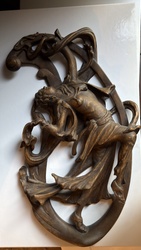
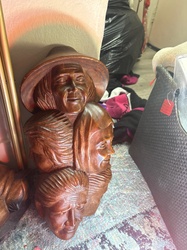
This is a tall, hand-carved wooden totem pole standing approximately 6 to 7 feet high, exhibiting a vertical stack of zoomorphic figures. The top-most figure is an owl with outspread wings, featuring intricate feather patterns on the chest and a decorative metallic crown or mesh element at the top. Below the owl is a sequence of figures, likely representing a fish or whale, followed by smaller bird-like or human-like crests, and ending in a base pillar with cross-hatched carvings. The wood is naturally weathered with a grayish-brown patina, suggesting it has been exposed to the elements or is of significant age, likely mid-20th century or later. It is mounted into a heavy circular metal base for stability. The carving shows rustic craftsmanship with visible tool marks across the wings and body, indicating it was sculpted by hand rather than mass-produced. There are noticeable surface drying cracks (checking) throughout the grain, particularly in the lower vertical segments, which is common for solid timber carvings. No specific maker's marks or signatures are visible in the photograph. The style appears to be an interpretation of Pacific Northwest indigenous art, though it may be a decorative folk art reproduction.
AI Appraisal Report

·AI can make mistakes·Verify before acting
I have completed a visual analysis of the 6-to-7-foot hand-carved wooden totem pole. The piece displays a traditional vertical narrative of zoomorphic figures, topped by a prominent owl with outspread wings. My physical assessment of the surface reveals significant weathering and deep longitudinal checking (drying cracks), particularly in the lower cedar or fir timber. These features, along with the oxidation on the metal base, suggest a mid-20th-century origin. The carving technique is rustic and expressive, though it lacks the specific stylistic formalisms usually associated with high-market Master Carvers from First Nations clans (such as Haida or Tlingit). It is likely a high-quality folk art interpretation or a decorative commission rather than a ceremonial object. The current market for Pacific Northwest-style carvings is bifurcated. Provenanced indigenous pieces command five-figure sums, while unsigned, decorative folk art poles of this size typically realize prices in the $1,000 to $2,000 range. Its height and the dramatic owl motif enhance its 'statement piece' appeal for interior design or garden focal points. The value is slightly tempered by the lack of a visible signature and the structural drying cracks, which are stable but aesthetically distracting to some collectors. Note that this appraisal is based on photographic evidence. A definitive valuation would require in-person inspection to verify wood type, check for hidden signatures, and assess structural integrity within the metal mount. To authenticate the piece as a genuine First Nations work, professional provenance documentation or a bill of sale from a recognized tribal artisan would be required. Without such documentation, it is valued as an anonymous folk art carving.

Get your items appraised

Instant estimates of your treasures with AI-powered appraisals

Browse More Appraisals