AI estimate as of August 30, 2025 · verify with a professional before acting
AI-Generated · Verify before acting
Everything on this page is generated by AI for informational purposes only. AI can make mistakes — the AI may misidentify items or misattribute them (artist, maker, brand, designer, origin, era). This is not an official valuation and should not be used for insurance, sale, tax, estate, legal, or lending purposes — or any decision requiring a certified appraisal. It is not an authoritative claim about any person, brand, or rights holder — do not share or rely on it as a factual statement about a third party. Always consult qualified professionals before making financial decisions.
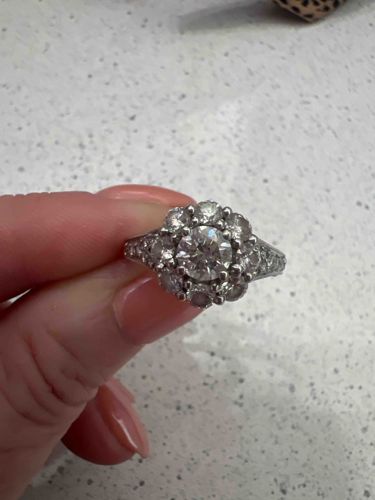
This item is a diamond cluster ring, likely made of white gold or platinum, given its silver-toned metallic appearance. The ring features a prominent central round brilliant-cut diamond surrounded by a halo of smaller round brilliant-cut diamonds, creating a floral or sunburst cluster effect. There are approximately 10-12 smaller diamonds in the halo, varying slightly in size. The shoulders and possibly part of the band are adorned with further pave-set or channel-set diamonds, enhancing the overall brilliance of the piece. The setting appears to be a prong-style setting for the larger stones, ensuring maximum light exposure. The metal shows some light surface scratches consistent with normal wear, but no significant damage like bent prongs or missing stones is immediately visible. The craftsmanship appears to be of good quality, with stones well-matched for clarity and color, typical of a contemporary or late 20th-century design. The ring has a substantial, yet feminine, presence with a high-profile setting. No specific maker's marks or signatures are discernible from the image alone. The overall aesthetic suggests a focus on maximizing sparkle and perceived size.
AI Appraisal Report
Upon examining the provided image of this diamond cluster ring, I assess its condition as good, showing typical signs of wear such as light surface scratches on the metal, consistent with normal use. No significant damage like bent prongs or missing stones is apparent. The setting appears secure, and the diamonds present with good brilliance. The craftsmanship seems of good quality, suggesting the stones are well-matched for color and clarity to maximize the visual impact.
Market conditions for diamond cluster rings remain steady, with a strong demand for classic designs that offer significant sparkle. This ring, featuring a central round brilliant-cut diamond surrounded by a halo and further adorned shoulders, aligns well with current consumer preferences for substantial yet elegant pieces. Comparables in the retail market, considering similar diamond total carat weight (estimated to be between 0.75 and 1.25 carats combined, though precise weights cannot be determined from an image), metal type (likely 14k or 18k white gold), and overall design, typically fall within the $1,800 to $2,500 range.
Factors significantly impacting value include the actual carat weight of the central diamond and the surrounding stones, their precise clarity and color grades, and the purity of the metal. Without these specifics, the valuation is based on visual estimates of quality. Demand for such cluster rings is consistently high due to their attractive aesthetic and perceived size. Rarity is not a significant factor here, as similar designs are widely produced.
It is crucial to note the limitations of authenticating solely from images. While the diamonds appear genuine based on their light return, an in-person examination is essential to confirm authenticity, identify any treatments, and accurately grade the 4Cs (Carat, Cut, Color, Clarity) of all diamonds. Provenance documentation could authenticate origin, and scientific testing (e.g., specific gravity, thermal conductivity tests) would definitively confirm diamond authenticity and metal composition. A jeweler's loupe inspection would also reveal internal characteristics of the diamonds and fine details of the setting not visible in the image.