AI identification & appraisal estimate

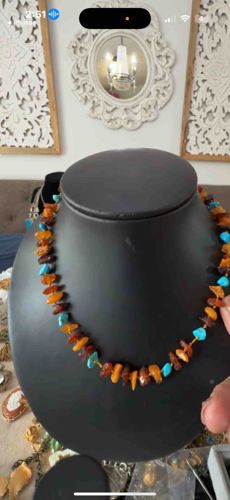
Amber and Turquoise Chip Necklace

Submitted photo of Amber and Turquoise Chip Necklace
Photo submitted by the user — not generated by AI

User's notes

Amber chip necklace

These notes were written by the person who submitted this item. Appraiser.AI has not verified them, and the AI's identification and estimate may rely on them.

AI Estimated Value

Not an official valuation

$25 - $45

AI estimate as of October 19, 2025 · verify with a professional before acting

AI-Generated · Verify before acting

Everything on this page is generated by AI for informational purposes only. AI can make mistakes — the AI may misidentify items or misattribute them (artist, maker, brand, designer, origin, era). This is not an official valuation and should not be used for insurance, sale, tax, estate, legal, or lending purposes — or any decision requiring a certified appraisal. It is not an authoritative claim about any person, brand, or rights holder — do not share or rely on it as a factual statement about a third party. Always consult qualified professionals before making financial decisions.

This analysis also relies on unverified notes provided by the user, which may be incomplete or inaccurate and could affect the result.

Read the full disclaimer

AI Item Analysis

This item is a necklace composed of irregularly shaped chip beads of amber and what appears to be turquoise, strung together to form a vibrant, multi-colored piece. The physical characteristics include a stringing of small, polished but un-faceted amber pieces showing various shades of orange, honey, and dark reddish-brown, interspersed with smaller, irregularly shaped, bright blue-green turquoise chips. The overall construction appears to be a single strand, likely threaded on a durable string or wire, although the clasp mechanism is not visible in the provided image. The beads vary in size and shape, creating an organic, rustic aesthetic. There are no visible markings or distinguishing elements such as maker's marks or signatures on the beads themselves, which is typical for chip necklaces. The condition appears good, with no obvious signs of breakage or significant wear. The amber chips exhibit natural inclusions and variations in translucency, which are desirable characteristics. The turquoise chips show a uniformly bright color, suggesting they may be natural or stabilized turquoise. Given the style, this necklace likely dates from the late 20th century to the present day, consistent with popular trends for natural stone jewelry. The craftsmanship, while simple, seems well-executed in terms of bead selection and stringing, offering a pleasant visual contrast between the warm amber and cool turquoise.
AI Appraisal Report

Upon examination of the provided image, this item is a single-strand chip necklace composed of amber and turquoise-colored beads. The beads are irregularly shaped and polished, creating a rustic, colorful aesthetic popular in the late 20th century. The amber pieces exhibit natural variations in color, from light honey to dark brown, with visible inclusions, consistent with genuine amber. The turquoise chips are a vibrant blue-green, though their exact nature—whether natural, stabilized, or dyed howlite—cannot be determined from visual inspection alone. The overall condition appears to be good, with no visible damage to the chips or stringing. The market for chip necklaces of this style is generally accessible and driven by decorative appeal rather than rarity. Similar amber and turquoise chip necklaces are widely available online and in craft markets. The value is primarily influenced by the material cost and simple labor involved. While aesthetically pleasing, the lack of precious metals, significant designer attribution, or exceptional provenance places this piece in the costume or fashion jewelry category. Key limitations exist in this appraisal due to its reliance on images. To confirm authenticity, I would need to perform in-person tests. For the amber, a specific gravity test or a hot needle test would be required to distinguish it from plastic simulants. For the turquoise, gemological testing is necessary to confirm it is genuine turquoise and not a more common substitute like dyed howlite. Without these physical confirmations, the valuation remains conservative and assumes the materials are as they appear.

Keep exploring

More jewelry appraisals

Get your items appraised

Instant AI-powered appraisal estimates from a photo

Browse More Appraisals