AI estimate as of July 19, 2025 · verify with a professional before acting
AI-Generated · Verify before acting
Everything on this page is generated by AI for informational purposes only. AI can make mistakes — the AI may misidentify items or misattribute them (artist, maker, brand, designer, origin, era). This is not an official valuation and should not be used for insurance, sale, tax, estate, legal, or lending purposes — or any decision requiring a certified appraisal. It is not an authoritative claim about any person, brand, or rights holder — do not share or rely on it as a factual statement about a third party. Always consult qualified professionals before making financial decisions.
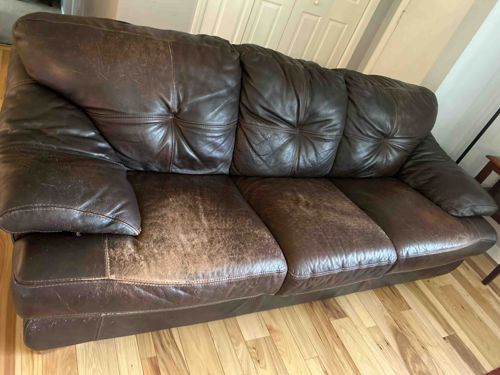
This is a three-seat deep brown leather sofa, characterized by its plush, overstuffed design. The sofa features three separate back cushions and three corresponding seat cushions. Each back cushion has a single tufted button in the center, creating a slightly pleated, radiating pattern. The cushioning appears soft and inviting, suggesting a focus on comfort. The arms are wide and gently sloped, integrated into the overall plush aesthetic.
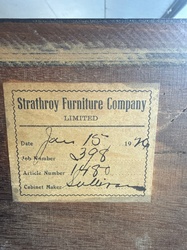
The primary material is a distressed dark brown leather, which exhibits significant signs of wear. The most prominent condition issues are apparent discoloration and fading on the seat cushions, particularly on the left and middle cushions, where the brown has lightened significantly to a tan or lighter brown hue, indicating heavy use and possible sun exposure or cleaning attempts. There are also numerous scuffs, scratches, and a prominent patina across the leather surfaces, especially on the seating areas and front edge, which is consistent with age and frequent use. Some areas show surface cracking, typical of older softened leather. The stitching appears to be intact but blended with the distressed appearance. Given the style and wear patterns, this sofa likely dates from the late 20th or early 21st century. No discernible maker’s marks or signatures are visible in the provided images. The overall craftsmanship suggests a mass-produced item designed for comfort rather than high-end decorative value, but the leather construction indicates a certain level of quality.
AI Appraisal Report
Upon visual examination of the provided images, I observe a three-seat, deep brown, distressed leather sofa. The design is plush and overstuffed, featuring three back cushions each with a single central tuft, and three corresponding seat cushions. The arms are wide and gently sloped. The primary material is distressed dark brown leather.
My assessment of its condition reveals significant wear, consistent with heavy use. The most prominent issues are discoloration and fading on the seat cushions, particularly the left and middle ones, which have lightened considerably. Scuffs, scratches, and a prominent patina are evident across all leather surfaces, especially seating areas and the front edge. Surface cracking typical of aged leather is also present. The stitching appears intact, blending with the distressed aesthetic. Authenticity cannot be definitively confirmed from images alone; however, the style and wear patterns suggest a late 20th to early 21st-century mass-produced item. No maker’s marks are discernible.
Market conditions for distressed leather sofas vary significantly. While the demand for comfortable, durable lounge furniture is generally stable, the extensive visible wear on this piece limits its market appeal and value. Comparables for heavily worn, non-designer leather sofas typically retail at lower price points in the secondary market. Factors significantly impacting value include its distressed condition, the absence of a known maker, and the commonality of the style. The primary value drivers are the remaining structural integrity and the inherent comfort of the design.
Rarity is not a factor here; similar styles are mass-produced. Its condition places it squarely in a used, 'as-is' market segment. For full authentication, an in-person examination would be critical to assess the leather's true condition, confirm structural integrity, and detect any potential hidden damage. Provenance documentation would be needed to establish ownership history and verify age claims. Scientific testing, such as material analysis, would only be pursued if there were an indication of high value or dispute over material composition, neither of which appears relevant here.