AI identification & appraisal estimate

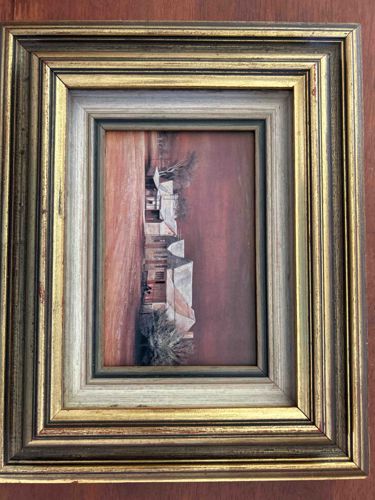
Kenneth Jack Landscape Painting in Gilt Frame

Submitted photo of Kenneth Jack Landscape Painting in Gilt Frame
Photo submitted by the user — not generated by AI

User's notes

Kenneth Jack

These notes were written by the person who submitted this item. Appraiser.AI has not verified them, and the AI's identification and estimate may rely on them.

AI Estimated Value

Not an official valuation

$2,500 - $4,000

AI estimate as of February 5, 2026 · verify with a professional before acting

AI-Generated · Verify before acting

Everything on this page is generated by AI for informational purposes only. AI can make mistakes — the AI may misidentify items or misattribute them (artist, maker, brand, designer, origin, era). This is not an official valuation and should not be used for insurance, sale, tax, estate, legal, or lending purposes — or any decision requiring a certified appraisal. It is not an authoritative claim about any person, brand, or rights holder — do not share or rely on it as a factual statement about a third party. Always consult qualified professionals before making financial decisions.

This analysis also relies on unverified notes provided by the user, which may be incomplete or inaccurate and could affect the result.

Read the full disclaimer

AI Item Analysis

This item is an original landscape painting attributed to the renowned Australian artist Kenneth Jack (1924–2006). The artwork likely utilizes gouache, oils, or acrylics on board, showcasing a rural Australian architectural scene. The palette is dominated by earthy, warm ochres and deep reddish-browns, contrasting with the cool, pale greys of the corrugated iron roofs and the textured green-grey foliage in the foreground. The composition features a sequence of outbuildings or farm structures, rendered with precise lines and a sense of isolation characteristic of Jack's structural landscape style. The painting is housed in a substantial multi-tiered wooden frame. The frame features a classic profile with an outer gold leaf-style gilded border, an inner textured linen or wooden slip in a neutral cream tone, and a dark inner fillet that provides depth. The craftsmanship appears to be mid-to-late 20th century, consistent with the artist's peak period. Condition-wise, the frame shows minor shelf wear and slight darkening of the gilt, while the painting surface appears well-preserved under glass, though slight yellowing of the highlight colors may be present due to age. Jack was famous for capturing the disappearing heritage of the Australian outback, and the detailed linework on the architectural elements is a hallmark of his professional background in graphics and drafting.


AI Appraisal Report

I have virtually examined this landscape attributed to Kenneth Jack (1924–2006). Based on the visual evidence, the work exhibits the artist’s signature 'structural landscape' style, characterized by fine draughtsmanship and a focus on Australian vernacular architecture. The use of gouache or acrylic on board is consistent with Jack's preferred media for capturing the sharp angles of corrugated iron and the weathered textures of outback structures. The color palette of warm siennas and cool greys is highly representative of his peak mid-career output. The condition appears sound; the multi-tiered gilt frame is appropriate to the era and shows only minor age-related oxidation. The painting appears well-preserved, though a slight yellowing of the varnish may require professional cleaning to restore the original highlights. Kenneth Jack’s market remains stable, particularly among collectors of historical Australian realism. His works frequently appear at major auction houses (e.g., Menzies, Leonard Joel), with similar rural architectural studies typically realizing between $2,000 and $5,000 depending on size and provenance. The rarity level is moderate; while Jack was prolific, pieces featuring strong architectural silhouettes are more desirable than his more generalized landscapes. Critically, this valuation is contingent upon definitive authentication. From images alone, I cannot verify the substrate’s age or the presence of a signature, which is often found integrated into the linework. Full authentication would require an in-person inspection to examine the paint layers for consistency, a review of provenance (past bills of sale or exhibition labels on the reverse), and possibly UV fluorescence testing to detect any overpainting. Without documented provenance, the piece is valued as 'attributed to,' though the stylistic hallmarks are highly persuasive.

Keep exploring

More fine art - painting appraisals

Get your items appraised

Instant AI-powered appraisal estimates from a photo

Browse More Appraisals