AI Appraisal Estimate

AI-generated estimates · not official valuations

From the user

What was submitted

Photo and notes provided by the user — not generated by AI

Submitted item photo
Submitted photo · June 4, 2026

User's notes

Sterling silver

AI analysis below

AI appraisal

AI analysis & estimate

AI-Generated · Verify before acting

Everything below is generated by AI for informational purposes only. AI can make mistakes — the AI may misidentify items or misattribute them (artist, maker, brand, designer, origin, era). This is not an official valuation and should not be used for insurance, sale, tax, estate, legal, or lending purposes — or any decision requiring a certified appraisal. It is not an authoritative claim about any person, brand, or rights holder — do not share or rely on it as a factual statement about a third party. Always consult qualified professionals before making financial decisions.

Note

This analysis also relies on unverified notes provided by the user, which may be incomplete or inaccurate and could affect the result.

Read the full disclaimer

AI Identification

·Not independently authenticated·Verify before acting

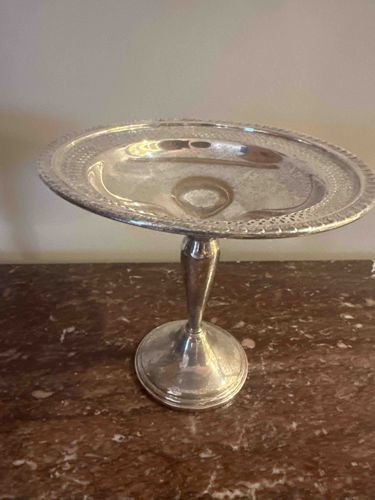
Sterling Silver Footed Compote or Bonbon Dish

Antique Silverware / Decorative Arts

AI Estimated Value

·Not an official valuation·Verify before acting

$250 - $400

As of June 4, 2026

AI Item Analysis

·AI can make mistakes·Verify before acting
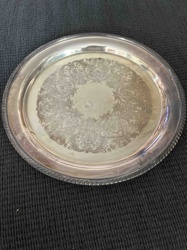
This is a fine antique or vintage sterling silver compote, also referred to as a tazza or bonbon dish, designed with a shallow circular bowl set upon a slender pedestal stem. The bowl features a wide, decorative rim adorned with a reticulated or pierced lattice-work pattern, finished with a classic beaded or gadrooned edge for added texture and visual interest. The interior of the basin is polished to a high mirror shine, though it displays a noticeable darkening in the center, likely due to oxidation or surface buildup that requires a gentle cleaning. The pedestal stem is tapered and elegant, transitioning into a weighted or hollow circular base with a stepped profile to ensure stability. Based on the provided context of 'Sterling Silver', this piece would likely bear a '925' mark or a maker's hallmark on the underside of the base or along the rim. The style suggests an early to mid-20th-century American or English origin, consistent with Neo-Classical or Art Deco influences. The craftsmanship is of high quality, exhibiting smooth solder joints and professional metalwork. Condition-wise, the piece shows a light patina and superficial cleaning scratches consistent with age and regular handling, but it retains its structural integrity without significant dents or warping.

AI Appraisal Report

·AI can make mistakes·Verify before acting
I have carefully examined the provided details and imagery for this sterling silver footed compote. Based on the reticulated lattice-work and the neo-classical beaded edge, this piece appears to be a high-quality example of American or English hollowware, likely dating from 1910 to 1940. The structural integrity remains sound, although the oxidative darkening in the basin and light surface scratches indicate a need for professional conservation to restore the mirror finish. The market for mid-sized sterling decorative arts remains steady, though it is currently driven more by metal weight and maker reputation than by pure antique rarity. Comparable pieces from makers such as Gorham, Reed & Barton, or Whiting typically realize prices in the $250 to $400 range at auction. The 'weighted' nature of many such bases can sometimes limit value compared to solid-cast pieces, as the silver content is lower than the total displacement suggests. While the visual characteristics strongly suggest authentic sterling silver, this digital appraisal has limitations. I cannot definitively verify the '925' or hallmarked purity without a physical inspection of the stamps. To provide a certified valuation, I would need to observe the maker's mark to determine if it originates from a prestigious silversmith, which could increase the premium. Furthermore, an in-person acid test or X-ray fluorescence (XRF) scan would be required to confirm the alloy composition. Provenance documentation or a bill of sale would also assist in establishing a more precise historical timeline.

Get your items appraised

Instant estimates of your treasures with AI-powered appraisals

Browse More Appraisals