AI identification & appraisal estimate

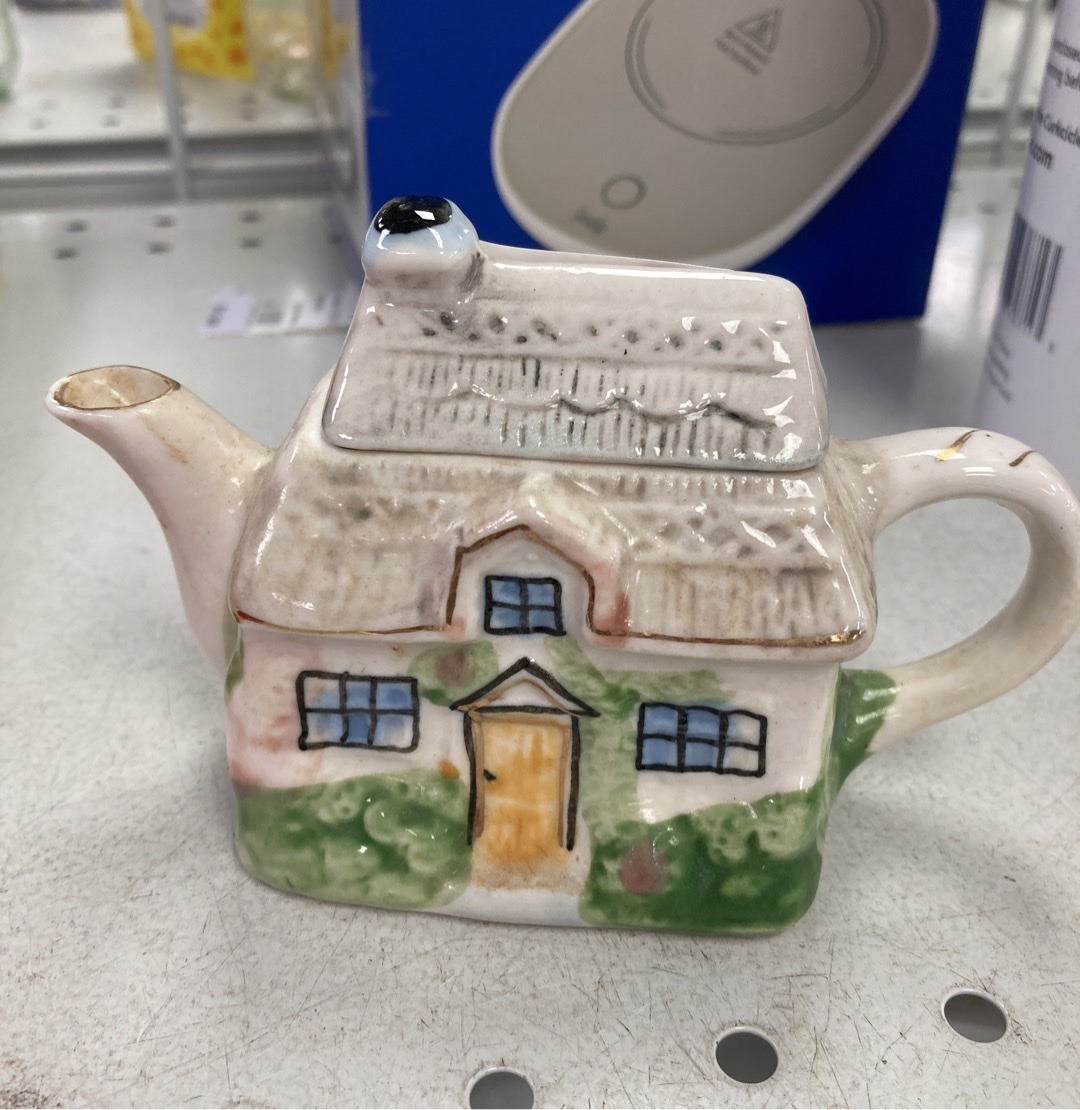
Novelty cottage teapot

Submitted photo of Novelty cottage teapot
Photo submitted by the user — not generated by AI

User's notes

made in china

These notes were written by the person who submitted this item. Appraiser.AI has not verified them, and the AI's identification and estimate may rely on them.

AI Estimated Value

Not an official valuation

$40-$80

AI estimate as of August 26, 2026 · verify with a professional before acting

AI-Generated · Verify before acting

Everything on this page is generated by AI for informational purposes only. AI can make mistakes — the AI may misidentify items or misattribute them (artist, maker, brand, designer, origin, era). This is not an official valuation and should not be used for insurance, sale, tax, estate, legal, or lending purposes — or any decision requiring a certified appraisal. It is not an authoritative claim about any person, brand, or rights holder — do not share or rely on it as a factual statement about a third party. Always consult qualified professionals before making financial decisions.

This analysis also relies on unverified notes provided by the user, which may be incomplete or inaccurate and could affect the result.

Read the full disclaimer

AI Item Analysis

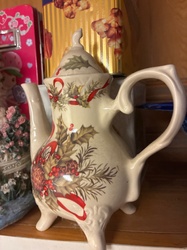
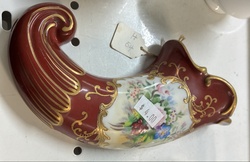
This is a charming ceramic novelty teapot shaped and hand-painted to resemble a thatched-roof English cottage. The piece is constructed from glazed ceramic with molded architectural details, including a prominent front door, small blue-paned windows, and a textured roof that doubles as a lid with a chimney-shaped finial. The color palette features creamy off-white walls, a brown and cream textured roof, green foliage painted along the base, a yellow front door, and blue window panes. The spout extends gracefully from the left side, while a simple C-shaped handle is attached to the right. The overall condition appears generally sound, though there is minor surface wear, slight discoloration or patina in the crevices of the glaze, and minor wear to the painted details consistent with age or gentle use. There is no visible maker's mark readable on the visible exterior portions. The user-supplied attribution claims the item was made in China, though this specific origin and any associated maker remain unverified from the photographic evidence alone. The style is characteristic of novelty cottage-ware ceramics frequently produced in the mid-to-late 20th century as decorative tableware or souvenirs. The identification rests purely on the visual characteristics of the cottage form and ceramic material.
AI Appraisal Report

Based on what I can see in the provided photographs, this novelty teapot is shaped and hand-painted to resemble an English thatched-roof cottage, featuring glazed ceramic construction with molded architectural details. Per user submission, the piece is attributed to being made in China. However, I can't verify this origin from a photo, and the piece bears no clearly visible maker's mark on the exterior. I am evaluating this item under the working assumption that the owner's attribution is correct. In terms of condition, the piece appears generally sound, though I note minor surface wear, slight discoloration or patina in the crevices of the glaze, and minor wear to the painted details consistent with age or gentle use. Novelty cottage-ware ceramics from the mid-to-late 20th century typically appeal to niche collectors of figural teapots and decorative tableware, with general market demand remaining modest and steady rather than high. The estimated value range of $40 to $80 reflects typical market behavior for decorative novelty ceramics of this type, assuming the attribution is correct. If physical inspection reveals the item to be a later mass-market reproduction, a replica, or an unattributed souvenir lacking the presumed origin, the value would likely decrease to the $15 to $30 range. To confirm authenticity, exact age, and origin, physical inspection by an expert appraiser, detailed analysis of the ceramic paste and glaze characteristics, and potential hallmark or provenance verification would be needed, as these cannot be determined from visual photographic evidence alone.

Keep exploring

More ceramics appraisals

Get your items appraised

Instant AI-powered appraisal estimates from a photo

Browse More Appraisals