Lower Paleolithic Acheulean Chert Biface Hand Axe
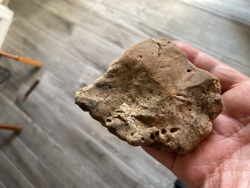
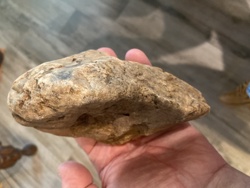
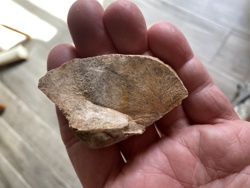
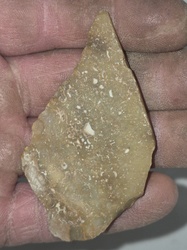
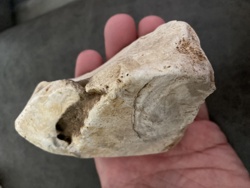
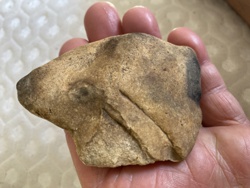
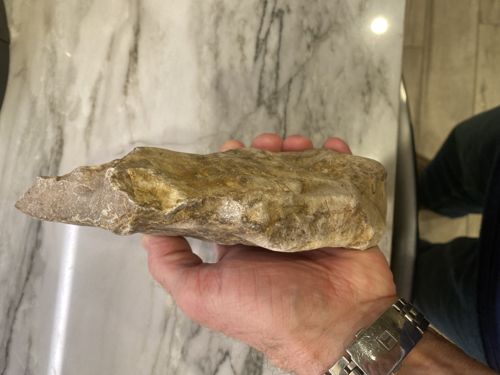
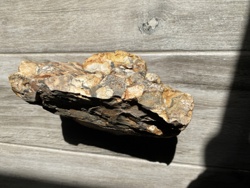
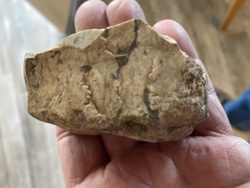
This is a significant lithic specimen identified as a bifacial hand axe, measuring approximately 8.5 inches in length by 4.5 inches in width. The artifact is crafted from a durable, high-silica chert, exhibiting a variegated color palette of ochre, tan, and earthy browns with localized areas of lighter gray mineral deposits. The construction demonstrates characteristic Acheulean percussion flaking techniques, where both faces (bifacial) have been worked to create a sharpened edge tapering to a point. The silhouette is roughly teardrop or ovate-shaped, featuring a thick, rounded butt end designed to fit the palm of the hand and a narrower, distal tip for cutting or scraping. Notable features include visible flake scars and a pronounced dorsal ridge indicating deliberate lithic reduction. The condition reflects its extreme age, showing heavy desert varnish/patina, significant edge rounding from thousands of years of exposure, and archaeological soil staining. While heavily weathered, the intentionality of the strikes remains discernible. Attributed to the Lower Paleolithic period, this tool represents early human cognitive development and mastery of stone-working found within the Guthrie, Oklahoma region.
AI-Generated Appraisal Disclaimer
Estimated Value
$400 - $650
Basic Information
Category
Archeological Artifacts / Prehistoric Stone Tools
Appraised On
March 6, 2026
Estimated Value
$400 - $650
Additional Details Provided By Owner
User Provided Information
Lower Paleolithic Acheulean chert bi face hand axe scraper tool found in Guthrie OK measuring 8.5" x 4.5
Item Description
This is a significant lithic specimen identified as a bifacial hand axe, measuring approximately 8.5 inches in length by 4.5 inches in width. The artifact is crafted from a durable, high-silica chert, exhibiting a variegated color palette of ochre, tan, and earthy browns with localized areas of lighter gray mineral deposits. The construction demonstrates characteristic Acheulean percussion flaking techniques, where both faces (bifacial) have been worked to create a sharpened edge tapering to a point. The silhouette is roughly teardrop or ovate-shaped, featuring a thick, rounded butt end designed to fit the palm of the hand and a narrower, distal tip for cutting or scraping. Notable features include visible flake scars and a pronounced dorsal ridge indicating deliberate lithic reduction. The condition reflects its extreme age, showing heavy desert varnish/patina, significant edge rounding from thousands of years of exposure, and archaeological soil staining. While heavily weathered, the intentionality of the strikes remains discernible. Attributed to the Lower Paleolithic period, this tool represents early human cognitive development and mastery of stone-working found within the Guthrie, Oklahoma region.
Get Your Items Appraised
Instant estimates of your treasures with AI-powered instant appraisals