AI estimate as of November 7, 2025 · verify with a professional before acting
AI-Generated · Verify before acting
Everything on this page is generated by AI for informational purposes only. AI can make mistakes — the AI may misidentify items or misattribute them (artist, maker, brand, designer, origin, era). This is not an official valuation and should not be used for insurance, sale, tax, estate, legal, or lending purposes — or any decision requiring a certified appraisal. It is not an authoritative claim about any person, brand, or rights holder — do not share or rely on it as a factual statement about a third party. Always consult qualified professionals before making financial decisions.
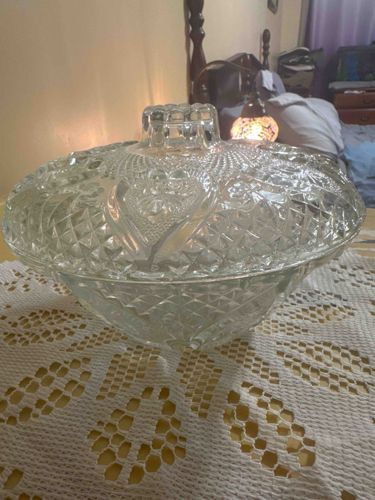
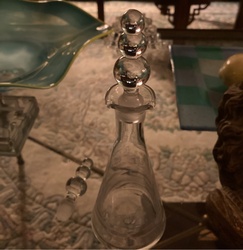
This item is a clear pressed glass covered dish, likely used for candy, butter, or holding small trinkets. The dish consists of two primary components: a shallow bowl and a fitted lid with a finial. The glass is transparent and appears to be of moderate thickness. The overall design features a highly decorative, faceted pattern, indicative of pressed glass manufacturing techniques. The lid is particularly ornate, displaying a central pattern of large, stylized hearts surrounded by a diamond-cut or hobnail-like texture. Around the rim of the lid, there is a repeating pattern of smaller geometric shapes and lines, giving it a somewhat scalloped or saw-tooth edge appearance. The finial at the top of the lid is integrated into the design, also being faceted and clear. The base of the dish is simpler, with a smooth rim where the lid rests, and the bowl itself seems to be less heavily patterned than the lid, though some subtle faceting may be present. Visible condition appears good with no obvious chips, cracks, or significant repair, although a closer inspection would be required to rule out minor fleabites or typical wear associated with pressed glass. There are no discernible maker's marks or signatures visible in the provided image. The style suggests an early to mid-20th-century aesthetic, possibly Depression-era glass or slightly later, aiming for a cut-glass look at a more affordable price point. The craftsmanship is typical for pressed glass, with molded details that offer visual appeal. The item sits on a white crocheted or lace tablecloth, which highlights its transparency and patterned surface.
AI Appraisal Report
I have carefully examined the provided image of this clear pressed glass covered dish. Visually, the piece appears to be in good condition, with no obvious chips, cracks, or significant damage. The transparency of the glass is evident, and the elaborate faceted and patterned design on both the lid and the bowl is typical of pressed glass manufacturing. The lid's heart and diamond-cut patterns, along with its scalloped edge, are particularly ornate. This style strongly suggests a production period from the early to mid-20th century, consistent with Depression-era glass or slightly later, designed to emulate more expensive cut glass. The finial is consistent with the overall pressed glass aesthetic.
My assessment of authenticity is based solely on visual characteristics seen in the image. The piece exhibits all the hallmarks of a mass-produced pressed glass item from the period. However, it is impossible to definitively confirm authenticity, assess minor fleabites, internal flaws, specific mold lines, or rule out repairs without a hands-on inspection. Without a physical examination, I cannot check for specific maker's marks, glass composition, or precise manufacturing techniques that might help pinpoint a particular factory or pattern name. Provenance documentation would also be valuable but is not available.
In terms of market conditions, pressed glass in common patterns like this generally commands modest prices. While aesthetically pleasing, it is not exceptionally rare. Demand is steady among collectors of vintage glassware, but significant value jumps are typically reserved for rarer patterns, specific manufacturers (e.g., Fostoria, Cambridge in some patterns), or colored variants. This clear example, while attractive, does not present as a high-demand rarity. Comparables for similar clear pressed glass candy or butter dishes in good condition typically range from $20 to $50. Factors impacting value would include pattern rarity (undeterminable from the image), specific manufacturer (also undeterminable), and any hidden condition issues upon physical inspection that could depreciate it slightly. Based on its apparent good condition and common decorative style, I estimate its current market value to be in the range of $25-$45.