Footed Polish Brilliant-Cut Lead Crystal Bowl
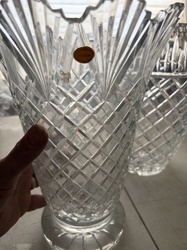
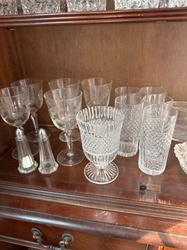
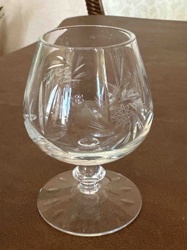
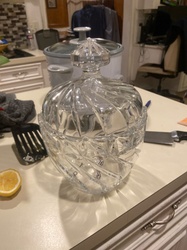
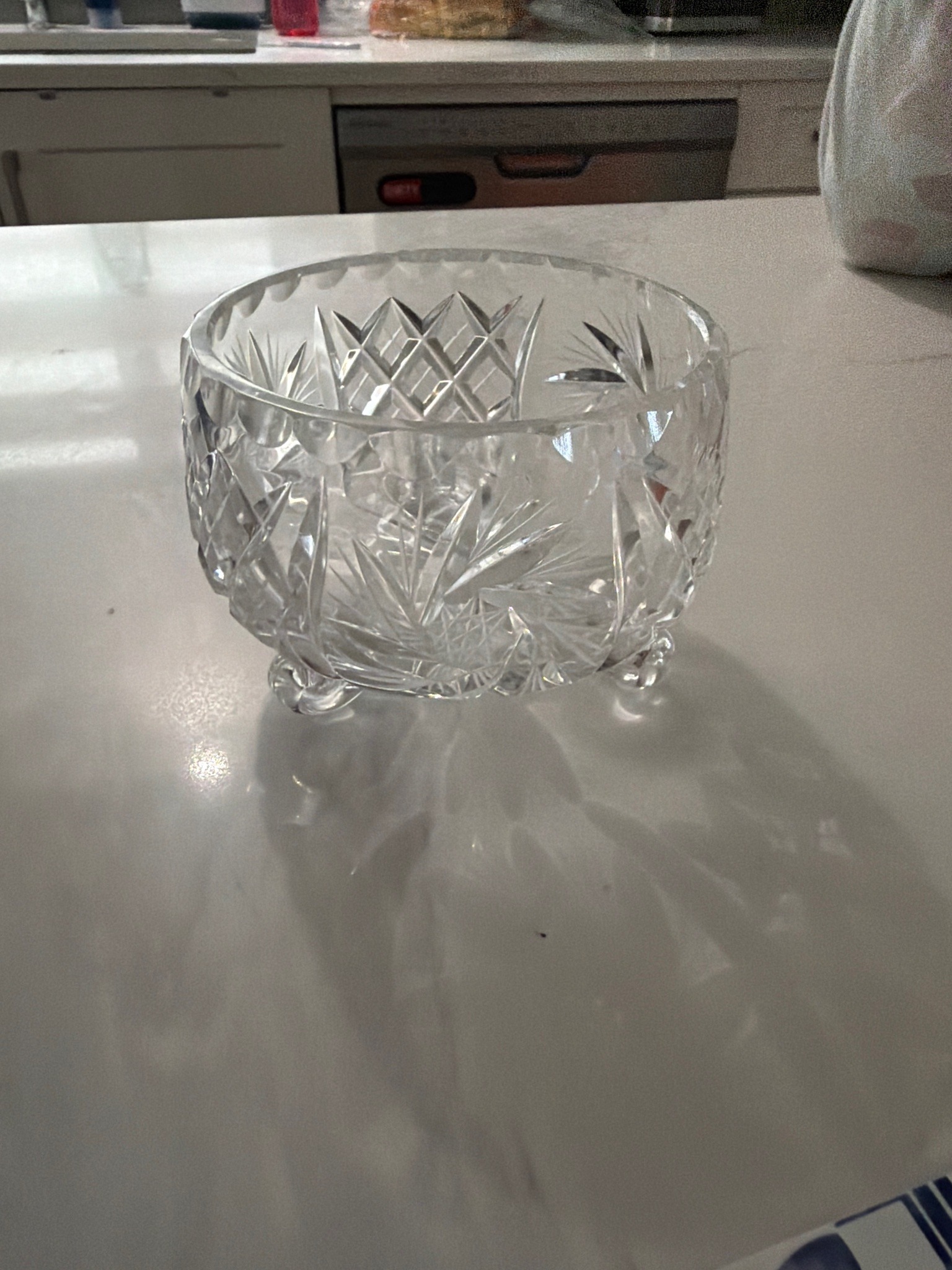
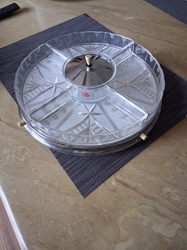
This is a heavy, lead-oxide crystal bowl, likely of Polish or Bohemian origin, featuring a traditional 'Brilliant-Cut' style. The bowl is characterized by its three small, integrated scroll feet that elevate the main body. The exterior is intricately hand-cut with a repeating geometric pattern that includes deep wedge cuts forming starbursts or fans, cross-hatching (diamonds), and a scalloped or notched rim. The material exhibits high clarity and a significant refractive index, which is characteristic of 24% lead crystal, creating a prismatic effect when light passes through it. The piece appears to be in good vintage condition with no large chips or cracks visible along the sharp edges of the cuts, though microscopic 'flea bites' are common in glass of this age. Based on the craftsmanship and pattern, it likely dates from the mid-to-late 20th century. The weight and depth of the cuts suggest high-quality artisanal production, frequently seen in exports from well-known crystal houses in Eastern Europe. There are no visible maker's marks or signatures in the photograph, which is common for these types of utility-art pieces often originally bearing only a paper or foil sticker.
AI-Generated Appraisal Disclaimer
Estimated Value
$45 - $75
Basic Information
Category
Antique/Vintage Glassware & Crystal
Appraised On
April 18, 2026
Estimated Value
$45 - $75
Item Description
This is a heavy, lead-oxide crystal bowl, likely of Polish or Bohemian origin, featuring a traditional 'Brilliant-Cut' style. The bowl is characterized by its three small, integrated scroll feet that elevate the main body. The exterior is intricately hand-cut with a repeating geometric pattern that includes deep wedge cuts forming starbursts or fans, cross-hatching (diamonds), and a scalloped or notched rim. The material exhibits high clarity and a significant refractive index, which is characteristic of 24% lead crystal, creating a prismatic effect when light passes through it. The piece appears to be in good vintage condition with no large chips or cracks visible along the sharp edges of the cuts, though microscopic 'flea bites' are common in glass of this age. Based on the craftsmanship and pattern, it likely dates from the mid-to-late 20th century. The weight and depth of the cuts suggest high-quality artisanal production, frequently seen in exports from well-known crystal houses in Eastern Europe. There are no visible maker's marks or signatures in the photograph, which is common for these types of utility-art pieces often originally bearing only a paper or foil sticker.
Get Your Items Appraised
Instant estimates of your treasures with AI-powered instant appraisals