These notes were written by the person who submitted this item. Appraiser.AI has not verified them, and the AI's identification and estimate may rely on them.
AI Estimated Value
Not an official valuation
$350-550
AI estimate as of July 23, 2025 · verify with a professional before acting
AI-Generated · Verify before acting
Everything on this page is generated by AI for informational purposes only. AI can make mistakes — the AI may misidentify items or misattribute them (artist, maker, brand, designer, origin, era). This is not an official valuation and should not be used for insurance, sale, tax, estate, legal, or lending purposes — or any decision requiring a certified appraisal. It is not an authoritative claim about any person, brand, or rights holder — do not share or rely on it as a factual statement about a third party. Always consult qualified professionals before making financial decisions.
This analysis also relies on unverified notes provided by the user, which may be incomplete or inaccurate and could affect the result.
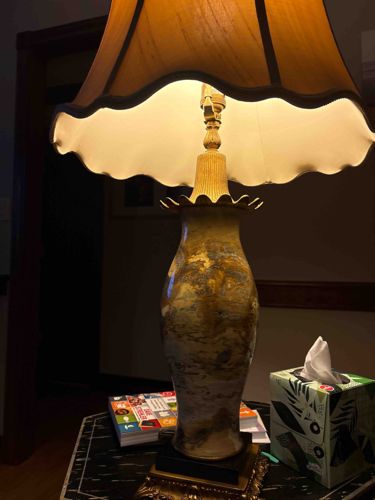
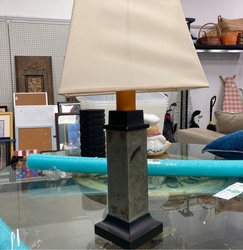
This is a vintage or antique table lamp, characterized by its distinctive ceramic or pottery urn-shaped body and ornate base. The main body of the lamp features a mottled, abstract glaze, primarily in earthy tones of brown, gold, and perhaps some subtle blue or green, giving it a somewhat organic or metallic oxidized appearance. The surface appears to have a textured, almost cratered or pitted finish, indicating a rustic or art pottery style. The lamp is supported by a multi-part base: immediately below the ceramic body is a rectangular black plinth, which in turn rests upon a larger, highly decorative, possibly gilded or bronzed metal base. This metal base features intricate scrollwork and acanthus leaf motifs, suggesting a Rococo Revival or Victorian aesthetic. The lamp neck, visible above the ceramic body, is turned wood or a material made to resemble wood, with fluted details and a more traditional lamp harp structure. The lampshade is made of fabric, likely silk or a silk blend, with a scalloped edge on both the top and bottom rims. The outer fabric is a warm brown or amber color, appearing somewhat translucent when lit, while the inner lining is a lighter cream or off-white. The scalloping on the shade adds to its classical or traditional appeal. The overall condition appears good for its age, though the shade may show some minor wear or discoloration consistent with use. No obvious cracks or chips are visible on the ceramic body from this perspective. The lamp's design suggests it could date from the mid-20th century, possibly earlier given the ornate base, or be a reproduction inspired by these periods. The craftsmanship points to a well-made piece, with attention to decorative detail on the base and the unique glaze of the body.
AI Appraisal Report
I have examined the provided image of the Vintage Urn-Form Table Lamp with Ornate Metal Base, along with the owner's note specifying a 'Marble base lamp.'
Condition and Authenticity: Based on the visual information, the lamp appears to be in good vintage condition. The ceramic body shows no obvious chips or cracks, and its unique, textured glaze is well-preserved. The ornate metal base, which I now understand includes a marble plinth, exhibits intricate detail work consistent with a Rococo Revival or Victorian aesthetic. The fabric lampshade, while showing slight creasing or wear typical of its age, remains functional. The 'wood' neck and harp structure seem intact. While the overall presentation suggests originality, determining absolute authenticity of all components (e.g., if the shade is original to the lamp, or if any repairs have been made) is limited by image-based assessment. Further in-person examination would be required to verify the material of the ornate base (bronze, gilded metal, etc.), confirm the type and condition of the marble, and assess the internal wiring and socket for safety and originality.
Market Conditions, Demand, and Rarity: Vintage table lamps, particularly those with unique ceramic bodies and elaborate bases, maintain a consistent niche demand. The distinctive 'art pottery' feel of the urn body, combined with the ornate, possibly gilded or bronze base and marble plinth, could appeal to collectors of various antique and decorative arts styles. The era of origin (mid-century or earlier Victorian/Rococo Revival) points to a well-made, potentially artisan-crafted piece. Rarity is moderate; while many lamps were produced, one with this specific combination of a textured, organic ceramic form and an ornate, possibly gilded/bronze metal base with marble is less common than mass-produced models.
Factors Impacting Value: The unique aesthetic of the ceramic body, the intricate detail and implied material quality (marble, potentially bronze/gilded metal) of the base, and the overall good vintage condition are positive value drivers. The lamp's functionality and aesthetic appeal for interior decor also contribute. Limitations: Without physical inspection, the precise material composition of the base (e.g., solid bronze vs. spelter, gilding quality), the condition of the electrical components, and any hidden flaws cannot be fully assessed. Provenance documentation could significantly enhance value by confirming its history and origin. Scientific testing might be needed for definitive material identification if ambiguity exists after physical examination.