AI Appraisal Estimate

AI-generated estimates · not official valuations

From the user

What was submitted

Photo and notes provided by the user — not generated by AI

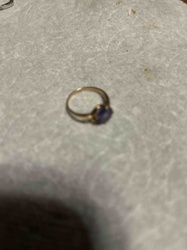
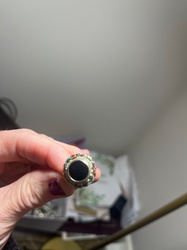
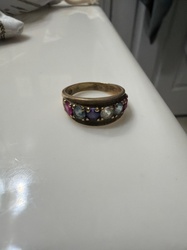
Submitted item photo
Submitted photo · May 30, 2026

User's notes

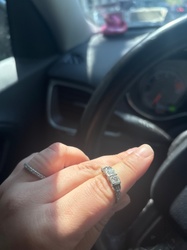
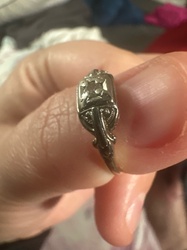
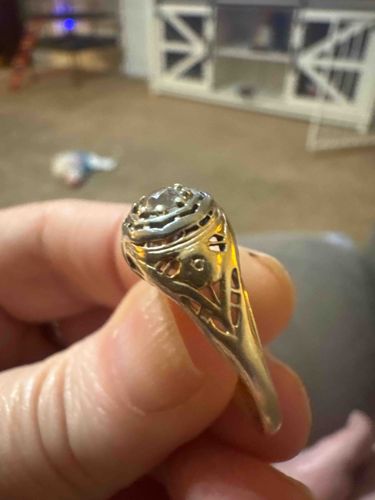
My great grandmothers ring with diamond

AI analysis below

AI appraisal

AI analysis & estimate

AI-Generated · Verify before acting

Everything below is generated by AI for informational purposes only. AI can make mistakes — the AI may misidentify items or misattribute them (artist, maker, brand, designer, origin, era). This is not an official valuation and should not be used for insurance, sale, tax, estate, legal, or lending purposes — or any decision requiring a certified appraisal. It is not an authoritative claim about any person, brand, or rights holder — do not share or rely on it as a factual statement about a third party. Always consult qualified professionals before making financial decisions.

Note

This analysis also relies on unverified notes provided by the user, which may be incomplete or inaccurate and could affect the result.

Read the full disclaimer

AI Identification

·Not independently authenticated·Verify before acting

Vintage Filigree Diamond Solitaire Ring

Fine Jewelry / Antique & Vintage Rings

AI Estimated Value

·Not an official valuation·Verify before acting

$1,850 - $2,450

As of May 30, 2026

AI Item Analysis

·AI can make mistakes·Verify before acting
This is an antique or early vintage diamond solitaire ring, likely dating from the Late Victorian to Edwardian era (circa 1890-1915). The piece is constructed with a two-tone aesthetic, featuring a yellow gold band and shoulders that transition into an ornate, possibly platinum or white gold, open-work filigree setting. At the center sits a single circular-cut diamond, potentially an Old European or Old Mine cut given the period, secured by multiple prongs within a hexagonal or star-shaped illusion setting designed to maximize the stone's perceived size. The shoulders of the ring exhibit sophisticated pierce-work and geometric filigree, a hallmark of high-quality craftsmanship from the turn of the 20th century. While the specific karat weight is not visible without an internal hallmark inspection, the warm tone of the gold suggests a 14k or 18k composition. The overall condition appears fair to good for its age, showing a natural aged patina and softening of the metal details on the shank, which is typical for a family heirloom. Some slight deformation of the band is visible, indicating a history of regular wear. The design is characterized by its light, airy structure and intricate 'lace-like' metalwork, reflecting the transition from the heavier Victorian styles to the delicate Art Nouveau and Edwardian sensibilities.
AI Appraisal Report

·AI can make mistakes·Verify before acting
I have carefully examined the provided images and descriptions of this heirloom diamond solitaire ring. This piece exhibits the classic hallmarks of Edwardian era craftsmanship (circa 1900-1915), specifically the transitional use of a 14k or 18k yellow gold shank paired with a white metal crown—likely platinum or 18k white gold—to enhance the diamond's brilliance. The intricate pierce-work and geometric filigree on the shoulders are indicative of a high level of hand-finishing common in the early 20th century. Based on the visual evidence, the center stone appears to be an Old European Cut diamond, approximately 0.40 to 0.55 carats, housed in a traditional hexagonal illusion setting. The market for 'authentic antique' bridal wear remains strong, with a high demand for sustainable, historical pieces. Comparable sales for similar Edwardian filigree rings in fair-to-good condition fluctuate between $1,800 and $2,500 depending on the specific color and clarity grades of the diamond. The visible patina and slight shank deformation are consistent with age and support the provenance of a family heirloom. However, several limitations exist: I cannot definitively verify the metal purity or the diamond's exact weight, color (4Cs), or authenticity (natural vs. synthetic) without a physical inspection. A full professional authentication would require a handheld loupe examination to check for 'knicks' or 'bearded girdles' characteristic of old-cut stones, an acid or XRF test for metal content, and a diamond tester or GIA certification to confirm the stone's origin. This appraisal assumes the diamond is a natural earth-mined stone and the metal is as described.

Get your items appraised

Instant estimates of your treasures with AI-powered appraisals

Browse More Appraisals