AI Appraisal Estimate

AI-generated estimates · not official valuations

From the user

What was submitted

Photo and notes provided by the user — not generated by AI

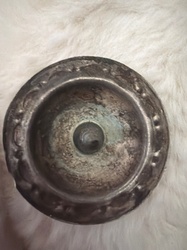
Submitted item photo
Submitted photo · June 23, 2026

User's notes

Kerzenständer

AI analysis below

AI appraisal

AI analysis & estimate

AI-Generated · Verify before acting

Everything below is generated by AI for informational purposes only. AI can make mistakes — the AI may misidentify items or misattribute them (artist, maker, brand, designer, origin, era). This is not an official valuation and should not be used for insurance, sale, tax, estate, legal, or lending purposes — or any decision requiring a certified appraisal. It is not an authoritative claim about any person, brand, or rights holder — do not share or rely on it as a factual statement about a third party. Always consult qualified professionals before making financial decisions.

Note

This analysis also relies on unverified notes provided by the user, which may be incomplete or inaccurate and could affect the result.

Read the full disclaimer

AI Identification

·Not independently authenticated·Verify before acting

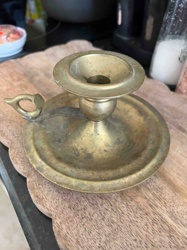
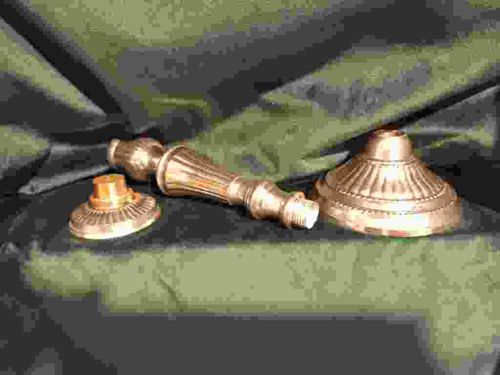
Dismantled Neoclassical Style Brass Candlestick

Antique Metalware / Lighting Accessories

AI Estimated Value

·Not an official valuation·Verify before acting

$45.00 - $75.00

As of June 23, 2026

AI Item Analysis

·AI can make mistakes·Verify before acting
This item is a traditional brass candlestick, currently shown in a disassembled state across a dark fabric background. The piece consists of three primary components: a wide circular weighted base, a fluted central column (stem), and a matching candle cup or decorative nozzle. The construction utilizes cast brass with a yellowish-gold metallic hue. The design features Neoclassical elements, most notably the vertical fluting on the stem and the radial ribbing on the base and shoulder pieces. The stem is baluster-shaped with a threaded end, indicating a screw-together assembly common in 19th and early 20th-century metalwork. In terms of condition, the brass exhibits a significant patina with darkened areas of oxidation and tarnish, particularly within the recessed grooves of the fluting. There is visible surface wear including small scratches and light pitting consistent with age and use. The threading on the central post appears intact but may require cleaning to ensure a stable reassembly. The style is reminiscent of 19th-century European craftsmanship, likely produced in the late Victorian or early Edwardian period. The weight of the base suggests a quality casting designed for stability.
AI Appraisal Report

·AI can make mistakes·Verify before acting
I have examined the images of this disassembled Neoclassical style brass candlestick. The item features decorative fluting and a baluster-form stem characteristic of 19th-century European revivalist metalwork, likely produced between 1880 and 1910. The threaded assembly is typical of this era, and the substantial weight of the base indicates a solid sand-cast production rather than modern stamped brass. The patina is heavy and consistent with aged brass; however, the presence of oxidation and surface pitting suggests a period of neglect or storage in a humid environment. While the threads appear functional, the overall condition is fair, requiring professional polishing or restoration to reach peak aesthetic appeal. The market for single, non-monumental brass candlesticks is currently soft, as most collectors prioritize matched pairs or unique artisanal signatures. Comparable Victorian-era brass sticks frequently sell in the $40 to $80 range at regional auctions. The fact that this piece is a single unit rather than one of a pair significantly limits its utility and secondary market value. Authenticity cannot be definitively confirmed via digital images alone. Photographic evidence cannot verify the exact alloy composition or detect modern 'stress-aging' techniques. To provide a conclusive authentication, an in-person examination is required to inspect the interior casting marks for signs of modern manufacturing and to verify the weight and thread pitch against known period standards. Provenance documentation or a maker's mark (often found on the underside of the base) would further clarify its origin. For valuation purposes, I am treating this as an authentic late 19th-century utilitarian object.

Get your items appraised

Instant estimates of your treasures with AI-powered appraisals

Browse More Appraisals