AI estimate as of July 25, 2025 · verify with a professional before acting
AI-Generated · Verify before acting
Everything on this page is generated by AI for informational purposes only. AI can make mistakes — the AI may misidentify items or misattribute them (artist, maker, brand, designer, origin, era). This is not an official valuation and should not be used for insurance, sale, tax, estate, legal, or lending purposes — or any decision requiring a certified appraisal. It is not an authoritative claim about any person, brand, or rights holder — do not share or rely on it as a factual statement about a third party. Always consult qualified professionals before making financial decisions.
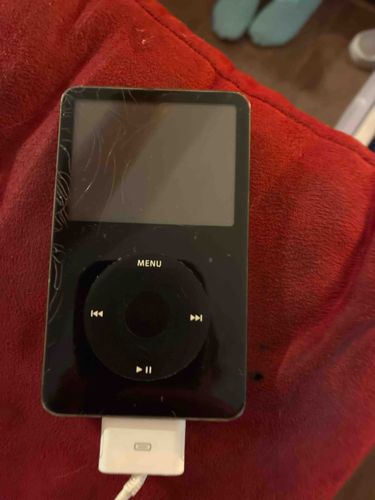
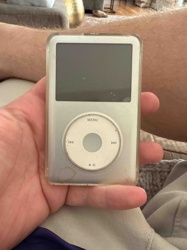
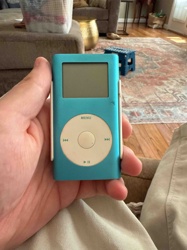
The item is a black Apple iPod (Classic model, likely 5th or 6th generation), a portable media player. Its physical characteristics include a rectangular form factor with rounded corners, a black plastic or glass front panel, and a hard disk drive within. The dimensions appear to be consistent with the standard iPod Classic size, approximately 4.1 inches by 2.4 inches. The device features a prominent display screen at the top, which shows significant damage with multiple intersecting cracks across its surface, suggesting impact or pressure damage. Below the screen is the iconic Apple click wheel, also black, with integrated navigation buttons: 'MENU' at the top, 'SKIP BACKWARD' (double arrow pointing left) on the left, 'SKIP FORWARD' (double arrow pointing right) on the right, and 'PLAY/PAUSE' (triangle and two vertical lines) at the bottom. The center button within the click wheel is also present. The entire surface of the front panel, including the click wheel, exhibits extensive wear, scratches, and smudges, indicating heavy use and lack of protective covering. There are visible dust and debris particles, especially along the edges and within the cracks of the screen. The device is connected via its 30-pin dock connector to a white charging cable, which also shows some grime or discoloration. The overall condition is poor due to the severe screen damage and significant cosmetic wear. No specific manufacturing marks or serial numbers are visible in the image, but the design strongly points to an Apple product from the mid-2000s, likely between 2005 and 2007. The quality of craftsmanship, while originally high as is typical for Apple products, is currently obscured by the extensive damage.
AI Appraisal Report
I've examined the provided image of this Apple iPod Classic. Based on its design characteristics, including the click wheel and 30-pin dock connector, I can confidently authenticate it as an original Apple product, likely a 5th or 6th generation model from the mid-2000s. Its condition is poor; the most significant factor impacting its value is the severely cracked screen, which indicates significant impact damage. Additionally, the entire front panel, including the click wheel, shows extensive cosmetic wear, scratches, and smudges, suggesting heavy use and lack of care. Visible dust and debris are also present.
In terms of market conditions, fully functional iPod Classics in good to excellent condition can still fetch moderate prices, often ranging from $100 to $300, particularly for higher storage capacities or special editions. However, given the severe screen damage, this unit is non-functional or requires extensive repair. The demand for damaged units is extremely low, limited primarily to hobbyists seeking parts or attempting complex repairs. Its rarity is not significant; many iPod Classics were produced.
Factors significantly impacting value include the non-functional screen, extensive cosmetic damage, and the requirement for costly repairs to restore usability. Without repair, its value is purely for parts.
Limitations in authenticity verification from images alone include the inability to verify internal components (e.g., hard drive capacity, board condition) or to check for internal water damage. A physical in-person examination would be needed to test functionality, assess the extent of internal damage, and confirm the specific model and storage capacity. Provenance documentation (original purchase receipts) would definitively establish its history, though this is less critical for a damaged item of this nature.