AI Appraisal Estimate

AI-generated estimates · not official valuations

From the user

What was submitted

Photo and notes provided by the user — not generated by AI

Submitted item photo
Submitted photo · June 12, 2026

User's notes

No additional notes provided.

AI analysis below

AI appraisal

AI analysis & estimate

AI-Generated · Verify before acting

Everything below is generated by AI for informational purposes only. AI can make mistakes — the AI may misidentify items or misattribute them (artist, maker, brand, designer, origin, era). This is not an official valuation and should not be used for insurance, sale, tax, estate, legal, or lending purposes — or any decision requiring a certified appraisal. It is not an authoritative claim about any person, brand, or rights holder — do not share or rely on it as a factual statement about a third party. Always consult qualified professionals before making financial decisions.

Read the full disclaimer

AI Identification

·Not independently authenticated·Verify before acting

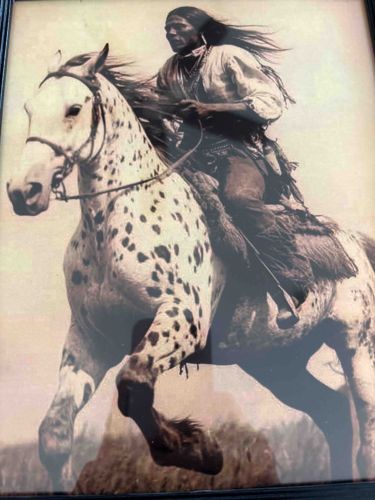
Framed Print of Native American Man on Appaloosa Horse

Art and Home Decor

AI Estimated Value

·Not an official valuation·Verify before acting

$45.00 - $75.00

As of June 12, 2026

AI Item Analysis

·AI can make mistakes·Verify before acting
This item is a contemporary framed photographic print depicting a Native American man with long, flowing hair riding a galloping Appaloosa horse. The image serves as a romanticized portrayal of Western or Indigenous life, utilizing a warm, sepia-toned or desaturated color palette to evoke a sense of historical nostalgia. The subject is shown wearing traditional-style fringed buckskin or leather garments and a light-colored tunic, riding bareback or with a minimalist saddle pad. The horse is a distinctive leopard Appaloosa, characterized by numerous dark spots over a white coat. The print is housed behind glass in a simple, dark-colored (likely black or dark brown) frame. The construction appears to be modern, common for home decor items found in specialty retail stores. There are no visible maker's marks, signatures, or limited edition numbers on the face of the image, suggesting it is an open-edition decorative print rather than a fine art photograph or an original historical archive. The condition appears fair, with the framing intact; however, there is a prominent vertical reflection across the center of the glass in the photograph provided. No significant foxing, fading, or moisture damage is immediately apparent, though the aged 'look' of the image is a stylistic choice rather than a result of physical age. The piece likely dates from the late 20th to early 21st century and is designed in a Western or Southwestern aesthetic.
AI Appraisal Report

·AI can make mistakes·Verify before acting
I have examined the digital image of the framed print depicting a Native American rider on a leopard Appaloosa. Based on my visual analysis, the item is a contemporary open-edition decorative print, likely produced between 1995 and 2010. The piece is styled with a sepia-toned finish to mimic historical photography, specifically the 'noble savage' aesthetic popularized by Edward S. Curtis, though the modern photographic clarity and horse breed presentation confirm it is a recent production. The framing is a standard synthetic or soft-wood commercial frame with glass, consistent with mass-market home decor sold in retail outlets like Hobby Lobby or Pier 1. The condition is fair; no UV-related fading or foxing is present, though the glass currently lacks high-end anti-reflective coating. Market demand for generic Western decor remains steady but does not command fine art prices due to the lack of a prominent photographer’s signature or limited edition numbering. Comparables for mass-produced Western prints of this size typically sell at estate sales or secondary markets for under $100. Valuing this item as a decorative asset rather than a collectible investment is appropriate. Importantly, this evaluation is limited by the lack of physical inspection. A definitive appraisal would require removing the backing to check for a publisher’s stamp, assessing the paper’s weight and acidity, and confirming the frame material. Without provenance or a signature, its value is strictly utility-based.

Get your items appraised

Instant estimates of your treasures with AI-powered appraisals

Browse More Appraisals