AI identification & appraisal estimate

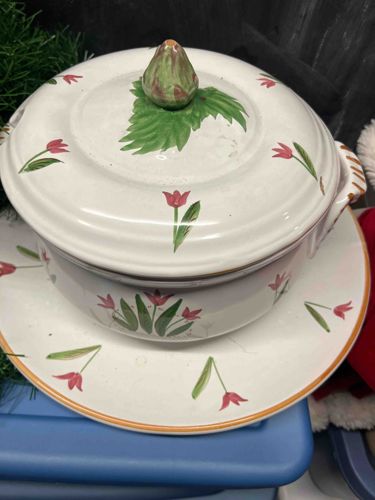
Cantagalli Hand-Painted Ceramic Tureen with Underplate

Submitted photo of Cantagalli Hand-Painted Ceramic Tureen with Underplate
Photo submitted by the user — not generated by AI

User's notes

Cantagalli handmade Italian ceramics from Firenze

These notes were written by the person who submitted this item. Appraiser.AI has not verified them, and the AI's identification and estimate may rely on them.

AI Estimated Value

Not an official valuation

$450-700

AI estimate as of July 25, 2025 · verify with a professional before acting

AI-Generated · Verify before acting

Everything on this page is generated by AI for informational purposes only. AI can make mistakes — the AI may misidentify items or misattribute them (artist, maker, brand, designer, origin, era). This is not an official valuation and should not be used for insurance, sale, tax, estate, legal, or lending purposes — or any decision requiring a certified appraisal. It is not an authoritative claim about any person, brand, or rights holder — do not share or rely on it as a factual statement about a third party. Always consult qualified professionals before making financial decisions.

This analysis also relies on unverified notes provided by the user, which may be incomplete or inaccurate and could affect the result.

Read the full disclaimer

AI Item Analysis

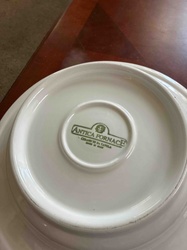
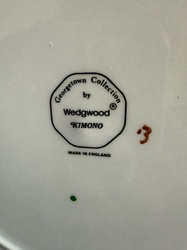
This item is a Cantagalli handmade Italian ceramic covered serving dish, likely a soup tureen or a casserole dish, accompanied by a matching underplate. Both pieces are crafted from white earthenware or majolica, consistent with traditional Tuscan ceramics. The dominant ornamentation is a hand-painted floral motif featuring stylized red or pink tulips with green leaves and stems, scattered artistically across the white glazed surface. The lid is crowned with a three-dimensional, hand-painted fig-shaped finial in shades of green and brown, resting on a painted green leaf base. The dish itself features two small handles, detailed with a subtle striped or textured pattern in a tan or light brown hue. The rim of the underplate and possibly the dish also have a thin, hand-painted orange or light brown band, adding a subtle border. The glazing appears lustrous and has a slightly irregular, handcrafted quality, indicating its artisan origin. There are visible signs of use and age, including what appears to be crazing in the glaze, particularly noticeable on the underplate and potentially the dish itself, which is common for older majolica pieces and affects value. Small chips or wear might be present along the edges, but are not clearly discernible from the provided images. As Cantagalli ceramics from Florence are known for their high quality and traditional styles, this piece likely dates from the late 19th to mid-20th century, though a more precise age would require examination of any maker's marks, which are not visible here. The hand-painted details exhibit a folk-art charm, characteristic of regional Italian pottery. The craftsmanship is indicative of skilled artisans, with attention to detail in both the form and the applied decoration. The overall condition, especially the visible crazing, points to its age and authentic character as a vintage or antique piece.
AI Appraisal Report

Based on my visual examination of the provided image, this Cantagalli Hand-Painted Ceramic Tureen with Underplate presents as an authentic example of Florentine majolica. The distinctive hand-painted floral motif, particularly the stylized tulips and the fig-shaped finial, aligns well with known Cantagalli designs. The visible crazing in the glaze, especially on the underplate, is consistent with the aging process of majolica glaze, affirming its vintage or antique status, likely dating from the early to mid-20th century. This crazing, while indicative of age and authenticity, slightly impacts the overall aesthetic condition and thus the value. Market conditions for Cantagalli ceramics remain steady, with collectors appreciating their artistic merit and historical significance. Comparables for similar large serving pieces, especially with matching underplates, can fetch significant prices. While not exceedingly rare, a complete tureen set in this condition is less common than individual smaller pieces. The hand-painted nature and artisan craftsmanship add to its desirability. However, it's crucial to note the limitations of a visual assessment from images alone. A definitive authentication would require an in-person examination to locate any potential maker's marks, assess the exact condition for any chips or repairs not visible, and confirm the tactile quality of the ceramic. Provenance documentation, such as original sales receipts or family history, would also significantly enhance authenticity and value. Without physical inspection, I cannot confirm the absence of subtle repairs or determine the precise level of crazing across all surfaces, which could affect the final valuation.

Keep exploring

More ceramic tableware appraisals

Get your items appraised

Instant AI-powered appraisal estimates from a photo

Browse More Appraisals