AI estimate as of August 8, 2025 · verify with a professional before acting
AI-Generated · Verify before acting
Everything on this page is generated by AI for informational purposes only. AI can make mistakes — the AI may misidentify items or misattribute them (artist, maker, brand, designer, origin, era). This is not an official valuation and should not be used for insurance, sale, tax, estate, legal, or lending purposes — or any decision requiring a certified appraisal. It is not an authoritative claim about any person, brand, or rights holder — do not share or rely on it as a factual statement about a third party. Always consult qualified professionals before making financial decisions.
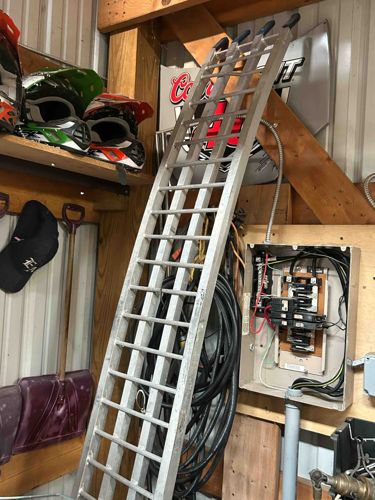
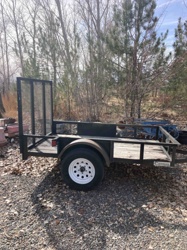
The item is an aluminum loading ramp, designed for assisting in the loading of vehicles such as motorcycles, ATVs, or lawnmowers onto a truck bed or trailer. It is constructed from lightweight, yet sturdy, aluminum, featuring a silver-grey metallic finish. The ramp's structure consists of two main longitudinal beams, with numerous transverse rungs forming a gridded, open-slat surface. This design ensures good traction for tires while allowing dirt and debris to fall through. The rungs appear to be flat bars, possibly welded or riveted to the main beams, creating a ladder-like appearance. At the top end, there are black plastic or rubber caps/grips over the ends of the rungs, likely to provide better grip against a tailgate or to protect the vehicle being loaded. The overall condition shows signs of regular use, with some scuffs, scratches, and a dulling of the aluminum finish, indicative of a slight patina developing. There are no obvious signs of major structural damage such as bends or cracks, suggesting it remains functional. One prominent feature is a small, silver-colored S-hook or carabiner visibly hanging from one of the rungs in the lower section of the ramp, which could be for securing it during transport or use. The ramp appears to be a standard, commercially manufactured item, likely produced within the last 10-20 years, given the modern appearance of the aluminum construction methods. Its craftsmanship is utilitarian, focused on function and durability for its intended purpose rather than ornate design. The visible wear matches what one would expect from a frequently used piece of utility equipment, indicating a lived-in character but no severe neglect.
AI Appraisal Report
I have examined the provided image of this aluminum loading ramp. Visually, the ramp appears to be a standard, commercially manufactured utility item, likely produced within the last 10-20 years. Its authenticity as a functional loading ramp is clear from its design and construction. The condition is consistent with regular use, showing expected scuffs, scratches, and a slight dulling of the aluminum finish. Crucially, I see no overt signs of structural damage like bends or significant cracks that would impair its function, indicating it has been well-maintained despite its working life. The S-hook is a practical addition for securing purposes.
From a market perspective, these types of aluminum loading ramps are widely available, both new and used. New models typically range from $100 to $250, depending on length, width, and weight capacity. Used comparables, even in good condition, generally sell for 50-70% of their new retail price, reflecting their utility nature and the lack of collectible value. There is no rarity associated with this item; demand is steady but not exceptionally high, as many users already own one or can easily acquire a new one. Factors significantly impacting value are primarily condition (structural integrity being paramount) and brand reputation, which cannot be determined from the image alone. The presence of all original components and an absence of significant deformation are key.
My assessment for authenticity and condition is based solely on visual inspection of the image. For full authentication and a more precise condition report, a physical examination would be necessary to detect hairline cracks, assess the integrity of welds/rivets, confirm material thickness, and verify any brand markings or load specifications. Provenance documentation would not typically apply to such a utilitarian item, and scientific testing is not generally relevant unless a material defect was suspected.