AI Appraisal Estimate

AI-generated estimates · not official valuations

From the user

What was submitted

Photo and notes provided by the user — not generated by AI

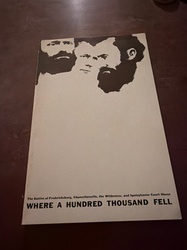
Submitted item photo
Submitted photo · May 27, 2026

User's notes

painting

AI analysis below

AI appraisal

AI analysis & estimate

AI-Generated · Verify before acting

Everything below is generated by AI for informational purposes only. AI can make mistakes — the AI may misidentify items or misattribute them (artist, maker, brand, designer, origin, era). This is not an official valuation and should not be used for insurance, sale, tax, estate, legal, or lending purposes — or any decision requiring a certified appraisal. It is not an authoritative claim about any person, brand, or rights holder — do not share or rely on it as a factual statement about a third party. Always consult qualified professionals before making financial decisions.

Note

This analysis also relies on unverified notes provided by the user, which may be incomplete or inaccurate and could affect the result.

Read the full disclaimer

AI Identification

·Not independently authenticated·Verify before acting

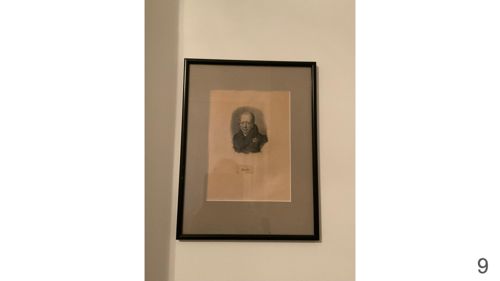
Framed Portrait Print of Baron Alexander von Humboldt

Art and Printed Ephemera

AI Estimated Value

·Not an official valuation·Verify before acting

$40–$75

As of May 27, 2026

AI Item Analysis

·AI can make mistakes·Verify before acting
This item is a framed monochrome portrait or etching, likely a lithograph, depicting the renowned German polymath and explorer Baron Alexander von Humboldt. The subject is shown in a bust-length view, centered on a vertically oriented rectangular piece of paper that exhibits significant amber-toned foxing and age-related yellowing consistent with mid-to-late 19th-century paper stock. The central image is surrounded by a large expanse of unprinted margin, which provides a stark contrast to the dark tones of the figure's clothing. The portrait captures the subject with a high forehead and a serious expression, typical of neoclassical or early Victorian scholarly portraiture. The artwork is professionally matted with a neutral grey-brown mat board that exhibits some light-reflective qualities, suggesting a smooth finish. It is housed in a modern, slim black wooden or composite frame with a satin finish. The overall condition of the display shows the print itself has darkened over time, with visible moisture spots or oxidative staining throughout the paper substrate. The framing appears contemporary and serves as a protective mount, likely including a glass or acrylic glazing layer. There is a small printed caption or nameplate just below the portrait within the paper's edge, though it is slightly blurry in the image. The craftsmanship of the engraving suggests high-quality reproductive printing from the 1800s, designed for intellectual or residential study spaces.
AI Appraisal Report

·AI can make mistakes·Verify before acting
Based on my visual examination, this item appears to be a 19th-century steel engraving or lithograph of Baron Alexander von Humboldt, a celebrated geographer and naturalist. The portrait exhibits the characteristic stiffness and fine line work associated with mass-produced prints intended for educational volumes or scholarly collections during the mid-to-late 1800s. Authenticity as a period print seems probable given the significant oxidative aging and foxing evident on the paper substrate; however, the lack of a visible plate mark or artist signature limits a definitive attribution to a specific engraver or publishing house. The condition significantly impacts the value. The paper shows heavy foxing (reddish-brown spots) and overall yellowing, which suggests acidic contact or improper storage prior to its current framing. While the modern black frame and neutral matming present the piece cleanly, they cannot undo the visible degradation of the primary support. Prints of Humboldt are not exceedingly rare, as his fame led to widespread publication of his likeness. Market comparables for similar specific uncolored engravings in fair-to-poor condition typically sell in the double digits. The value here lies primarily in the decorative appeal of the subject matter and the sunk cost of the contemporary framing. To fully authenticate the print as an original 19th-century impression rather than a later photomechanical reproduction, I would need to examine the dot pattern under magnification and inspect the paper's watermark and texture out of the frame.

Get your items appraised

Instant estimates of your treasures with AI-powered appraisals

Browse More Appraisals