AI Appraisal Estimate

AI-generated estimates · not official valuations

From the user

What was submitted

Photo and notes provided by the user — not generated by AI

Submitted item photo
Submitted photo · June 4, 2026

User's notes

No additional notes provided.

AI analysis below

AI appraisal

AI analysis & estimate

AI-Generated · Verify before acting

Everything below is generated by AI for informational purposes only. AI can make mistakes — the AI may misidentify items or misattribute them (artist, maker, brand, designer, origin, era). This is not an official valuation and should not be used for insurance, sale, tax, estate, legal, or lending purposes — or any decision requiring a certified appraisal. It is not an authoritative claim about any person, brand, or rights holder — do not share or rely on it as a factual statement about a third party. Always consult qualified professionals before making financial decisions.

Read the full disclaimer

AI Identification

·Not independently authenticated·Verify before acting

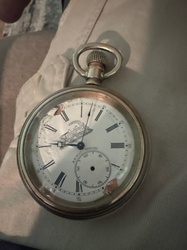
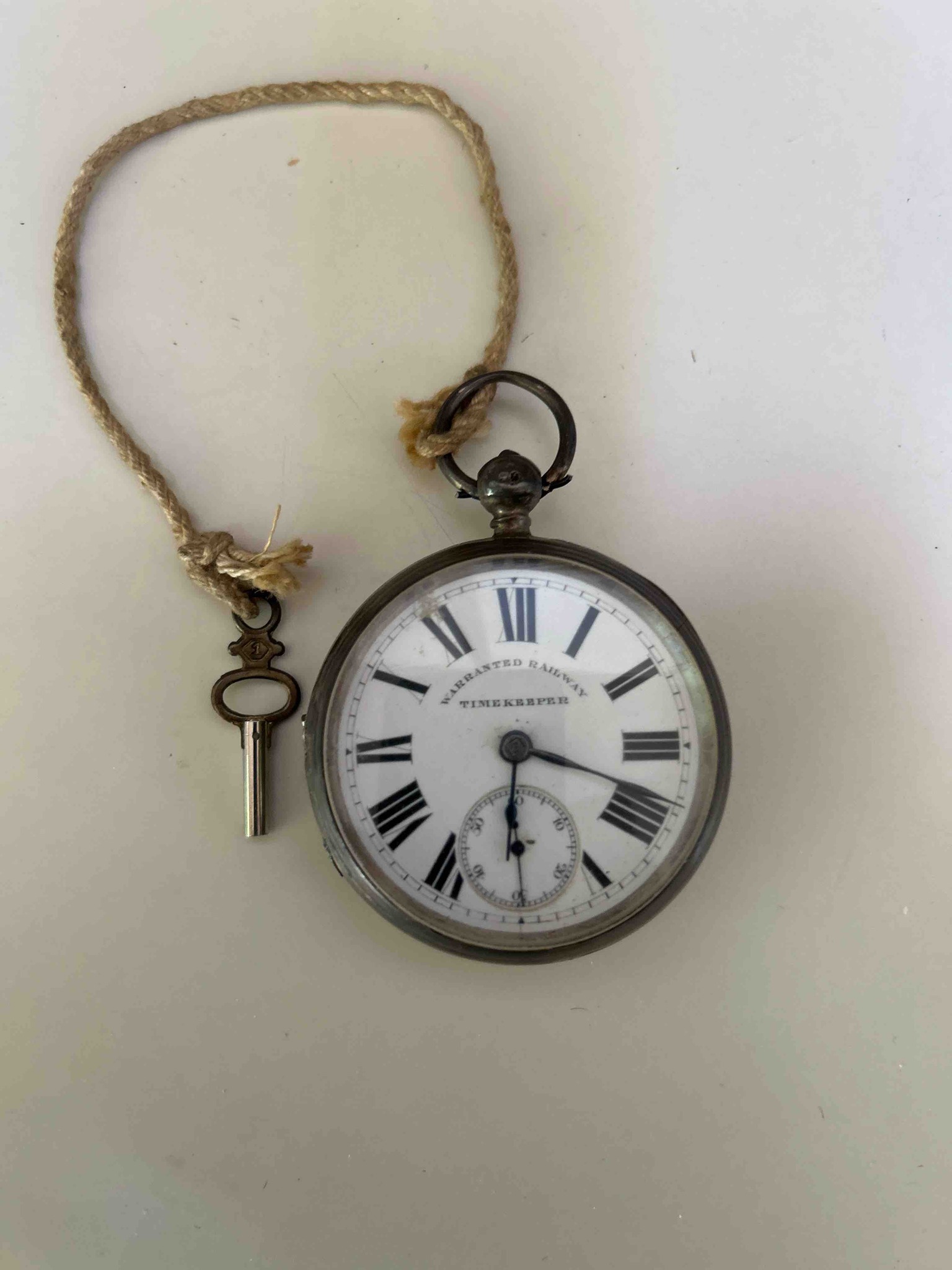
Antique Key-Wind 'Warranted Railway Timekeeper' Pocket Watch

Horology / Antique Timepieces

AI Estimated Value

·Not an official valuation·Verify before acting

$150 - $250

As of June 4, 2026

AI Item Analysis

·AI can make mistakes·Verify before acting
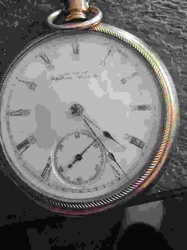
This is an antique, oversized open-face pocket watch, likely dating from the mid-to-late 19th century (circa 1860-1890). The watch features a white enamel dial with bold black Roman numerals and an outer minute track. Below the 12 o'clock position, the dial is marked 'WARRANTED RAILWAY TIMEKEEPER' in an arched serif font. It includes a subsidiary seconds dial at the 6 o'clock position with Arabic ten-second markers and a railroad-style chapter ring. The hands appear to be steel; the hour and minute hands are simple thin spades, while the sub-seconds hand is a slender needle. The case is constructed from a heavy white metal, possibly coin silver or nickel silver (German silver), showing a significant dark grey patina and localized tarnishing. It features a hinged case back and a large circular bow at the top attached to a ball pendant. Attached to the bow by a primitive twine string is a separate watch key, indicating this is a key-wind, key-set movement rather than a stem-wind. The crystal shows minor surface scuffing but remains intact. The overall condition reflects heavy utilitarian use, consistent with an authentic 'railway' style timepiece designed for durability rather than luxury. There is no visible branding for a specific manufacturer on the dial, which was common for private-label or Swiss-export pieces intended for the British or American markets.
AI Appraisal Report

·AI can make mistakes·Verify before acting
I have virtually examined this 'Warranted Railway Timekeeper' oversized open-face pocket watch. The piece exhibits the hallmarks of a mid-to-late Victorian (circa 1870-1890) utilitarian timepiece, likely featuring a Swiss lever movement manufactured for the British market. The 'Railway Timekeeper' designation was a popular marketing term used for private label imports, emphasizing accuracy and robust construction. The key-wind/key-set configuration and heavy nickel or silver-plated case are consistent with mid-range workhorse watches of that era. Visually, the dial remains in good condition with no apparent hairlines, though the case shows significant oxidation and wear typical of industrial use. Market demand for non-branded 'Railway' watches is moderate, driven primarily by collectors of railwayana and entry-level horology enthusiasts. Comparables for generic Swiss-made 'Warranted' timepieces in unserviced condition typically trade in the $100 to $300 range. The inclusion of the winding key adds minor value. Factors limiting the value include the lack of a prominent maker's mark (e.g., Waltham or Elgin) and the use of base metal rather than sterling silver. Limitations: This appraisal is based solely on visual inspection. A physical examination is required to verify the movement's functionality, hairspring integrity, and caliber quality. Furthermore, an in-person inspection of the interior case back hallmarks is necessary to determine if the metal is solid silver or 'nickel silver.' Provenance documentation or original service records would be required to establish a formal historical link to specific railway personnel, which could potentially increase the valuation. Restoration to the case and a movement service would improve marketability but may exceed the current fair market value.

Get your items appraised

Instant estimates of your treasures with AI-powered appraisals

Browse More Appraisals