AI identification & appraisal estimate

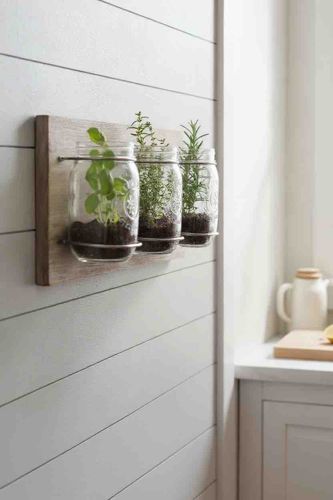
Wall-Mounted Mason Jar Herb Planter

Submitted photo of Wall-Mounted Mason Jar Herb Planter
Photo submitted by the user — not generated by AI

AI Estimated Value

Not an official valuation

$40 - $60

AI estimate as of October 3, 2025 · verify with a professional before acting

AI-Generated · Verify before acting

Everything on this page is generated by AI for informational purposes only. AI can make mistakes — the AI may misidentify items or misattribute them (artist, maker, brand, designer, origin, era). This is not an official valuation and should not be used for insurance, sale, tax, estate, legal, or lending purposes — or any decision requiring a certified appraisal. It is not an authoritative claim about any person, brand, or rights holder — do not share or rely on it as a factual statement about a third party. Always consult qualified professionals before making financial decisions.

Read the full disclaimer

AI Item Analysis

This item is a rustic-style, wall-mounted herb planter designed to hold three individual herb plants in glass Mason jars. The primary mounting structure is a rectangular piece of natural wood, likely a light-colored hardwood or pine, exhibiting a distressed or weathered finish. The wood grain is visible, adding to its rustic aesthetic. Three standard-sized clear glass Mason jars, commonly associated with canning, are suspended from this wooden backboard. Each jar contains soil and a growing herb plant (visible examples include what appears to be basil, thyme, and rosemary). The jars are held in place by individual metal holders, which appear to be thin, bent metal rods or wires, possibly stainless steel or chrome-plated, forming a cradle around the lower portion of each jar and extending upwards to secure the rim. These metal components are affixed to the wooden backboard, likely with screws or small brackets, though the specific attachment points are not clearly visible. The overall construction suggests a DIY or farmhouse-chic style. There are no obvious visible condition issues such as cracks in the jars, significant scratches on the wood, or corrosion on the metal, indicating a well-maintained or relatively new item. The design prioritizes both functionality for growing herbs and aesthetic appeal as a decorative wall accent. The craftsmanship appears to be sturdy and straightforward, fitting within a modern rustic or cottage core design sensibility. The item's estimated age is contemporary, likely manufactured or assembled within the last 5-10 years.
AI Appraisal Report

Upon visual examination of the provided image, this Wall-Mounted Mason Jar Herb Planter presents as a functional and decorative item in very good to excellent condition. The wood appears free from significant damage, and the Mason jars show no visible cracks or chips. The metal supports seem intact and without corrosion. The rustic design, utilizing natural wood and Mason jars, aligns with popular farmhouse-chic and cottage-core aesthetics, suggesting contemporary manufacturing, likely within the last 5-10 years. Authenticity, in this context, refers to it being a genuine artisan or commercially produced item of its type rather than a misrepresented antique; it appears authentic to its described style. Market conditions for such home decor items are generally stable. Comparables on online artisan marketplaces (e.g., Etsy) and home goods retailers show similar multi-jar wall planters fetching between $30 and $70, depending on materials, craftsmanship, and brand. The inclusion of living herbs adds immediate display value but does not significantly increase the long-term intrinsic value of the planter itself, as these are consumable and easily replaced. Demand for rustic and functional home decor remains consistent. Factors impacting value positively include its good condition and popular aesthetic. Negative factors are its commonality and ease of replication, which prevent it from becoming a high-value collectible. Rarity is not a factor here; similar items are widely available. My assessment for authenticity is limited to visual cues from the image. A physical examination would allow me to verify material quality, the integrity of the joinery, the type of wood and metal, and confirm the absence of subtle flaws not apparent in photographs. Provenance documentation (e.g., origin of manufacture or artisan details) would also provide irrefutable authentication that cannot be determined from an image alone.

Keep exploring

More home decor/horticultural display appraisals

Get your items appraised

Instant AI-powered appraisal estimates from a photo

Browse More Appraisals