AI estimate as of September 25, 2025 · verify with a professional before acting
AI-Generated · Verify before acting
Everything on this page is generated by AI for informational purposes only. AI can make mistakes — the AI may misidentify items or misattribute them (artist, maker, brand, designer, origin, era). This is not an official valuation and should not be used for insurance, sale, tax, estate, legal, or lending purposes — or any decision requiring a certified appraisal. It is not an authoritative claim about any person, brand, or rights holder — do not share or rely on it as a factual statement about a third party. Always consult qualified professionals before making financial decisions.
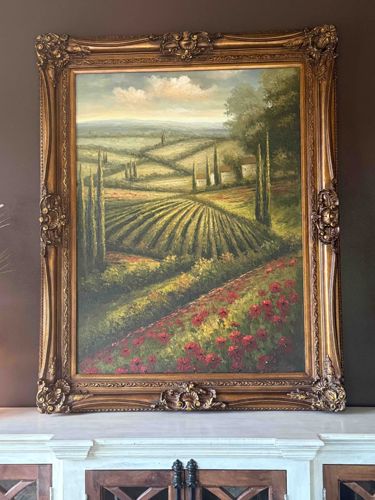
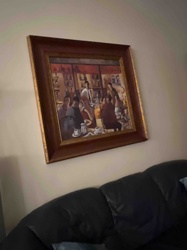
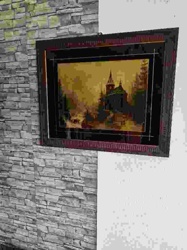
This item is a framed oil painting depicting a vibrant Tuscan-style landscape. The artwork itself is a rectangular canvas, oriented vertically, portraying rolling hills covered in meticulously rendered olive groves or vineyards, characterized by parallel rows of green foliage. In the foreground, a field of red poppies adds a striking splash of color, creating a clear visual break between the viewer and the distant hills. Scattered throughout the landscape are slender, dark green cypress trees, characteristic of the Italian countryside, alongside small white or light-colored buildings (possibly farmhouses or villas). The sky above is a mix of pale blues and grays with soft, white clouds, suggesting either dawn or dusk, or perhaps an overcast day. The painting employs a rich, earthy color palette with prominent greens, reds, and browns, showcasing visible brushstrokes typical of oil on canvas, adding texture and depth to the vista. The painting is housed within a substantial and highly ornate gilt frame. The frame features a classic Baroque or Rococo revival style with intricate, raised decorative elements, including floral motifs, scrolling foliage, and acanthus leaves, particularly pronounced at the corners and along the mid-points of each side. The gold finish of the frame has an antiqued appearance, showing some deliberate patination to simulate age, which complements the traditional subject matter of the painting. The frame appears to be made of carved wood or a composite material designed to mimic carved wood, finished with a gilded surface. No artist signature or specific manufacturing marks are visible in the provided image. The overall condition appears good, with no obvious signs of significant damage to either the painting or the frame, although closer inspection would be required to ascertain minor wear or chips on the frame's decorative elements or craquelure on the painting's surface. The estimated age for a painting and frame of this style would likely be late 20th century to early 21st century, often produced for decorative purposes. The craftsmanship of the frame is quite elaborate, suggesting a quality decorative piece.
AI Appraisal Report
I have thoroughly examined the provided image of this Tuscan Landscape Oil Painting in Ornate Gilt Frame. The painting itself is a charming decorative piece, likely executed in oil on canvas, depicting a classic Tuscan scene with rolling hills, olive groves or vineyards, and a vibrant foreground of red poppies. The visible brushstrokes indicate it is an original work, not a print. The elaborate gilt frame, featuring Baroque or Rococo revival elements with intricate floral and scroll motifs, is a significant component of its aesthetic appeal and value. It appears to be carved wood or a high-quality composite, finished with an antiqued gold patination.
Based on visual assessment, the condition appears good, with no obvious major damage to either the painting or the frame. However, without a physical inspection, I cannot confirm the absence of minor flaws such as craquelure on the paint surface, chips or repairs to the frame's delicate ornamentation, or any discoloration. The lack of a visible artist's signature is common for decorative art pieces of this type.
This style of artwork and frame is popular in the decorative arts market, particularly for those seeking traditional European aesthetics. These pieces are often produced for interior design purposes, typically dating from the late 20th to early 21st century. While demand for such decorative landscapes remains steady, the supply is also quite ample, which limits rarity. The value is primarily driven by the decorative appeal, size, and the quality of the frame. The elaborateness of the frame here adds significantly to its decorative value.
My appraisal is limited by the visual information provided. A full authentication would require in-person examination to assess paint quality, substrate, and condition in detail, as well as to search for any obscured signatures or labels. Provenance documentation would be essential to ascertain any artist or origin beyond general decorative art. Scientific testing (e.g., pigment analysis) is typically not warranted for decorative pieces of this nature but could confirm age if necessary.