AI estimate as of September 13, 2025 · verify with a professional before acting
AI-Generated · Verify before acting
Everything on this page is generated by AI for informational purposes only. AI can make mistakes — the AI may misidentify items or misattribute them (artist, maker, brand, designer, origin, era). This is not an official valuation and should not be used for insurance, sale, tax, estate, legal, or lending purposes — or any decision requiring a certified appraisal. It is not an authoritative claim about any person, brand, or rights holder — do not share or rely on it as a factual statement about a third party. Always consult qualified professionals before making financial decisions.
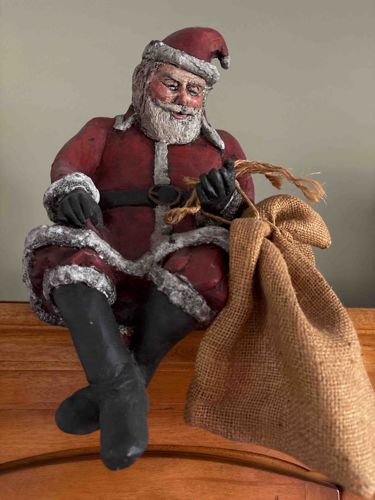
This item is a decorative Santa Claus figurine designed to sit on a ledge or shelf, likely for holiday display. The figure is predominantly red with a distressed, rustic finish, suggesting a folk art or vintage-inspired aesthetic. Santa's suit features a deep red coloration with visible texture, possibly sculpted to mimic fabric folds or brushstrokes. Accenting the red suit are off-white or light gray trim details on the hat, collar, cuffs, and bottom hem of the coat, which have a fuzzy or snowy appearance. He wears black gloves and black boots, with the boots extending as legs in a pose ideal for dangling over an edge. His face displays a kind, smiling expression with rosy cheeks and a prominent white beard and mustache, highly textured, replicating real hair. The Santa is holding a coarse, light brown burlap sack cinched at the top with a jute or string tie. The sack itself appears empty or lightly filled and is an integral part of the decor. The overall construction appears to be made from a solid material, possibly resin, carved wood, or a composite, painted to achieve the desired look. Given the textured paint and somewhat unrefined details, it leans towards a handcrafted or mass-produced item with a handmade feel. The condition appears good, with the distressed finish being intentional rather than actual wear. There are no obvious chips, cracks, or repairs visible. The style suggests it belongs to a traditional Christmas decor theme, possibly from the late 20th or early 21st century, designed to evoke a classic Santa image.
AI Appraisal Report
Based on my visual examination of the provided image, this Shelf-Sitting Santa Claus Figurine with Sack appears to be in excellent condition. The distressed finish is clearly intentional, contributing to its rustic, folk-art aesthetic, rather than indicating wear or damage. I observe no chips, cracks, or repairs, and all painted details, including the textured beard and rosy cheeks, are intact. The general construction suggests a mass-produced item designed to emulate a handmade look, likely made from resin or a similar composite material, rather than carved wood. The burlap sack is a common accessory for such figurines.
In terms of market conditions, shelf-sitting Santa figures are a popular segment of holiday decor. Comparables, new and pre-owned, are widely available from various retailers, craft fairs, and online marketplaces. The demand for such items is seasonal, peaking during the Christmas holiday period. While charming, this specific design does not exhibit characteristics typically associated with rare, antique, or artist-signed pieces that would command a premium. Factors impacting its value include its good condition, appealing traditional aesthetic, and functional design as a shelf sitter.
My valuation is based on similar mass-produced holiday figurines available in the retail and secondary markets. Without physical inspection, I cannot definitively determine the exact material (e.g., confirming resin vs. pottery vs. wood composite) or the specific manufacturer. An in-person examination would allow me to assess the weight, tactile feel of the materials, and check for any maker's marks or labels that might be on the underside or back of the figurine. Provenance documentation, such as original retail receipts or manufacturer's packaging, would further solidify its origin and potential value within a brand collection, though for this type of item, it's generally not a significant factor.