AI Appraisal Estimate

AI-generated estimates · not official valuations

From the user

What was submitted

Photo and notes provided by the user — not generated by AI

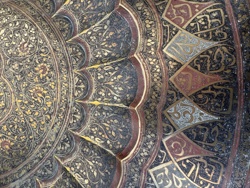
Submitted item photo
Submitted photo · May 25, 2026

User's notes

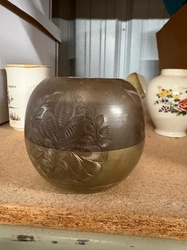
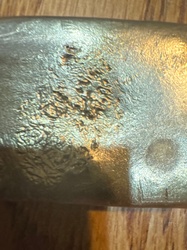
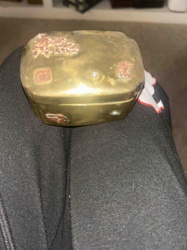
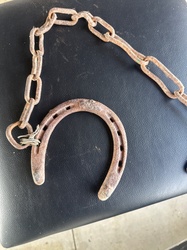
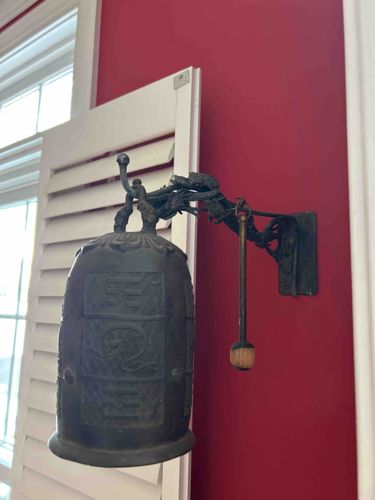
Asian dragon motif gong bell.

AI analysis below

AI appraisal

AI analysis & estimate

AI-Generated · Verify before acting

Everything below is generated by AI for informational purposes only. AI can make mistakes — the AI may misidentify items or misattribute them (artist, maker, brand, designer, origin, era). This is not an official valuation and should not be used for insurance, sale, tax, estate, legal, or lending purposes — or any decision requiring a certified appraisal. It is not an authoritative claim about any person, brand, or rights holder — do not share or rely on it as a factual statement about a third party. Always consult qualified professionals before making financial decisions.

Note

This analysis also relies on unverified notes provided by the user, which may be incomplete or inaccurate and could affect the result.

Read the full disclaimer

AI Identification

·Not independently authenticated·Verify before acting

Japanese-style Bronze Bonsho Temple Bell with Dragon Wall Bracket

Asian Antiques / Decorative Metalwork

AI Estimated Value

·Not an official valuation·Verify before acting

$450.00 - $700.00

As of May 25, 2026

AI Item Analysis

·AI can make mistakes·Verify before acting
This is a decorative wall-mounted bronze bell, modeled after the traditional Japanese 'bonsho' temple bells. The piece consists of three primary components: the bell, a tiered bracket, and a mallet. The bell itself features a cylindrical body with a domed top and flared rim, quintessential to East Asian design. It is decorated with cast relief patterns including cloud motifs, raised circular bosses (nyu), and a central panel depicting a sinuous dragon. The bronze displays a deep, dark brown patina with subtle areas of oxidation, suggesting a late 19th-century to early 20th-century origins, common in the Export era. The mounting bracket is a particularly striking feature, cast in the form of a serpentine dragon that extends from a rectangular wall plate. This dragon bracket includes a vertical mounting hook from which the bell is suspended by a double-loop handle. Appended to the bracket is a small, elongated metal mallet with a light-colored wooden or bone striking head, used to ring the bell laterally. The construction shows high-quality casting with intricate details in the dragon's scales and features. There is visible surface wear consistent with age, including dust accumulation in the crevices and slight tarnishing of the metal. No significant structural damage, cracks, or modern repairs are immediately apparent, indicating a well-preserved antique or vintage decorative object.
AI Appraisal Report

·AI can make mistakes·Verify before acting
Based on my visual examination, this Japanese-style bronze bonsho bell is an excellent example of Meiji-era or early Taisho-era export metalwork. The casting of the serpentine dragon bracket is of high quality, showing the characteristic movement and detail associated with late 19th-century Japanese craftsmanship. The bell's relief work, including the dragon motif and 'nyu' bosses, remains crisp. The patina is consistent with age, showing a deep chocolate brown with natural oxidization that suggests it was likely produced between 1890 and 1920. The inclusion of the original striker adds significantly to the value, as these are frequently lost. Market demand for high-quality Meiji-period bronze remains steady, particularly for functional pieces with strong mythological imagery like the dragon. Comparable bells of this size and complexity typically realize between $400 and $800 at auction, depending on the provenance. However, image-based appraisal has inherent limitations. I cannot definitively confirm if the bronze is a single-pour or if there are internal structural micro-fractures that would dull the bell's resonance. A physical inspection is required to test the sound quality, verify the weight density, and check for hidden maker’s marks on the underside of the bracket or within the bell’s interior. Scientific testing of the metal alloy (XRF) or documentation showing the date of import would be necessary for a full authentication of its antiquity. Without these, the value remains based on its aesthetic and stylistic merits as a vintage decorative object.

Get your items appraised

Instant estimates of your treasures with AI-powered appraisals

Browse More Appraisals