AI estimate as of December 4, 2025 · verify with a professional before acting
AI-Generated · Verify before acting
Everything on this page is generated by AI for informational purposes only. AI can make mistakes — the AI may misidentify items or misattribute them (artist, maker, brand, designer, origin, era). This is not an official valuation and should not be used for insurance, sale, tax, estate, legal, or lending purposes — or any decision requiring a certified appraisal. It is not an authoritative claim about any person, brand, or rights holder — do not share or rely on it as a factual statement about a third party. Always consult qualified professionals before making financial decisions.
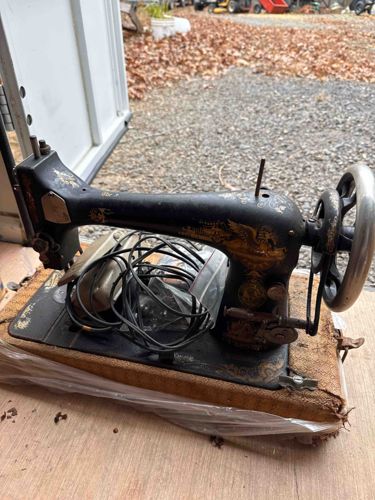
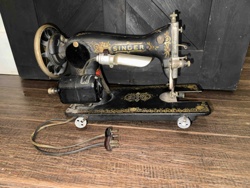
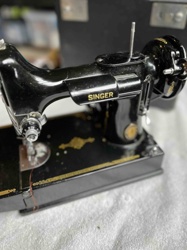
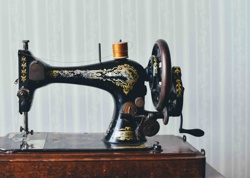
This item is a vintage domestic sewing machine, most likely a Singer 'Red Eye' model (such as a Model 66 or similar variant), characterized by its black japanned finish adorned with distinctive gold transfers. The 'Red Eye' nickname comes from the specific decal pattern, which includes ornate gold scrollwork and sometimes an eagle graphic, as partially visible on the arm of this machine.
Physical characteristics include a robust cast-iron body with a long arm design. The overall color is black, but much of the surface is embellished with intricate golden decals, showing a classical aesthetic. The machine features a prominent silver-colored handwheel on the right side. Attached to the base, which appears to be a wooden platform covered in a textured, possibly burlap or woven fabric, is an associated electrical cord and foot pedal, indicating it has been converted to electric operation or was originally an electrified model. The construction suggests durable craftsmanship typical of early 20th-century sewing machines.
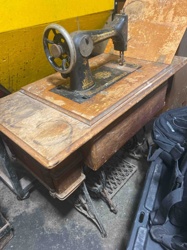
Visible condition issues include significant wear to the decals, particularly on the flatbed and along the arm, where the gold patterns are faded and chipped, exposing the black finish beneath. The japanning itself shows scuffs, scratches, and some areas of loss, consistent with age and use. There are signs of surface grime and dust across the machine. The wooden base shows wear and fraying to its covering material around the edges. The metal components, including the handwheel and various levers and mechanisms, exhibit a dull patina, suggesting some oxidation or lack of recent polishing. While no specific maker's marks or serial numbers are clearly visible in the image, the iconic design strongly points to Singer Manufacturing.
Based on the 'Red Eye' decal pattern and overall design, the estimated age of this machine would likely be early to mid-20th century, possibly dating from the 1910s to the 1950s. The presence of the electric motor and foot pedal suggests it's either an later electric model or an earlier treadle model that was electrified. The craftsmanship is evident in the heavy-duty metal construction, designed for longevity and reliable operation. Unique aspects include its historical decal pattern, which makes it collectible.
AI Appraisal Report
Upon visual examination, this is undoubtedly a vintage domestic sewing machine, very likely a Singer Model 66 or similar 'Red Eye' variant, identifiable by the distinctive gold 'Red Eye' decal pattern and robust cast-iron construction consistent with early 20th-century Singer machines. Authenticity as a Singer product is highly probable given the iconic design, though definitive serial number verification is impossible from the image alone.
The machine’s condition is fair, exhibiting significant cosmetic wear. The 'Red Eye' decals, a key aesthetic feature, are considerably faded and chipped, exposing the black japanned finish. This wear, along with scuffs and scratches on the japanning, and patina on metal components, significantly impacts value. The wooden base and its covering also show wear and fraying. The presence of an electrical conversion/electrification (cord and foot pedal visible) is common and generally acceptable, though original treadle machines in pristine condition can sometimes fetch higher prices.
Market conditions for these machines are modest. While historic and well-built, Model 66s are not particularly rare due to their mass production. Demand is primarily from collectors appreciating vintage aesthetics, decorators, or hobbyists seeking a functional machine (though this one's mechanical functionality can't be assessed). Comparables in this condition typically sell for under $200. Models with perfect decals and pristine japanning, particularly if still treadle-operated, can achieve higher prices.
Factors significantly impacting this item's value are the extensive decal wear and general cosmetic deterioration. While the inherent craftsmanship is still evident, the visual appeal as a display piece is diminished. To fully authenticate, an in-person inspection would be needed to locate and verify the serial number, assess mechanical integrity, and inspect for any hidden damage or repairs. Without this, I cannot confirm 100% authenticity or mechanical functionality.