AI identification & appraisal estimate

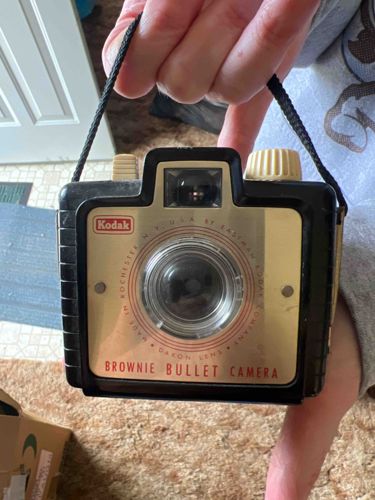
Kodak Brownie Bullet Camera

This name is the AI's identification of the item — it may be incorrect.

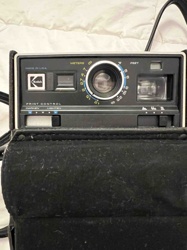
Submitted photo of Kodak Brownie Bullet Camera
Photo submitted by the user — not generated by AI

AI Estimated Value

Not an official valuation

$20-40

AI estimate as of October 18, 2025 · verify with a professional before acting

AI-Generated · Verify before acting

Everything on this page is generated by AI for informational purposes only. AI can make mistakes — the AI may misidentify items or misattribute them (artist, maker, brand, designer, origin, era). This is not an official valuation and should not be used for insurance, sale, tax, estate, legal, or lending purposes — or any decision requiring a certified appraisal. It is not an authoritative claim about any person, brand, or rights holder — do not share or rely on it as a factual statement about a third party. Always consult qualified professionals before making financial decisions.

Read the full disclaimer

AI Item Analysis

This item is a vintage Kodak Brownie Bullet Camera, a compact and simple box camera from the mid-20th century. Its physical characteristics include a rectangular body primarily constructed of black molded plastic with a prominent golden-colored metal faceplate. The camera is small enough to be held comfortably in one hand, as depicted in the image. Notable features include a fixed-focus Dakon lens centrally located on the faceplate, surrounded by concentric red rings of text that read "MADE IN ROCHESTER N.Y. U.S.A. BY EASTMAN KODAK COMPANY" and "DAKON LENS". Below the lens, in red lettering, it clearly states "BROWNIE BULLET CAMERA". A small red square with "Kodak" in white lettering is visible on the upper left of the faceplate. At the top of the camera, there's a bright viewfinder window and a cream-colored, ridged (possibly bakelite or plastic) film advance knob on the right side. Another similar knob is partially visible on the left side, likely for film rewinding or opening. A black braided cord strap is attached to the top corners, indicating its portability. The condition appears to be relatively good for its age, with no significant visible damage like cracks or major scratches to the plastic body or metal faceplate, though subtle wear and patina consistent with age and use would be expected. The lens appears clear. This model was produced from 1957 to 1961, placing its estimated age in the late 1950s to early 1960s. Its simple, durable design made it a popular and affordable camera, representing a significant period in consumer photography history. The craftsmanship is utilitarian, focused on mass production and ease of use rather than intricate details.

AI Appraisal Report

Based on my visual examination of the provided image, this Kodak Brownie Bullet Camera appears to be authentic, consistent with models produced between 1957 and 1961. The distinct black molded plastic body, golden-colored metal faceplate with "DAKON LENS" and "BROWNIE BULLET CAMERA" in red text, and the 'Kodak' branding are all correct for this model. The physical condition seems relatively good for its age; I note no obvious cracks, significant scratches, or major dents, and the lens appears clear. The braided strap is also present and consistent with original accessories. However, without a physical inspection, I cannot confirm the integrity of internal mechanisms, lens cleanliness, shutter function, or the absence of hidden damage. Discoloration or stickiness of the plastic or internal corrosion are possibilities that cannot be assessed remotely. Market conditions for vintage consumer cameras like the Brownie Bullet are generally stable but with low values. These cameras were mass-produced, making them neither rare nor highly sought-after by high-end collectors. Comparables on platforms like eBay or specialized vintage camera sites show similar models in good condition typically selling in the $20-40 range. Factors impacting value include cosmetic condition, complete originality (including strap and a clean lens), and, less critically, functional status. Demand is primarily from casual collectors, photography enthusiasts for display, or those seeking sentimental items. Rarity is not a significant factor here. The primary limitation in this appraisal is the lack of physical examination; full authentication would involve hands-on inspection of mechanics, a definitive check for hidden damage, and possibly lens testing for clarity and fungas. Provenance documentation is generally not critical for items of this value due to their mass-produced nature.

Keep exploring

More vintage camera appraisals

Get your items appraised

Instant AI-powered appraisal estimates from a photo

Browse More Appraisals