AI estimate as of October 12, 2025 · verify with a professional before acting
AI-Generated · Verify before acting
Everything on this page is generated by AI for informational purposes only. AI can make mistakes — the AI may misidentify items or misattribute them (artist, maker, brand, designer, origin, era). This is not an official valuation and should not be used for insurance, sale, tax, estate, legal, or lending purposes — or any decision requiring a certified appraisal. It is not an authoritative claim about any person, brand, or rights holder — do not share or rely on it as a factual statement about a third party. Always consult qualified professionals before making financial decisions.
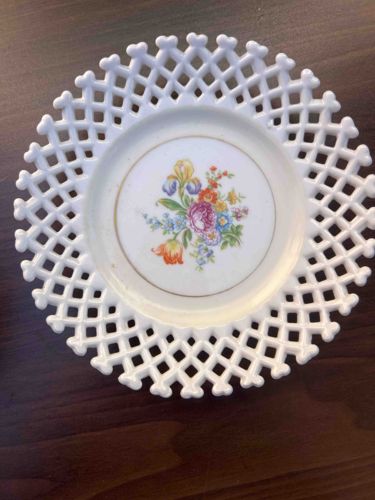
This item is a circular decorative plate, likely made of ceramic or porcelain, featuring a white glaze. The most prominent physical characteristic is its intricate latticework border, which forms an openwork pattern of interconnected diamond shapes. The outer edge of this lattice border is scalloped, with each point resembling a small heart or lobe shape, adding a delicate and ornamental touch. The central area of the plate is solid white and serves as a canvas for a vibrant floral decal or hand-painted design. This central motif depicts a naturalistic bouquet of assorted flowers in rich, varied colors, including yellow, blue, red, orange, and purple, set against a plain white background. A thin, possibly gold-colored, line encircles the floral design, subtly defining the central image from the surrounding solid white section. The plate appears to be in good condition with no immediately visible chips, cracks, or significant wear, though a closer inspection would be required to confirm the absence of crazing or staining. The white glaze is consistent, and the colors of the floral design are bright and unfaded. The craftsmanship of the latticework suggests a decorative purpose rather than utilitarian. This style of plate was popular during the mid-20th century, particularly from the 1940s to the 1970s, as a decorative item for display on walls or in china cabinets. Without a visible maker's mark, the exact manufacturing details are unknown, but it represents a classic ornamental ceramic design.
AI Appraisal Report
Upon visual examination of the provided image, this Latticework Floral Decorative Plate appears to be in good overall condition. I observe no obvious chips, cracks, or significant wear on the surface or the delicate latticework. The white glaze is consistent, and the floral decal or hand-painted design retains bright, unfaded colors. The thin gold-colored line also seems intact. Authenticity, based solely on an image, is limited; I can confirm it is consistent with decorative plates from the mid-20th century (1940s-1970s). Without a visible maker's mark or physical examination, I cannot definitively confirm its origin, manufacturer, or whether the floral design is a decal or hand-painted, which could impact value.
Market conditions for such decorative plates are generally modest. Comparables in online marketplaces and antique shops typically range from $15 to $50, depending on condition, specific design intricacy, and any identifiable maker. This style is not particularly rare; many similar pieces were produced during its popular period. Demand is moderate, primarily from collectors of vintage home decor or those seeking specific aesthetic accents. The main factors impacting its value are its decorative appeal, condition, and the level of craftsmanship, particularly the openwork border. A physical inspection would be crucial to check for crazing, staining, unseen repairs, and to identify any hidden maker's marks. Microscopic analysis could differentiate between decal and hand-painting. Provenance documentation would also add verifiable history and potentially increase value, but this is rarely available for such items.