AI Appraisal Estimate

AI-generated estimates · not official valuations

From the user

What was submitted

Photo and notes provided by the user — not generated by AI

Submitted item photo
Submitted photo · June 19, 2026

User's notes

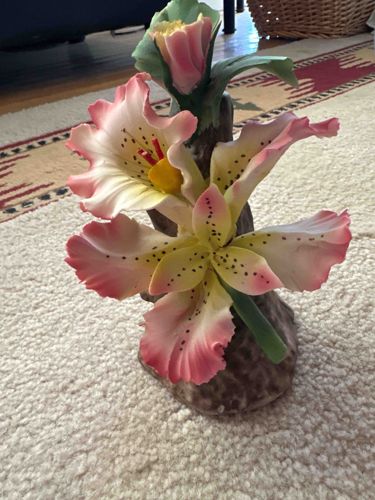
Very delicate flower artifact made in Italy small

AI analysis below

AI appraisal

AI analysis & estimate

AI-Generated · Verify before acting

Everything below is generated by AI for informational purposes only. AI can make mistakes — the AI may misidentify items or misattribute them (artist, maker, brand, designer, origin, era). This is not an official valuation and should not be used for insurance, sale, tax, estate, legal, or lending purposes — or any decision requiring a certified appraisal. It is not an authoritative claim about any person, brand, or rights holder — do not share or rely on it as a factual statement about a third party. Always consult qualified professionals before making financial decisions.

Note

This analysis also relies on unverified notes provided by the user, which may be incomplete or inaccurate and could affect the result.

Read the full disclaimer

AI Identification

·Not independently authenticated·Verify before acting

Capodimonte Style Italian Porcelain Figural Flower Arrangement

Decorative Collectibles - Porcelain & Figurines

AI Estimated Value

·Not an official valuation·Verify before acting

$45 - $75

As of June 19, 2026

AI Item Analysis

·AI can make mistakes·Verify before acting
This item is a meticulously crafted hand-painted porcelain floral figurine, characteristic of the Capodimonte style frequently associated with the Neapolitan region of Italy. The sculpture features two fully bloomed tiger lilies and one budding flower emerging from a textured, bark-like brown ceramic stump base. Each petal is individually sculpted with delicate, ruffled edges and finished with a gradient of soft cream to vibrant pink. The interior of the lilies showcases yellow centers with hand-applied black stippling to represent pollen and realistic red-tipped stamens. In terms of condition, the piece demonstrates the inherent fragility of cold-paste or biscuit porcelain. While the colors remain vibrant, there are visible minor chips and 'fleabites' along the extremely thin edges of the petals and green sepals, which is common for such intricate botanical pieces. The craftsmanship reflects mid-20th-century Italian artistry, likely dating between 1950 and 1970. The matte finish and high level of detail in the texture of the leaves and stump indicate a high-quality decorative object meant for display in a curio cabinet. No visible maker mark is shown, but its stylistic hallmarks are consistent with Italian porcelain houses like Ginori or various workshops in Doccia.
AI Appraisal Report

·AI can make mistakes·Verify before acting
I have carefully examined the provided images and descriptions of this Capodimonte-style porcelain floral arrangement. The piece exhibits the classic 'biscuit' or 'cold-paste' aesthetic typical of mid-20th-century Italian workshops. The hand-painted gradients on the tiger lilies and the realistic stippling on the stamens demonstrate a respectable level of craftsmanship consistent with the 1950–1970 production era. Upon visual inspection, I noted several ‘fleabite’ chips and minor losses on the petal edges and sepals. In the world of fine porcelain, condition is paramount; even minor losses to these fragile extremities significantly suppress the market value, as collectors prioritize pristine examples. The current market for decorative Italian floral porcelain is heavily saturated. While these pieces were highly prized as luxury imports in the mid-century, they are now frequently found in the secondary estate market. Comparables for unsigned pieces of this size and condition typically realize between $40 and $80 at auction or specialized vintage retail. The lack of a visible 'N' crown mark or a specific studio stamp (such as Ginori or Cappe) further categorizes this as a high-quality decorative object rather than a rare collector’s investment. Limitations of this appraisal include the inability to verify the porcelain's density, weight, or base markings hidden from view. A definitive authentication would require a physical inspection to check for professional restorations under UV light and a search for incised marks on the underside of the stump base. Provenance documentation or original import labels would also assist in narrowing the specific workshop of origin.

Get your items appraised

Instant estimates of your treasures with AI-powered appraisals

Browse More Appraisals