AI Appraisal Estimate

AI-generated estimates · not official valuations

From the user

What was submitted

Photo and notes provided by the user — not generated by AI

Submitted item photo
Submitted photo · June 18, 2026

User's notes

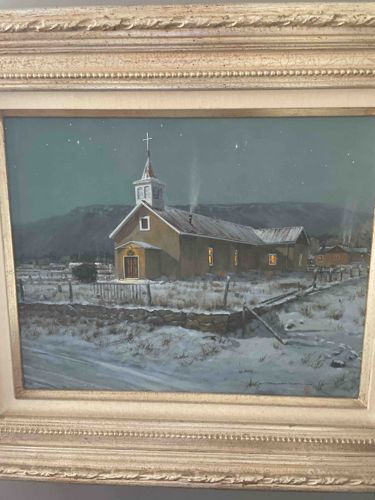
Signed painting of the church in pesos New Mexico

AI analysis below

AI appraisal

AI analysis & estimate

AI-Generated · Verify before acting

Everything below is generated by AI for informational purposes only. AI can make mistakes — the AI may misidentify items or misattribute them (artist, maker, brand, designer, origin, era). This is not an official valuation and should not be used for insurance, sale, tax, estate, legal, or lending purposes — or any decision requiring a certified appraisal. It is not an authoritative claim about any person, brand, or rights holder — do not share or rely on it as a factual statement about a third party. Always consult qualified professionals before making financial decisions.

Note

This analysis also relies on unverified notes provided by the user, which may be incomplete or inaccurate and could affect the result.

Read the full disclaimer

AI Identification

·Not independently authenticated·Verify before acting

Signed Oil Painting of Pecos, New Mexico Church in Winter

Fine Art - Paintings

AI Estimated Value

·Not an official valuation·Verify before acting

$1,200 - $1,800

As of June 18, 2026

AI Item Analysis

·AI can make mistakes·Verify before acting
This is an original representational oil painting on canvas or board, depicting a quiet winter scene of a historic church in Pecos, New Mexico (likely St. Anthony's or a similar Adobe-style structure). The composition features a central church building with a prominent white steeple topped with a cross, set against a backdrop of shadowed mesas and a starry twilight sky. The painting uses a muted palette of ochres, earth tones, cool grays, and whites to convey a cold, serene atmosphere. Significant attention is paid to the play of light, notably the warm glow emanating from the church windows and entrance, which contrasts with the cool, blue-toned snow covering the foreground and a rough stone wall. The brushwork appears deliberate and textured, particularly in the rendering of the snow-laden ground and the smoke rising from the chimneys. The work is signed by the artist in the lower right corner, though the signature is partially obscured by the frame and lighting in this image. The piece is housed in a substantial, decorative wood frame with a cream-colored wash and classic beaded detailing, indicating a mid-to-late 20th-century aesthetic. The condition of the painting surface appears excellent with no visible craquelure, flaking, or significant yellowing of the varnish. The style is characteristic of New Mexican regionalism or Western Impressionism, focusing on the cultural and architectural heritage of the American Southwest.


AI Appraisal Report

·AI can make mistakes·Verify before acting
Upon my visual examination of this oil painting, I find it to be a high-quality example of New Mexican Regionalism, evocative of the Santa Fe and Taos schools of the mid-to-late 20th century. The work expertly utilizes a chiaroscuro effect, contrasting the golden internal luminescence of the Adobe-style church with the cool indigoes and grays of a New Mexican winter twilight. The impasto application in the foreground snow suggests a confident, professional hand. The condition appears excellent; I observe no evidence of canvas sagging, pigment loss, or varnish oxidation. The frame is a period-appropriate decorative wood moulding that adds significant display value. Market demand for Southwest liturgical subjects remains robust, particularly for scenes depicting historic Pecos landmarks which appeal to regional collectors. This estimate is based on auction results for mid-career Western Impressionists specializing in regional architecture. However, valuation is currently limited by the partially obscured signature. In-person inspection is required to definitively identify the artist via signature analysis under magnification and UV light. Full authentication would necessitate provenance documentation, such as a gallery bill of sale or exhibition history. Furthermore, a physical examination of the substrate—be it canvas or board—is necessary to confirm the age of the materials and ensure no hidden repairs are present under the frame's rabbet. Should the artist be identified as a listed regional master, the value could appreciate significantly beyond this current range.

Get your items appraised

Instant estimates of your treasures with AI-powered appraisals

Browse More Appraisals