AI Appraisal Estimate

AI-generated estimates · not official valuations

From the user

What was submitted

Photo and notes provided by the user — not generated by AI

Submitted item photo
Submitted photo · June 6, 2026

User's notes

Cookie jar

AI analysis below

AI appraisal

AI analysis & estimate

AI-Generated · Verify before acting

Everything below is generated by AI for informational purposes only. AI can make mistakes — the AI may misidentify items or misattribute them (artist, maker, brand, designer, origin, era). This is not an official valuation and should not be used for insurance, sale, tax, estate, legal, or lending purposes — or any decision requiring a certified appraisal. It is not an authoritative claim about any person, brand, or rights holder — do not share or rely on it as a factual statement about a third party. Always consult qualified professionals before making financial decisions.

Note

This analysis also relies on unverified notes provided by the user, which may be incomplete or inaccurate and could affect the result.

Read the full disclaimer

AI Identification

·Not independently authenticated·Verify before acting

Vintage Anthropomorphic White Dog Cookie Jar with Yellow Bow

Vintage Kitchenware / Collectible Ceramics

AI Estimated Value

·Not an official valuation·Verify before acting

$45.00 - $75.00

As of June 6, 2026

AI Item Analysis

·AI can make mistakes·Verify before acting
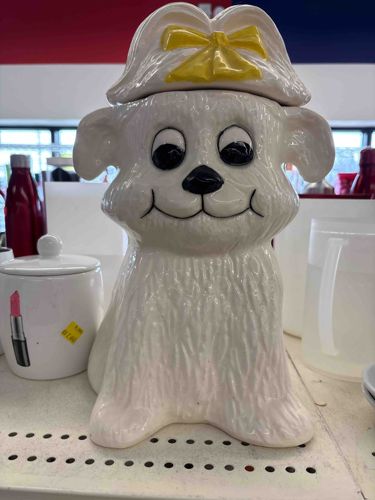
This is a vintage anthropomorphic ceramic cookie jar depicting a seated white dog, likely a terrier or poodle mix, wearing a sculpted hat or hair piece adorned with a vibrant yellow bow. The piece is constructed from heavy ceramic with a high-gloss cold-glazed or kiln-fired finish. It features distinct textured fur detailing throughout the body and head, achieved through molded vertical striations. The face is stylized with large, hand-painted black googly-style eyes, a rounded black nose, and a simple black-lined smile with dimples. The lid of the jar is integrated at the top of the head, separating just above the ears. Physically, the item appears to be in fair to good vintage condition; however, visible wear is present, including slight paint loss on the nose and possible crazing consistent with age (mid-20th century, circa 1960s-1970s). The craftsmanship is characteristic of mass-produced decorative kitchenware from companies like Treasure Craft, McCoy, or Metlox, though no specific maker's mark is visible in the image. The white glaze has a subtle off-white or cream patina, and the overall construction is sturdy with a wide base for stability.
AI Appraisal Report

·AI can make mistakes·Verify before acting
I have examined the digital representation of this vintage white dog cookie jar. My visual assessment identifies it as a mid-century novelty 'cold paint' ceramic piece, likely produced by a Californian or Japanese import firm during the 1960s. The vertical fur texture and 'googly' eye style characterize the anthropomorphic aesthetic popular in mass-produced kitchenware of that era. The condition is fair to good; I note visible paint loss on the cold-painted nose and ears, which is typical for these finishes as they were applied after firing and lack a protective glaze. Crazing is evident, reflecting the natural expansion and contraction of the clay body over time. Market demand for unmarked anthropomorphic jars remains steady but niche. While iconic McCoy or Metlox pieces command higher premiums, unsigned examples like this one generally appeal to decorators and specific breed collectors rather than high-end investors. The vibrant yellow bow adds a 'pop' of color that increases shelf appeal, though the lack of a manufacturer’s mark limits the upper-tier valuation. Comparables for similar unmarked poodle/terrier jars currently fluctuate in the $40 to $80 range depending on the severity of surface chips. Limitations: This appraisal is based strictly on visual photographic evidence. A physical inspection is required to determine if the lid is original to the base or a 'married' replacement, and to check for hidden structural cracks or professional restorations. Full authentication would require an examination of the unglazed foot ring for specific clay signatures and provenance documentation to confirm its manufacturer. Scientific testing is generally not warranted for items of this market value.

Get your items appraised

Instant estimates of your treasures with AI-powered appraisals

Browse More Appraisals