AI identification & appraisal estimate

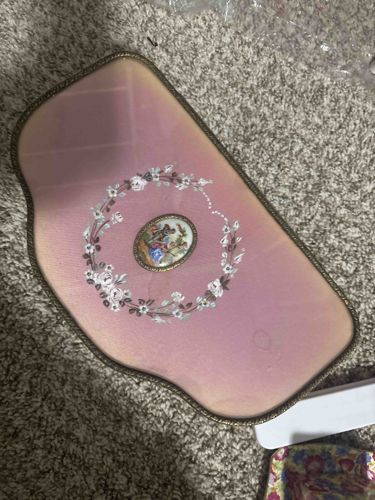
Pink Rococo Style Vanity Tray

Submitted photo of Pink Rococo Style Vanity Tray
Photo submitted by the user — not generated by AI

User's notes

Gerber

These notes were written by the person who submitted this item. Appraiser.AI has not verified them, and the AI's identification and estimate may rely on them.

AI Estimated Value

Not an official valuation

$40-$65

AI estimate as of July 31, 2025 · verify with a professional before acting

AI-Generated · Verify before acting

Everything on this page is generated by AI for informational purposes only. AI can make mistakes — the AI may misidentify items or misattribute them (artist, maker, brand, designer, origin, era). This is not an official valuation and should not be used for insurance, sale, tax, estate, legal, or lending purposes — or any decision requiring a certified appraisal. It is not an authoritative claim about any person, brand, or rights holder — do not share or rely on it as a factual statement about a third party. Always consult qualified professionals before making financial decisions.

This analysis also relies on unverified notes provided by the user, which may be incomplete or inaccurate and could affect the result.

Read the full disclaimer

AI Item Analysis

This appears to be an antique or vintage vanity tray, possibly a dresser tray or a hand mirror, though the absence of a visible handle suggests a tray. The item has an irregular, somewhat paddle-like or curved rectangular shape with rounded corners, measuring approximately 12-15 inches in length. Its surface is adorned with a delicate pink fabric, likely silk or satin, which exhibits a noticeable sheen and some areas of discoloration or fading, particularly around the edges and center, indicating age and potential exposure to light. The edges are framed by a decorative, possibly braided or corded, trim in a muted gold or bronze tone, suggesting a metallic or metallic-thread material, showing some patina consistent with age. At the center of the pink fabric, there's an oval-shaped miniature painting or print, possibly a transferware decal under a clear covering, depicting a Rococo-style figural scene with two individuals in period attire, characteristic of genre paintings from the 18th or 19th centuries. This central motif is encircled by an intricately painted or embroidered wreath of white and light-colored roses and delicate foliage, further enhancing its ornate aesthetic. No discernible maker's marks or signatures are visible from this perspective. The overall condition suggests gentle wear and age-related patina. The craftsmanship appears to be of moderate to good quality, typical of mass-produced decorative items or vanity sets from the late 19th to early 20th century, consistent with the Victorian or Edwardian eras. The back of the item is not visible but would likely reveal the construction and material of the base.
AI Appraisal Report

Upon examining the provided image of this Rococo-style vanity tray, my assessment is that it is a charming example of late Victorian or early Edwardian decorative arts, likely dating from the 1890s to the 1920s. These items were often part of larger dresser sets and were mass-produced. The construction appears to consist of a fabric surface, possibly silk or satin, over a rigid base. The central motif, a transfer print depicting a romantic 18th-century style courting scene, is typical for this era. The hand-painted floral details surrounding the central oval add to its decorative appeal. The condition, as observed visually, shows age-related wear including fading and discoloration to the pink fabric and patina on the metallic trim, which is expected and does not significantly detract from its value for an item of this type. The primary factor influencing value for these trays is aesthetics and condition rather than rarity, as many were produced. The current market for such decorative antiques is modest. Similar vanity trays in comparable condition typically sell at auctions and online marketplaces for under $100. It is important to note the limitations of an appraisal based solely on images. A physical examination is necessary to confirm the materials (e.g., silk vs. synthetic fabric), the nature of the decoration (print vs. hand-painting), and to search for any maker's marks on the reverse side, which could potentially increase its value. Without provenance or markings from a notable maker like Limoges or a high-end silversmith, its value remains within the decorative arts category.

Keep exploring

More vanity item/personal accessory appraisals

Get your items appraised

Instant AI-powered appraisal estimates from a photo

Browse More Appraisals