AI estimate as of October 6, 2025 · verify with a professional before acting
AI-Generated · Verify before acting
Everything on this page is generated by AI for informational purposes only. AI can make mistakes — the AI may misidentify items or misattribute them (artist, maker, brand, designer, origin, era). This is not an official valuation and should not be used for insurance, sale, tax, estate, legal, or lending purposes — or any decision requiring a certified appraisal. It is not an authoritative claim about any person, brand, or rights holder — do not share or rely on it as a factual statement about a third party. Always consult qualified professionals before making financial decisions.
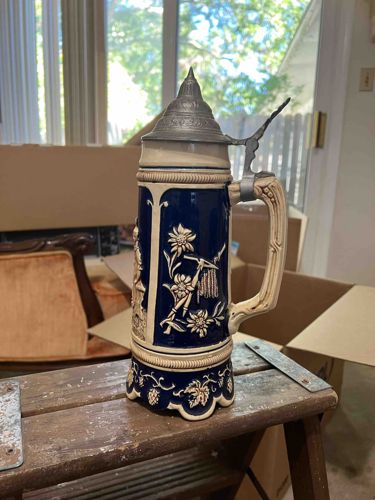
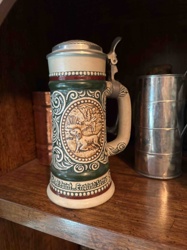
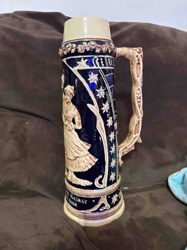
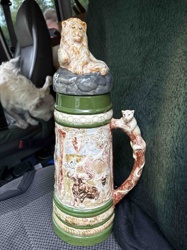
This is a traditional German beer stein, likely crafted from salt-glazed stoneware or ceramic. The body features a prominent dark blue glaze, contrasting with raised, unglazed or lightly glazed cream-colored relief decorations. The main body of the stein is cylindrical, tapering slightly towards the top, and rests on a molded, scalloped base adorned with intricate relief work depicting grapevines and hops, suggesting a connection to beer or wine production. The central decorative panel on the body displays a traditional alpine or Bavarian scene, featuring edelweiss flowers and what appears to be a hunting horn or similar traditional motif, rendered in detailed relief. The handle is robust, sculpted with organic, almost bone-like textures and a comfortable grip. A significant feature is the elaborate pewter lid, which is hinged. The lid itself is conical and highly ornate, boasting embossed decorative patterns, possibly floral or scrolled motifs, and topped with a finial or decorative spire. The thumb-lift mechanism for opening the lid is also made of pewter and is substantial and decorative, characteristic of German steins. The overall condition appears good, with no obvious cracks, chips, or significant damage visible from the provided image. The pewter lid shows a natural aged patina consistent with its material and age, adding to its character. The craftsmanship indicates a factory-produced item, likely from the late 19th to mid-20th century, a popular period for souvenir and collectible steins.
AI Appraisal Report
Upon visual examination of the provided image, this German Ceramic Beer Stein with Pewter Lid appears to be a factory-produced decorative piece, likely dating from the late 19th to mid-20th century, a period prolific for such souvenir and collectible items. The dark blue salt-glazed stoneware body with cream-colored relief decorations, depicting an alpine scene with edelweiss and a hunting horn, is characteristic. The robust handle with organic textures and the ornate hinged pewter lid with a decorative finial and substantial thumb-lift are consistent with typical German stein manufacturing of the era. The overall condition looks good; I observe no obvious cracks, chips, or significant damage that would detract from its value. The pewter lid shows a natural, attractive patina, which enhances its aged character.
In terms of market conditions, items like this are generally considered decorative collectibles. While aesthetically pleasing, they are not typically rare. Demand is moderate, primarily from collectors of German memorabilia or decorative beer steins. Comparables in the market for good-condition, mass-produced steins of this type typically range from $60 to $150, depending on the intricacy of design and condition.
Factors impacting value positively include its apparent good condition and the detailed pewter lid. The likely factory production, rather than bespoke artisan work, limits its rarity and, consequently, its higher-end value potential.
It is crucial to note the limitations of appraising from an image alone. Without physical inspection, I cannot definitively assess the internal condition, hairline cracks, professional repairs, manufacturing flaws, or the exact material composition and quality of the relief work. An in-person examination would also be necessary to check for any maker's marks or specific series numbers on the base, which could occasionally provide more precise dating or origin, potentially affecting value. Provenance documentation, though rare for such items, could authenticate any historical significance, while scientific testing would be overkill for this type of collectible.