AI estimate as of August 22, 2025 · verify with a professional before acting
AI-Generated · Verify before acting
Everything on this page is generated by AI for informational purposes only. AI can make mistakes — the AI may misidentify items or misattribute them (artist, maker, brand, designer, origin, era). This is not an official valuation and should not be used for insurance, sale, tax, estate, legal, or lending purposes — or any decision requiring a certified appraisal. It is not an authoritative claim about any person, brand, or rights holder — do not share or rely on it as a factual statement about a third party. Always consult qualified professionals before making financial decisions.
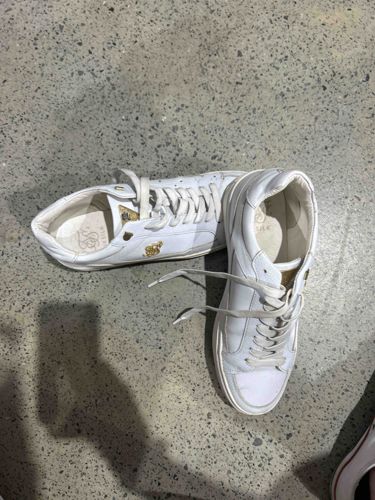
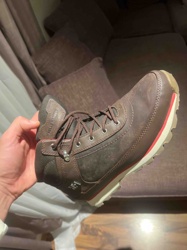
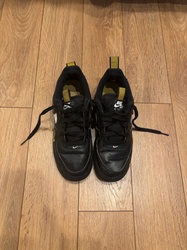
This item is a pair of white low-top sneakers. The primary material appears to be leather or a synthetic leather-like material, given the smooth, somewhat textured surface and slight creasing visible. The color is predominantly white, with some discoloration and scuff marks indicating wear, particularly around the toes and sides. Each shoe features white laces, which are tied. A notable design element is a gold-colored emblem, possibly a crest or logo, prominently displayed on the side of each shoe. Another gold-colored embellishment is visible near the top eyelet on the side of one shoe. The inner sole of the shoe on the left appears to have a swirling logo or pattern. The overall construction suggests a casual sneaker style, likely from the 2000s or 2010s. The shoes show signs of regular use, including dirt, scuffing, and minor creasing in the material, but no significant tears or structural damage are immediately visible. The craftsmanship appears to be standard for mass-produced sneakers, with visible stitching details.
AI Appraisal Report
Upon examining the image of these white low-top sneakers, I assess their condition as moderately used. There is visible creasing, dirt, and scuffing, particularly around the toes and sides, indicative of regular wear. The gold-colored emblems appear intact, and there are no immediate signs of major structural damage or tears, which is positive for their current state.
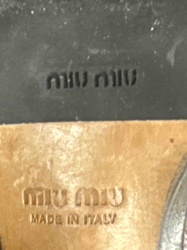
Authenticity is challenging to definitively verify from an image alone. The 'swirling logo or pattern' on the inner sole could be a brand identifier, but without a clear view or knowledge of the brand, I cannot confirm. The overall construction appears typical for mass-produced sneakers from the 2000s or 2010s, as suggested by the client.
Regarding market conditions, white low-top sneakers are perennially popular, but the presence of gold emblems suggests a specific brand or designer. Without knowing the brand, assessing comparables is difficult. If these are from a luxury or sought-after designer, their value would be higher. If they are from a more common athletic brand, even a used pair would hold some value, though significantly less. Demand for used sneakers depends heavily on brand, model, and condition. These are not rare based on their generic appearance, but a designer attribution could change that.
The primary factors impacting value here are the unknown brand identity and the used condition. The extensive wear significantly depreciates their value. For full authentication, I would require in-person examination to assess material quality, stitching details, and obtain clearer images of all branding, including size tags and internal labels. Provenance documentation (original purchase receipts) and potentially scientific testing of materials could also be crucial for high-value items, which these are not currently perceived to be.