AI Appraisal Estimate

AI-generated estimates · not official valuations

From the user

What was submitted

Photo and notes provided by the user — not generated by AI

Submitted item photo
Submitted photo · June 8, 2026

User's notes

No additional notes provided.

AI analysis below

AI appraisal

AI analysis & estimate

AI-Generated · Verify before acting

Everything below is generated by AI for informational purposes only. AI can make mistakes — the AI may misidentify items or misattribute them (artist, maker, brand, designer, origin, era). This is not an official valuation and should not be used for insurance, sale, tax, estate, legal, or lending purposes — or any decision requiring a certified appraisal. It is not an authoritative claim about any person, brand, or rights holder — do not share or rely on it as a factual statement about a third party. Always consult qualified professionals before making financial decisions.

Read the full disclaimer

AI Identification

·Not independently authenticated·Verify before acting

Mid-20th-century style wooden parlor table

Antique Furniture

AI Estimated Value

·Not an official valuation·Verify before acting

$75-$150

As of June 8, 2026

AI Item Analysis

·AI can make mistakes·Verify before acting
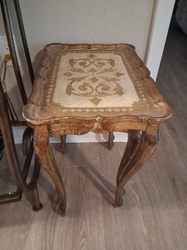
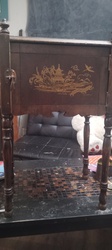
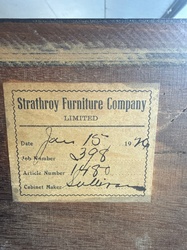
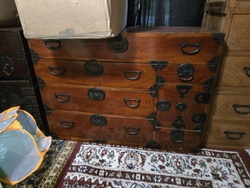
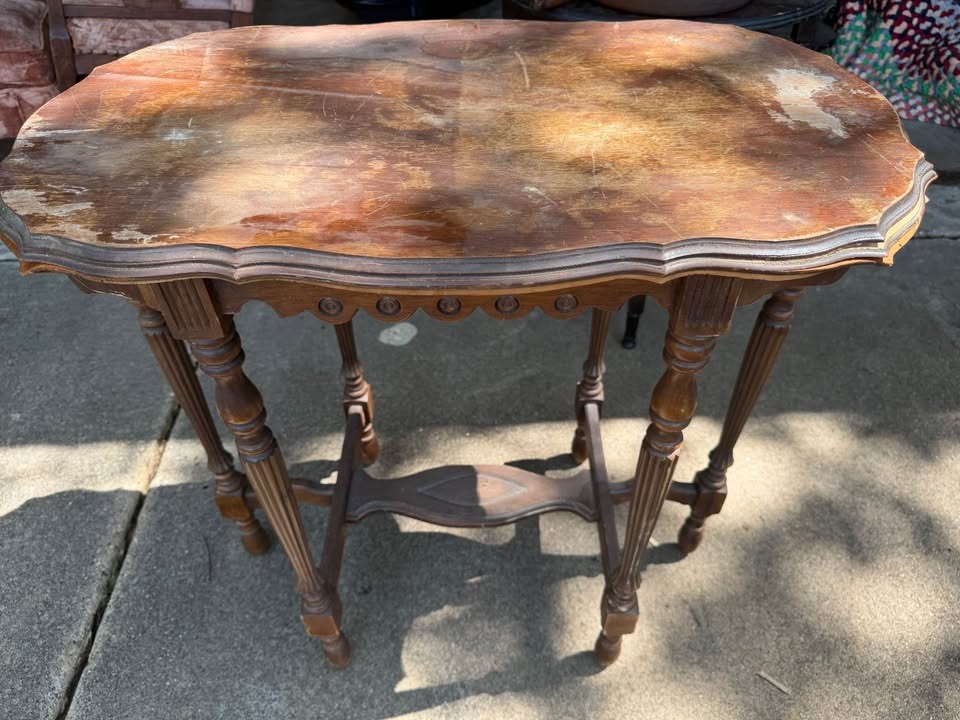
This item appears to be a small wooden parlor or side table, stylistically consistent with American furniture from the early to mid-20th century, possibly in a Colonial or Neoclassical Revival style. The piece features a scalloped or shaped top with a decorative edge. The apron is ornamented with a scalloped trim containing circular medallions or carved bosses. The table is supported by four main turned and reeded legs, connected by a shaped center stretcher. There appear to be secondary supports or a gate-leg mechanism, though this is not entirely clear from the single angle. The construction appears to utilize a combination of solid wood and veneers. Significant condition issues are present, including heavy wear to the finish on the tabletop, visible scratches, fading, and areas where the surface varnish or veneer has peeled or bleached due to environmental exposure. No manufacturer labels or maker's marks are visible in the image, so this identification is based solely on stylistic features and construction methods. The overall craftsmanship is consistent with mass-produced revival furniture of the 1920s-1940s era.
AI Appraisal Report

·AI can make mistakes·Verify before acting
Based on the provided imagery, I have evaluated this wooden parlor table as a mass-produced piece likely dating from the 1920s to the 1940s. The design is consistent with a Colonial or Neoclassical Revival style, featuring turned, reeded legs and a scalloped apron with carved bosses. From what I can see, the construction likely uses a mix of solid wood and veneers, which was typical for mid-market furniture of that era. I cannot determine the specific wood species or the presence of maker's marks from this photo alone; a physical inspection of the underside and joints would be required to identify a specific manufacturer. The estimated value of $75 to $150 reflects the item's current fair market value in an 'as-is' state. The valuation is heavily impacted by the significant condition issues visible on the tabletop, including severe finish wear, fading, and possible veneer degradation. In the current market, demand for mid-20th-century revival furniture is stable but modest, as collectors and decorators generally prioritize pieces in excellent original finish or those with high-end designer attributions. Because this appears to be a standard production model, the value rests mainly on its utility and aesthetic appeal rather than rarity. To refine this estimate, an in-person examination would be necessary to check for structural stability and to verify if the wear has damaged the substrate or merely the surface varnish. Should this piece be identified as the work of a premium manufacturer of the period, such as Kittinger or Baker, the value could increase slightly, though the finish condition would still be a primary limiting factor. Conversely, if the structural integrity is compromised by the environmental exposure evident in the photos, the value would fall toward the lower end of the range.

Get your items appraised

Instant estimates of your treasures with AI-powered appraisals

Browse More Appraisals