AI estimate as of October 22, 2025 · verify with a professional before acting
AI-Generated · Verify before acting
Everything on this page is generated by AI for informational purposes only. AI can make mistakes — the AI may misidentify items or misattribute them (artist, maker, brand, designer, origin, era). This is not an official valuation and should not be used for insurance, sale, tax, estate, legal, or lending purposes — or any decision requiring a certified appraisal. It is not an authoritative claim about any person, brand, or rights holder — do not share or rely on it as a factual statement about a third party. Always consult qualified professionals before making financial decisions.
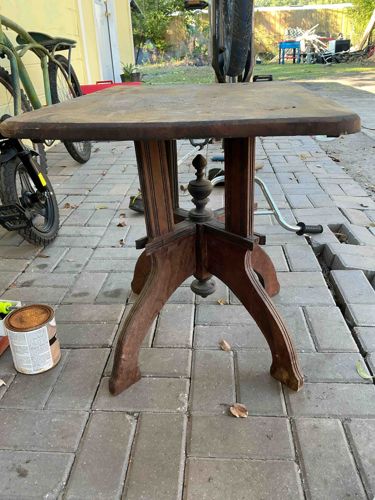
This is an antique pedestal square table, likely constructed from a dark wood such as oak or mahogany, exhibiting a rich, aged brown color with visible grain patterns. The tabletop is square with slightly rounded corners, showing significant wear, including scratches, discoloration, and what appears to be some water damage or uneven fading across its surface, suggesting prolonged exposure or lack of protective finish. The edges of the tabletop are slightly rounded and show some chipping or abrasion. The table is supported by a robust central pedestal base, featuring a turned central column with decorative spindle elements, including a prominent finial-like form. The column transitions into a sturdy quadruped base with four scrolled or curved legs, each terminating in a simple, flat foot. The construction appears solid and traditional, indicative of craftsmanship from the late 19th or early 20th century. There are no immediate visible maker's marks or signatures, but the style strongly suggests an Arts and Crafts or Victorian aesthetic. The overall condition indicates significant age and use, with the current patina reflecting years of exposure and requiring restoration to fully appreciate its original beauty. The joinery appears to be robust, although specific details are obscured by the finish and angle. The table's weight and stability appear substantial, characteristic of solid wood furniture from its estimated period.
AI Appraisal Report
Based on my visual examination of the provided image, this Antique Pedestal Square Table appears to be constructed from a dark wood, likely oak or mahogany, exhibiting a rich, aged brown color. The square tabletop, with its slightly rounded corners, shows significant wear, including scratches, discoloration, and what I interpret as water damage or uneven fading, consistent with prolonged use and lack of protective finish. The edges also display chipping and abrasion. The robust central pedestal base, featuring a turned central column with decorative spindle elements and a finial-like form, transitions into a sturdy quadruped base with four scrolled legs. This construction suggests a late 19th or early 20th-century origin, aligning with Arts and Crafts or Victorian aesthetics. The visible grain patterns and solid appearance indicate substantial weight and stability, characteristic of period solid wood furniture.
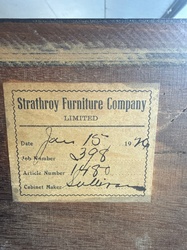
Authenticity, based solely on visual cues, points to a genuine antique given the style, construction, and condition consistent with historical manufacturing. However, without in-person inspection, I cannot confirm specific wood types, joinery methods beyond general robustness, or detect any subtle repairs or restorations. Market demand for antique pedestal tables of this style is somewhat moderate. While elegant, the significant cosmetic wear on the tabletop, including discoloration and potential water damage, substantially impacts its current value. Buyers in its current state would likely factor in significant restoration costs. Similar tables in better condition or with more elaborate carving typically command higher prices. The absence of visible maker's marks also limits value, as attribution to a known manufacturer could increase desirability. For full authentication and a more precise valuation, I would need a physical inspection to assess the integrity of the joinery, confirm wood species through grain and pore analysis, and investigate the extent of the damage. Examination for any hidden repairs, identification of specific period-appropriate finishes, and a search for ghost marks that might indicate a removed label are also crucial for full authentication. Without this, I estimate its value to be in the range of $250-400, reflecting its antique status but accounting for its significant condition issues and the need for restoration.