AI Appraisal Estimate

AI-generated estimates · not official valuations

From the user

What was submitted

Photo and notes provided by the user — not generated by AI

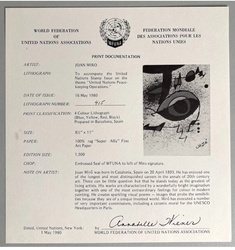
Submitted item photo
Submitted photo · May 18, 2026

User's notes

No additional notes provided.

AI analysis below

AI appraisal

AI analysis & estimate

AI-Generated · Verify before acting

Everything below is generated by AI for informational purposes only. AI can make mistakes — the AI may misidentify items or misattribute them (artist, maker, brand, designer, origin, era). This is not an official valuation and should not be used for insurance, sale, tax, estate, legal, or lending purposes — or any decision requiring a certified appraisal. It is not an authoritative claim about any person, brand, or rights holder — do not share or rely on it as a factual statement about a third party. Always consult qualified professionals before making financial decisions.

Read the full disclaimer

AI Identification

·Not independently authenticated·Verify before acting

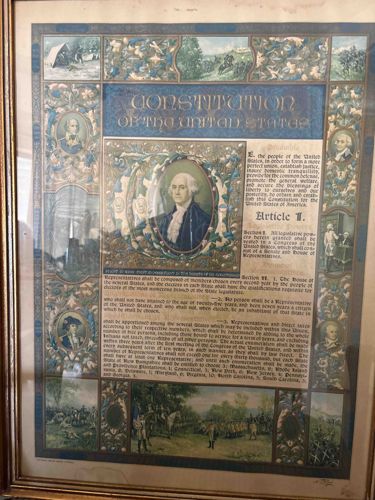
Illustrated Chromolithograph of the Constitution of the United States

Antique Prints and Documents

AI Estimated Value

·Not an official valuation·Verify before acting

$150 - $250

As of May 18, 2026

AI Item Analysis

·AI can make mistakes·Verify before acting
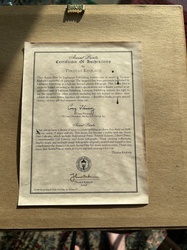
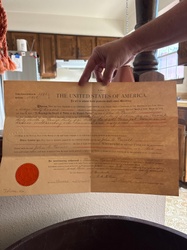
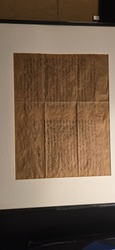
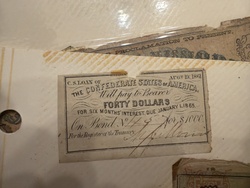
This item is an intricately decorated, multi-colored chromolithograph depicting the Constitution of the United States, centered around Article I. The piece features a central oval portrait of George Washington, flanked by an ornate architectural and floral border in shades of blue, gold, and red. The border contains various vignettes of historical American scenes, including military encampments and battlefield landscapes, as well as smaller portrait medallions of other founding figures. The typography is stylized, with a large, decorative header in an Old English or Gothic-inspired font. The print is housed in a simple gold-toned metallic or wood frame protected by glass. Regarding its condition, there is significant water staining and foxing visible along the top edge and upper right corner of the paper, as well as some localized mottling at the bottom. The color registration remains relatively vibrant despite aging, suggesting it has been kept out of direct sunlight for much of its life. These specific mass-produced patriotic prints were highly popular in the late 19th century, specifically the Centennial era (circa 1876-1890), intended for educational or domestic display to foster national pride. The quality of the lithography indicates a professional printing house, likely based in Philadelphia or New York, although specific maker's marks are partially obscured by the frame at the bottom edge.
AI Appraisal Report

·AI can make mistakes·Verify before acting
I have completed a visual examination of the illustrated chromolithograph of the U.S. Constitution, dating from the American Centennial era (circa 1876-1890). The piece displays the high-quality color registration characteristic of late 19th-century professional lithography, likely produced by a firm such as Thomas Kelly or Currier & Ives to capitalize on the period's patriotic fervor. While the vibrant pigments suggest excellent preservation of the inks, the structural integrity of the paper is compromised. Significant water staining and foxing are evident along the upper margins, and the mottling at the base suggests past exposure to high humidity or moisture. Such condition issues significantly depress the value for serious collectors of Americana. The market for mass-produced Centennial prints remains steady but price-sensitive; copies in 'near-mint' condition can fetch upwards of $500, but the visible damage here places this specimen in a lower tier. Aesthetically, the central portrait of Washington and the military vignettes remain compelling, providing some decorative 'shabby chic' appeal. However, please note that this appraisal is based solely on digital imagery. A physical inspection is required to confirm the paper's watermark and acidity levels, and to check for hidden tears or repairs beneath the frame's edge. To fully authenticate the piece as a period original rather than a mid-20th-century reproduction, I would need to examine the 'halftone' dot pattern under magnification and verify the presence of a late-Victorian stone-lithograph grain. Comprehensive provenance or a bill of sale from a recognized antiquarian would further solidify its valuation.

Get your items appraised

Instant estimates of your treasures with AI-powered appraisals

Browse More Appraisals