AI estimate as of September 19, 2025 · verify with a professional before acting
AI-Generated · Verify before acting
Everything on this page is generated by AI for informational purposes only. AI can make mistakes — the AI may misidentify items or misattribute them (artist, maker, brand, designer, origin, era). This is not an official valuation and should not be used for insurance, sale, tax, estate, legal, or lending purposes — or any decision requiring a certified appraisal. It is not an authoritative claim about any person, brand, or rights holder — do not share or rely on it as a factual statement about a third party. Always consult qualified professionals before making financial decisions.
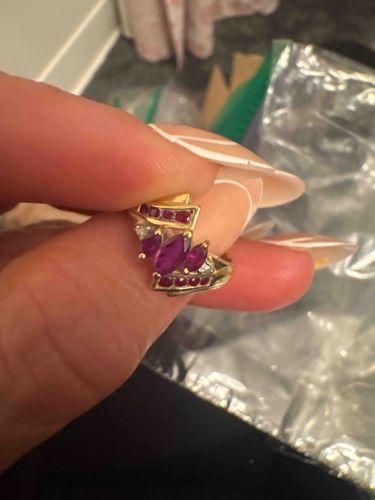
This item is a visually striking gold-toned ring featuring a cluster design with multiple rubies and small diamond accents. The ring appears to be constructed from a yellow metal, likely gold or gold-plated, given its warm hue and lustrous finish. The design is ornate and multi-tiered, presenting a noticeable height on the finger. The central focus includes three prominent marquise-cut rubies, arranged vertically in a slightly staggered or curved formation. These rubies display a deep, saturated purplish-red color, indicative of a classic ruby shade. Flanking these marquise rubies are small, round-cut diamond accents, two of which are clearly visible, adding sparkle and contrast to the design. Below this central arrangement, the ring features a curved band of smaller, round-cut rubies, set in a channel or pave style, contributing to the overall lush appearance. Additionally, there appears to be another row of small round rubies at the top of the design, consistent with the cluster styling. The craftsmanship suggests a retail-quality piece, possibly from the late 20th to early 21st century, given its contemporary cluster style. No visible manufacturer's marks or hallmarks are discernible from the image. The condition appears to be good with no obvious signs of significant wear, damage, or missing stones, although a closer inspection would be required for a definitive assessment. The setting style for the larger rubies seems to be prong-set, while the smaller stones could be pave or channel set. The overall impression is one of a festive and decorative piece of jewelry.
AI Appraisal Report
Upon visual examination of this Gold-Toned Ruby and Diamond Accent Cluster Ring, I assess its condition as good, showing no obvious signs of significant wear, damage, or missing stones from the provided image. The gold-toned metal, likely 10K or 14K gold, or possibly gold-plated, presents a lustrous finish. Its authenticity as a genuine piece of jewelry is likely, however, without hallmarks, a definitive statement on the metal's purity or composition cannot be made from imagery alone.
The market for cluster rings featuring rubies and diamond accents is consistently active, particularly for pieces that offer a bold aesthetic. Comparables on the secondary market suggest a range for similar gold or gold-plated cluster rings, often with synthetic or treated rubies and small diamond accents. The rubies here show a rich purplish-red color, which could indicate natural stones, but only a gemological examination could confirm this, as well as any treatments. The diamond accents, while small, contribute positively to the overall appeal.
Factors significantly impacting value include the karat weight of the gold (if solid), the origin and treatment status of the rubies, and the quality of the diamonds. Should the rubies be natural and untreated, the value would increase significantly. However, given the cluster style and common market practices, it is probable they are heat-treated natural rubies or synthetic. Demand for festive, eye-catching jewelry remains steady.
Crucially, this appraisal is limited by the visual nature of the examination. For full authentication and a more precise valuation, an in-person examination is essential to verify metal purity via hallmarks or testing, determine the exact nature and origin of the rubies (natural vs. synthetic, presence of treatments), and assess diamond quality (cut, color, clarity). Provenance documentation, if available, would further enhance authentication.