AI Appraisal Estimate

AI-generated estimates · not official valuations

From the user

What was submitted

Photo and notes provided by the user — not generated by AI

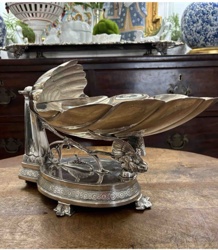
Submitted item photo
Submitted photo · June 6, 2026

User's notes

No additional notes provided.

AI analysis below

AI appraisal

AI analysis & estimate

AI-Generated · Verify before acting

Everything below is generated by AI for informational purposes only. AI can make mistakes — the AI may misidentify items or misattribute them (artist, maker, brand, designer, origin, era). This is not an official valuation and should not be used for insurance, sale, tax, estate, legal, or lending purposes — or any decision requiring a certified appraisal. It is not an authoritative claim about any person, brand, or rights holder — do not share or rely on it as a factual statement about a third party. Always consult qualified professionals before making financial decisions.

Read the full disclaimer

AI Identification

·Not independently authenticated·Verify before acting

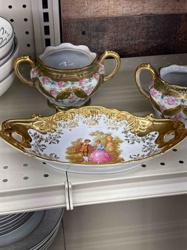
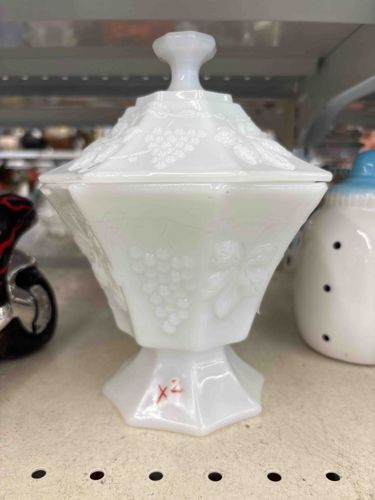
White Milk Glass Covered Compote/Candy Dish with Grape and Vine Pattern

Decorative Arts/Tableware

AI Estimated Value

·Not an official valuation·Verify before acting

$25-45

As of June 6, 2026

AI Item Analysis

·AI can make mistakes·Verify before acting
This item is a covered compote or candy dish, crafted from white milk glass. It features a hexagonal or octagonal shape in its body and base, with a matching faceted lid topped by a knob-like finial for easy lifting. The surface of both the lid and the body is adorned with intricate embossed or molded designs, primarily depicting clusters of grapes and intertwining vines, characteristic of a 'Harvest Grape' or 'Grape and Vine' pattern. The milk glass itself appears to be opaque white with a subtle translucence in certain areas, occasionally exhibiting the characteristic slight yellowish or bluish tint common in older milk glass. There are no visible chips, cracks, or repairs, suggesting good overall condition. Patina or surface wear appears minimal, though a faint reddish mark, likely an inventory or pricing indicator such as 'x2', is present on the base, which is not inherent to the item's design. The craftsmanship suggests it was likely mass-produced, typical for glassware from the mid-20th century. Based on the style and material, it likely dates from the 1940s to 1960s, a period when milk glass was highly popular. Its design balances decorative appeal with functional utility.
AI Appraisal Report

·AI can make mistakes·Verify before acting
Upon examining the provided image of this white milk glass covered compote/candy dish, I assess its condition as excellent. There are no visible chips, cracks, or repairs, and the surface appears to be largely free of significant wear, aside from a faint reddish mark, likely an inventory 'x2', on the base. This mark is not inherent to the item and can likely be removed. The hexagonal/octagonal body and lid, featuring the distinctive "Grape and Vine" or "Harvest Grape" pattern, are consistent with mid-20th century mass-produced milk glass. The subtle translucence and occasional yellowish/bluish tint are typical of milk glass from that era (1940s-1960s). In terms of market conditions, vintage milk glass, particularly pieces with popular patterns like 'Grape and Vine', maintains a steady but not exceptionally high demand. It's considered collectible but widely available. Comparables for similar covered compotes or candy dishes in excellent condition typically sell within a modest range. Rarity is not a significant factor here; these items were produced in large quantities. Factors impacting value positively include its excellent condition and complete nature (with lid). The primary limiting factor is its mass-produced nature and common pattern, which prevents it from being a high-value collectible. The market for vintage milk glass is largely driven by decorative appeal rather than investment potential. It is crucial to note the limitations of assessing authenticity and condition from images alone. A physical examination would allow me to thoroughly inspect for hairline cracks not visible in photos, assess the true opacity and specific tint of the glass, feel for any subtle surface roughness or repairs, and confirm the method of manufacture. Provenance documentation, while unlikely for such a common item, would also be beneficial for absolute certainty. Scientific testing is generally not required for common glassware of this type.

Get your items appraised

Instant estimates of your treasures with AI-powered appraisals

Browse More Appraisals