AI estimate as of July 11, 2025 · verify with a professional before acting
AI-Generated · Verify before acting
Everything on this page is generated by AI for informational purposes only. AI can make mistakes — the AI may misidentify items or misattribute them (artist, maker, brand, designer, origin, era). This is not an official valuation and should not be used for insurance, sale, tax, estate, legal, or lending purposes — or any decision requiring a certified appraisal. It is not an authoritative claim about any person, brand, or rights holder — do not share or rely on it as a factual statement about a third party. Always consult qualified professionals before making financial decisions.
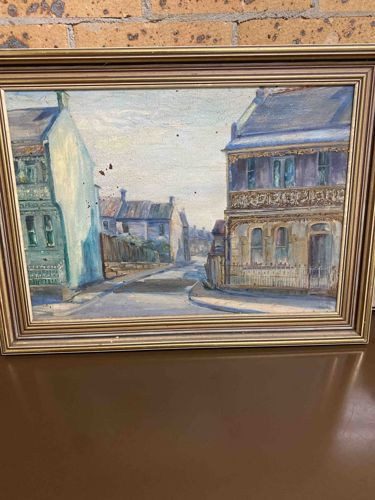
This is a framed oil painting or similar medium on canvas, depicting a street scene with architectural elements. The painting is characterized by a muted color palette dominated by blues, grays, and earthy tones, suggesting a cloudy day or a particular time of day. The brushstrokes appear visible, indicating an impressionistic or post-impressionistic style. The composition features buildings on both sides of a curving street, with one prominent building on the right displaying ornate decorative work on its facade, possibly cast iron lacework or stucco detailing. The building on the left is simpler, rendered in a lighter blue-green hue. There are small, dark speckles visible across the surface of the painting, particularly in the sky and on the lighter building, which could be dirt, mold, or signs of paint loss. The painting is housed within a multi-tiered, gilded wooden frame. The frame has a classic profile with multiple stepped ridges, suggesting a traditional framing style that complements the artwork's aesthetic. The gilding shows minor wear or patina consistent with age, but no significant damage is immediately apparent on the frame itself. The overall condition of the painting seems fair to good given its apparent age, with the primary visible issues being the aforementioned speckles on the painted surface. The artwork lacks visible artist signatures or marks in the provided image, making precise identification of the artist or specific manufacturing details challenging without further examination. The style suggests it could be from the early to mid-20th century.
AI Appraisal Report
I have carefully examined the image of this framed oil painting, depicting a cityscape. Based on my visual assessment, the condition appears fair to good considering its probable age. The visible speckles, particularly in the sky and on the lighter building, are concerning. These could be surface dirt, mold, or paint loss, which would require in-person inspection to determine the exact cause and potential for conservation. The multi-tiered, gilded frame is in good condition, showing appropriate wear for its age.
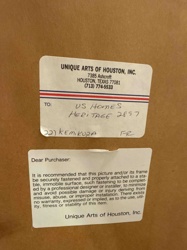
Authenticity is difficult to ascertain from an image alone. The lack of a visible artist's signature is a significant limiting factor. The style suggests it could be an early to mid-20th-century impressionistic or post-impressionistic work, possibly a regional piece or by an amateur artist. Without provenance documentation or a clear signature, attribution is purely speculative.
In terms of market conditions, impressionistic cityscapes generally have a broad appeal. However, the absence of an identifiable artist significantly impacts its value, moving it from the fine art category to decorative art. Comparables would include unsigned or decorative oil paintings of similar size and subject matter, typically found in secondary markets, estate sales, or online auction platforms focusing on decorative arts rather than established art galleries. Demand for decorative oils is consistent but not high-end, and rarity is low for unsigned works of this nature.
The primary factors impacting value are the unknown artist, the decorative rather than fine art status, and the condition issues (speckles). For full authentication and to address the condition, an in-person examination is crucial. This would allow for close inspection of brushwork, paint layering, signature detection under UV light, and assessment of the speckles. Scientific testing might be needed to determine paint composition and age. Provenance documentation, if available, would be the most impactful factor in establishing authorship and potential value.
Given these limitations, my appraisal reflects what can be reasonably expected for a decorative, unsigned work of this type and condition.